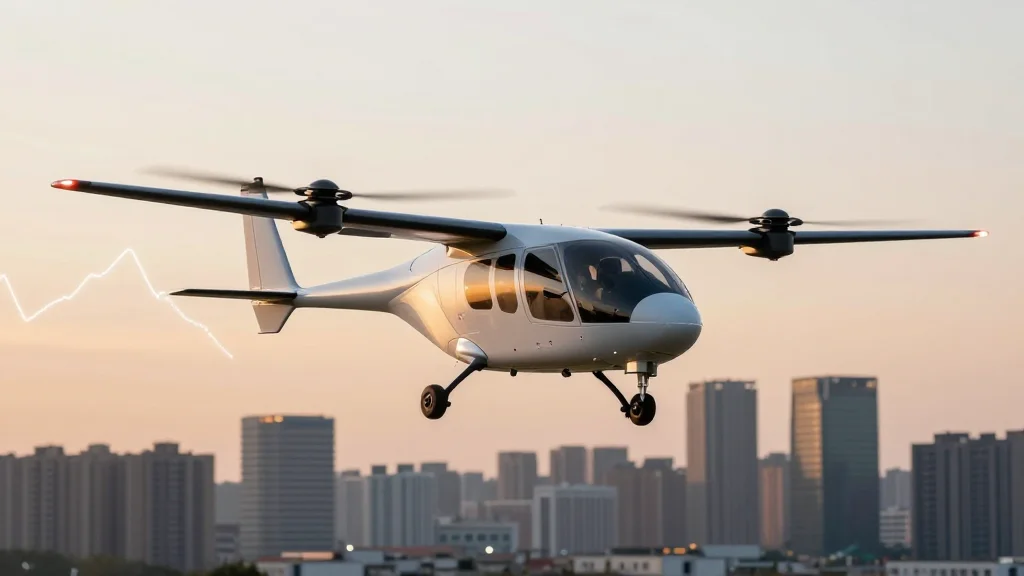
Archer Aviation Clears Key FAA Hurdle but Faces Dilution and Execution Risks

Companies Mentioned
Why It Matters
Archer Aviation sits at the intersection of emerging electric aviation technology and a nascent urban mobility market that could reshape city transportation. The FAA acceptance reduces a key regulatory unknown, potentially accelerating the timeline for commercial eVTOL services. At the same time, the company’s massive cash position and ongoing dilution illustrate the financing challenges of capital‑intensive, pre‑revenue ventures. How Archer navigates these dynamics will influence investor appetite for other eVTOL firms and signal whether the broader trillion‑dollar urban air mobility vision is financially viable. The broader market impact extends to airlines and infrastructure developers. IndiGo’s recent ₹10 crore (~$1.2 million) equity stake in Indian startup Sarla Aviation highlights a shift toward domestic eVTOL ecosystems, suggesting that legacy carriers are hedging bets on future air‑taxi networks. Archer’s progress, therefore, not only affects its own shareholders but also informs strategic decisions across the aviation industry regarding partnerships, vertiport investments, and regulatory lobbying.
Key Takeaways
- •FAA grants 100% acceptance of Archer’s Means of Compliance for its Midnight eVTOL, clearing a major certification hurdle.
- •Archer ends 2025 with roughly $2 billion in cash after multiple equity raises, but posts a $618 million net loss and zero revenue.
- •Analysts warn that ongoing dilution could limit shareholder upside despite the company’s strong cash position.
- •Urban air mobility market potential is estimated at a trillion dollars, but commercial viability remains unproven.
- •IndiGo invests ₹10 crore (~$1.2 million) in Indian eVTOL startup Sarla Aviation, underscoring airline interest in the sector.
Pulse Analysis
Archer Aviation’s recent FAA milestone is a classic case of regulatory risk mitigation without guaranteeing commercial success. Historically, aerospace firms that clear certification early—think Boeing’s 787 or Airbus’s A350—benefit from first‑mover advantage, but they also shoulder massive development costs that can erode cash reserves. Archer’s $2 billion cash cushion is sizable for a startup, yet the $618 million loss signals a burn rate that will likely force additional equity raises, further diluting shareholders. In a market where the total addressable opportunity is framed in trillions, the incremental value captured by any single player will be modest unless the company can achieve scale quickly.
Execution will be the decisive factor. The next 12 months demand two concrete outcomes: a launch of paid passenger flights and evidence that production can be ramped without cost overruns. If Archer can demonstrate a repeatable revenue stream, the stock’s risk profile will shift dramatically, attracting a broader investor base beyond high‑risk speculators. Conversely, missed timelines could reinforce the narrative that eVTOLs remain a futuristic concept, prompting capital to flow toward more diversified mobility plays.
Finally, Archer’s trajectory will influence the strategic calculus of legacy airlines. IndiGo’s modest but symbolic investment in Sarla Aviation signals that carriers are hedging bets on domestic eVTOL ecosystems, potentially bypassing international partners like Archer if timelines lag. Should Archer secure commercial operations before its competitors, it could lock in partnership deals that lock in future revenue and provide a runway for sustainable growth. The market will be watching closely, and the next certification milestone could be the tipping point between a speculative bet and a viable new transportation vertical.
Archer Aviation Clears Key FAA Hurdle but Faces Dilution and Execution Risks
Comments
Want to join the conversation?
Loading comments...