Buffett Warns Against Blind “Buy the Dip” As Berkshire Holds $373 Billion Cash

Companies Mentioned
Why It Matters
Buffett’s caution reverberates across the stock‑investing landscape because his views shape the behavior of millions of retail and institutional investors. By emphasizing that Berkshire will only act on a "big" decline, he signals that large cash reserves can be a stabilizing force in volatile markets, potentially dampening panic‑driven buying sprees. Moreover, his critique of the prevailing gambling mentality highlights a cultural shift toward short‑term speculation, raising questions about market efficiency and the sustainability of current valuation levels. If investors heed Buffett’s advice, we may see a slowdown in the rapid inflows that have driven recent equity price inflation, allowing valuations to realign with fundamentals. Conversely, ignoring his warning could fuel a cycle of over‑buying during modest dips, increasing the risk of a sharper correction when a true market crisis finally materializes.
Key Takeaways
- •Warren Buffett warned against treating the 2026 market pullback as a buying opportunity.
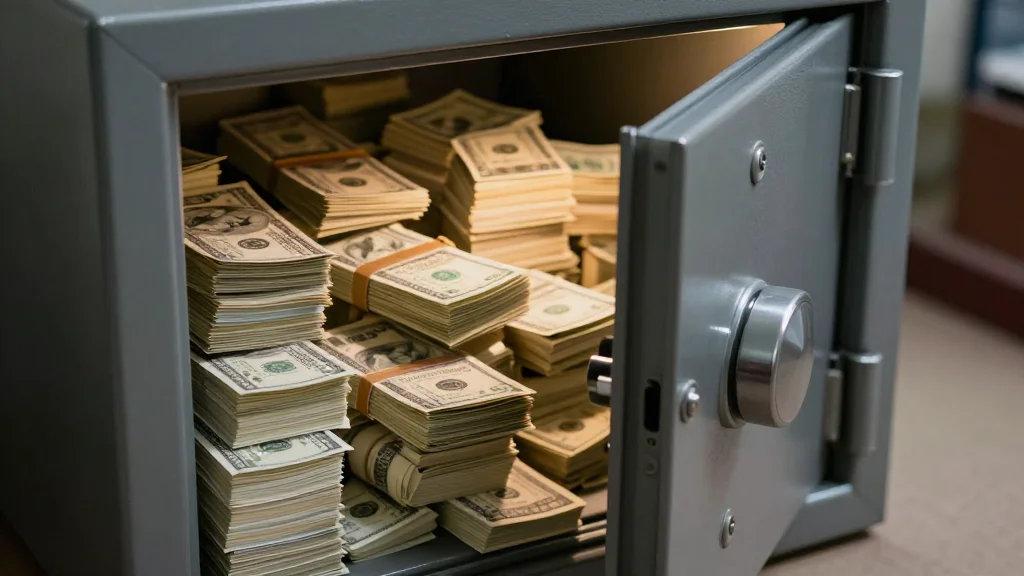
- •Berkshire Hathaway holds $373 billion in cash and Treasury bills, earmarked for "big" market declines.
- •Buffett said the market has fallen >50% three times in his tenure, yet he remains patient.
- •The Buffett Indicator sits at ~227% of GDP, a level Buffett calls "playing with fire."
- •Berkshire’s Q1 operating profit rose 18% to $11.35 billion, but its stock lags the S&P 500 by 39 points.
Pulse Analysis
Buffett’s public restraint underscores a broader strategic advantage: massive cash reserves give Berkshire a unique option value that most investors lack. In a market where AI hype and geopolitical risk have amplified volatility, the ability to sit on the sidelines preserves capital and prevents the erosion of buying power that can occur during a series of small, repeated corrections. Historically, Berkshire’s biggest wins—such as the 2008 financial crisis purchase of Goldman Sachs and the 2020 Covid‑era acquisition of Apple shares—came after severe dislocations that created deep discounts relative to intrinsic value. By waiting for a comparable shock, Berkshire can continue to generate outsized returns without compromising its disciplined, long‑term approach.
The warning also reflects a cultural tension between traditional value investing and the rise of algorithmic, momentum‑driven trading. As retail platforms lower barriers to entry, more participants chase short‑term price moves, inflating valuations and compressing risk premia. Buffett’s comment that "We've never had more people in a gambling mood than now" is a direct challenge to that trend, suggesting that the market may be over‑leveraged on sentiment rather than fundamentals. If the market corrects sharply, investors who have ignored this caution could face amplified losses, while those who maintain a patient, diversified portfolio may emerge relatively unscathed.
Looking ahead, the key variable will be the trigger for a "big" decline. Potential catalysts include a hard landing in interest rates, a geopolitical flashpoint that disrupts energy supplies, or a systemic shock in the AI sector. Should any of these materialize, Berkshire’s cash pile positions it to act decisively, potentially reshaping ownership structures in high‑quality businesses. Until then, Buffett’s message serves as a reminder that disciplined capital allocation, even in the face of market hype, remains the cornerstone of sustainable wealth creation.
Buffett Warns Against Blind “Buy the Dip” as Berkshire Holds $373 Billion Cash
Comments
Want to join the conversation?
Loading comments...