Customer-Obsessed Companies Deliver for Shareholders
Why It Matters
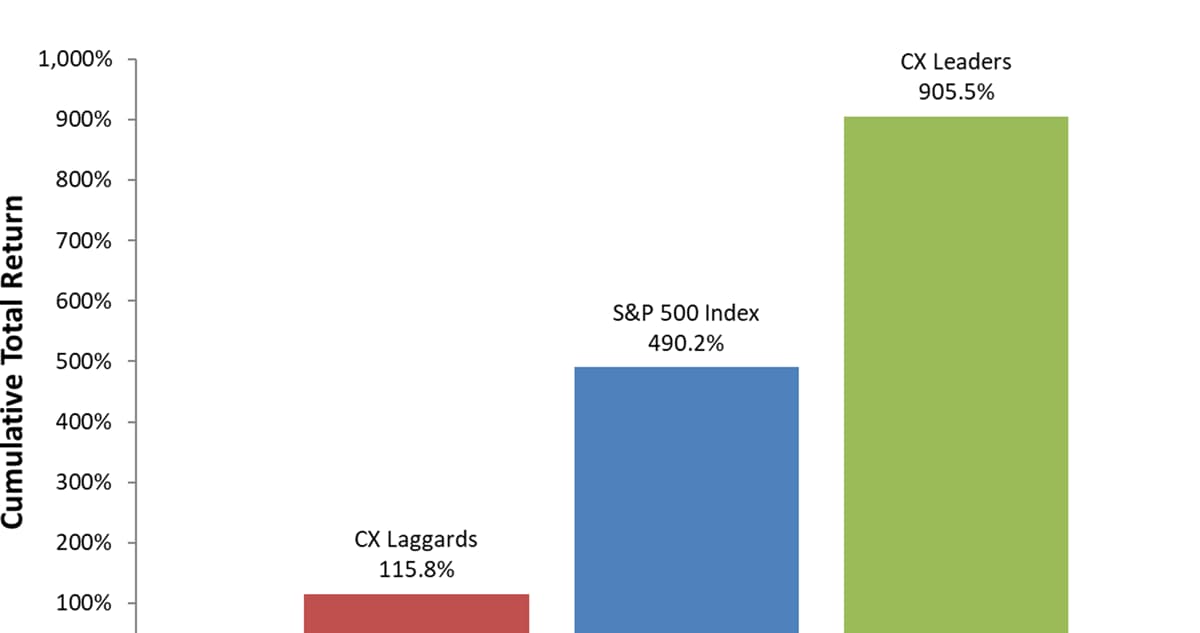
The findings prove that superior CX directly translates into outsized shareholder returns, making it a strategic imperative for investors and executives alike.
Key Takeaways
- •CX‑leading firms earn 7.8× higher stock returns.
- •Outperform S&P 500 by over 400 percentage points.
- •Gap between CX leaders and laggards doubled in five years.
- •Automation cost‑cuts risk eroding customer experience.
- •Proven framework can boost CX across industries.
Pulse Analysis
The Watermark Consulting report arrives at a pivotal moment when many firms are racing to automate processes and trim expenses. While such initiatives can improve short‑term margins, the study quantifies the hidden cost: companies that neglect the customer experience fall dramatically behind in market performance. By delivering a seamless, memorable journey, CX‑focused firms not only command premium pricing but also enjoy higher customer loyalty, translating into steadier revenue streams and lower churn rates. This dynamic explains the staggering 7.8‑fold return differential and the 400‑point S&P 500 outperformance.
For investors, the data offers a clear signal: CX metrics should be a core component of equity analysis. Firms that consistently rank high on Net Promoter Score, customer satisfaction, or similar indicators tend to generate superior cash flows, allowing them to reinvest in growth or return capital to shareholders. Conversely, organizations that prioritize cost‑cutting at the expense of service risk a widening earnings gap, as the performance disparity has more than doubled in the last half‑decade. Executives must therefore balance efficiency gains with investments in human touchpoints, digital self‑service, and feedback loops that keep the customer voice central to strategy.
Practically, Watermark outlines a repeatable framework that any company can adopt. It emphasizes mapping the end‑to‑end journey, empowering frontline employees, leveraging data to anticipate needs, and continuously iterating based on real‑time feedback. Brands that embed these principles often see expense control improve alongside revenue uplift, creating a virtuous cycle of growth. As competition intensifies across sectors, the cost of inaction—measured in lost market share and diminished stock performance—far outweighs the investment required to become truly customer‑obsessed.
Customer-Obsessed Companies Deliver for Shareholders
Comments
Want to join the conversation?
Loading comments...