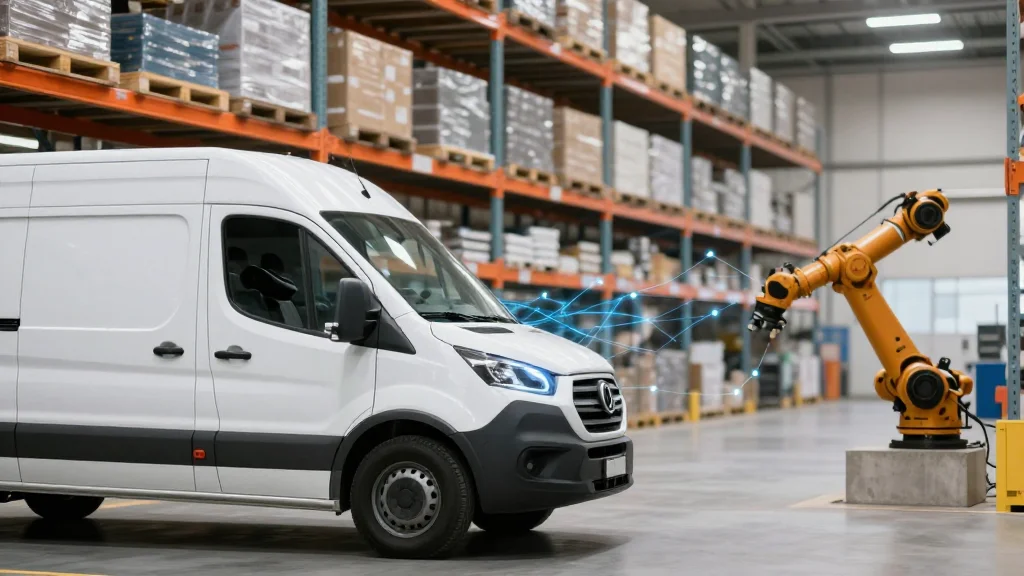
Amazon Launches Supply Chain Services to Offer Global Freight, Fulfilment to External Clients

Companies Mentioned
Why It Matters
Amazon’s decision to commercialise its logistics network could reshape the $1.3 trillion global 3PL industry. By offering a unified, technology‑driven platform, Amazon may force traditional providers to rethink pricing, asset utilization and digital integration. For manufacturers and retailers, the service promises faster, more transparent shipping options, potentially lowering inventory costs and improving supply‑chain resilience. Conversely, the move raises competitive‑fairness concerns, as Amazon could leverage its data advantage to out‑maneuver rivals while simultaneously becoming a supplier to the same customers. The launch also highlights a broader trend of tech‑centric companies turning internal capabilities into revenue‑generating services. If Amazon can capture even a modest share of the 3PL market, it would add a significant new pillar to its business beyond the marketplace, further diversifying its revenue base and reducing reliance on retail sales cycles.
Key Takeaways
- •Amazon launches Amazon Supply Chain Services, a unified platform for fulfilment, freight and trucking.
- •"We first built this network over 20 years for ourselves..." – Peter Larsen, VP of Amazon Supply Chain Services.
- •The service targets a $1.3 trillion global 3PL market, competing with DHL, Kuehne + Nagel, UPS and FedEx.
- •Third‑party seller logistics accounted for about 24 % of Amazon’s $172 billion revenue last year.
- •Rollout begins in North America and Europe, with global expansion planned within 12 months.
Pulse Analysis
Amazon’s entry into the commercial logistics arena is more than a diversification play; it is a strategic lever to lock in high‑margin, recurring revenue streams that are less sensitive to retail cycles. Historically, Amazon’s logistics arm was a cost‑center designed to support faster delivery for its own customers. By repackaging that capability as a service, Amazon can monetize idle capacity, especially in its vast warehouse network that often sits under‑utilized during off‑peak seasons.
The competitive impact will likely be uneven. Large, asset‑heavy 3PLs such as DHL and Kuehne + Nagel have deep relationships and global reach, but they also carry higher fixed costs. Amazon’s technology stack—real‑time inventory visibility, predictive routing and AI‑driven demand forecasting—offers a compelling value proposition for midsize manufacturers seeking agility. If Amazon can price its services aggressively, it could erode market share from incumbents, prompting a wave of consolidation or accelerated investment in digital platforms among traditional players.
From a macro perspective, the move underscores the blurring of lines between retailer, carrier and technology provider. As supply‑chain disruptions become a board‑level focus, companies will gravitate toward platforms that promise end‑to‑end control and data transparency. Amazon’s platform could become a de‑facto standard if it gains critical mass, forcing the rest of the industry to adopt similar API‑first, cloud‑native architectures. The next 12‑18 months will reveal whether Amazon can translate its logistical muscle into sustainable profit outside the e‑commerce ecosystem, or whether the challenges of serving external clients—regulatory, contractual and competitive—will temper its ambitions.
Amazon Launches Supply Chain Services to Offer Global Freight, Fulfilment to External Clients
Comments
Want to join the conversation?
Loading comments...