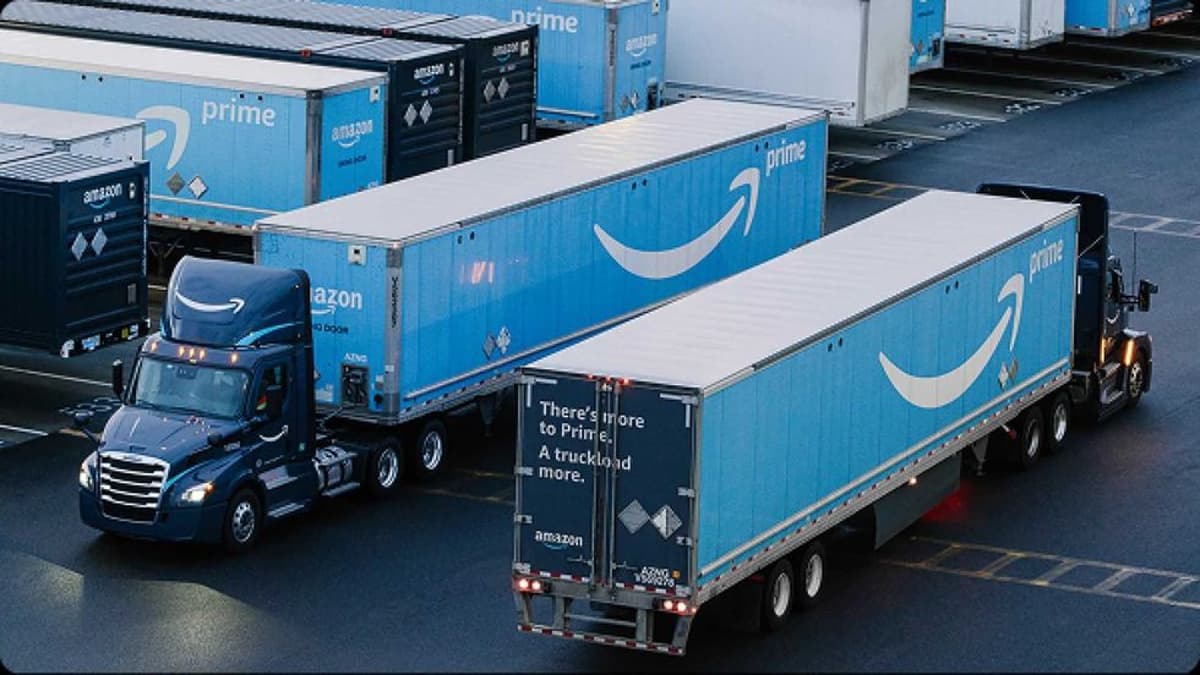
Amazon Opens Its LTL Trucking Service to All
Companies Mentioned


Why It Matters
By opening its LTL network to external customers, Amazon can monetize idle capacity and challenge established carriers, potentially reshaping the U.S. freight market.
Key Takeaways
- •Amazon's LTL service now open to any destination, not just its own
- •Fleet includes over 80,000 trailers and 24,000 intermodal containers
- •Pickups range from same‑day drop‑trailer to next‑day live service
- •Analysts see rapid market‑share growth despite early service‑level gaps
Pulse Analysis
Amazon’s decision to launch a full‑scale less‑than‑truckload (LTL) carrier marks the latest chapter in its aggressive push beyond retail. Until now the company confined LTL moves to inbound lanes feeding its fulfillment network, but the new Amazon Supply Chain Services (ASCS) arm opens the offering to any warehouse, distributor or retail partner. By leveraging its existing fleet of more than 80,000 trailers and 24,000 intermodal containers, Amazon can provide a nationwide footprint that rivals traditional LTL specialists. The move underscores the retailer’s ambition to become a one‑stop logistics platform for businesses of all sizes.
The service targets shipments of one to six pallets, roughly 150 to 15,000 pounds, and offers flexible pickup options. Shippers can schedule same‑day drop‑trailer pickups, next‑day live pickups for orders placed by 5 p.m., or arrange standing daily pickups for high‑volume users. These tiers aim to attract small and midsize manufacturers that previously relied on regional carriers, while giving larger enterprises a scalable alternative to legacy LTL providers such as XPO and Old Dominion. By bundling freight with Amazon’s broader fulfillment, distribution and parcel capabilities, the company creates a seamless end‑to‑end supply‑chain solution.
Analysts acknowledge that LTL currently represents a modest slice of Amazon’s massive logistics portfolio, yet they predict rapid market‑share gains. Morgan Stanley notes the retailer’s proven ability to scale transportation services through iterative models, suggesting Amazon could capture meaningful share even without best‑in‑class service levels at launch. Conversely, TD Cowen points to infrastructure gaps, such as limited cross‑dock capacity at many fulfillment centers, that could constrain growth. Continued investment in real‑estate and technology will be critical for Amazon to transition from a volume‑driven carrier to a competitive LTL player capable of challenging entrenched incumbents.
Amazon opens its LTL trucking service to all
Comments
Want to join the conversation?
Loading comments...