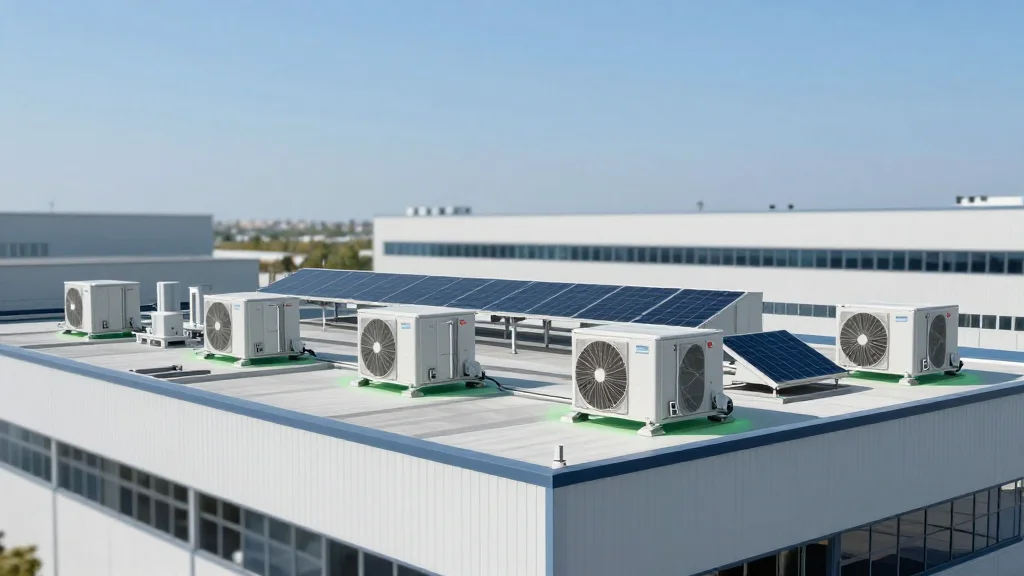
Amazon Teams with Transaera to Deploy Rooftop Heat‑Pump HVAC, Targeting 40% Energy Savings

Companies Mentioned
Why It Matters
Deploying high‑efficiency heat‑pump HVAC at Amazon’s fulfillment centers tackles two critical supply‑chain challenges: operating cost volatility and carbon intensity. Energy accounts for a sizable share of warehouse overhead, and a 40% reduction can improve margin resilience, especially as e‑commerce volumes surge. Moreover, Amazon’s climate‑pledge commitments set a benchmark that could pressure peers to adopt comparable technologies, accelerating industry‑wide decarbonization. The collaboration also strengthens U.S. advanced‑manufacturing in the HVAC sector, creating a domestic supply chain for next‑generation climate‑control components. This reduces reliance on imported equipment and aligns with broader policy goals to boost clean‑technology production at home.
Key Takeaways
- •Amazon and Transaera sign a multi‑year deal to install rooftop heat‑pump HVAC at logistics hubs
- •Six‑month trial demonstrated 40% energy savings versus conventional systems
- •Technology uses metal‑organic framework desiccants to separate dehumidification from cooling
- •Supports Amazon’s Climate Pledge goal of net‑zero emissions by 2040
- •HVAC accounts for over one‑third of commercial building energy use, offering sizable cost‑reduction potential
Pulse Analysis
Amazon’s move to embed Transaera’s heat‑pump technology reflects a broader shift where logistics firms treat energy efficiency as a core competitive lever rather than a peripheral sustainability add‑on. Historically, warehouse operators have focused on automation and real‑time inventory visibility to shave costs; now, the energy bill is emerging as an equally tractable margin driver. By locking in a domestic supplier, Amazon also mitigates supply‑chain risk associated with overseas component shortages, a lesson reinforced by recent semiconductor constraints.
The partnership could catalyze a cascade effect across the warehousing ecosystem. Smaller 3PLs and regional distributors, which often lack the capital to experiment with novel HVAC solutions, may be compelled to adopt similar systems to stay cost‑competitive, especially if Amazon publishes transparent savings data. This could spur a new market segment for high‑efficiency, desiccant‑based HVAC units, prompting incumbents like Carrier and Trane to accelerate their own R&D pipelines.
However, scaling MOF‑based technology presents challenges. Manufacturing MOFs at volume while maintaining performance consistency remains a nascent process, and any supply bottleneck could slow rollout. Additionally, the true carbon impact depends on the electricity grid mix at each site; regions powered by coal could see muted emissions benefits despite lower energy use. Monitoring these variables will be essential to validate the partnership’s long‑term sustainability claims.
Amazon Teams with Transaera to Deploy Rooftop Heat‑Pump HVAC, Targeting 40% Energy Savings
Comments
Want to join the conversation?
Loading comments...