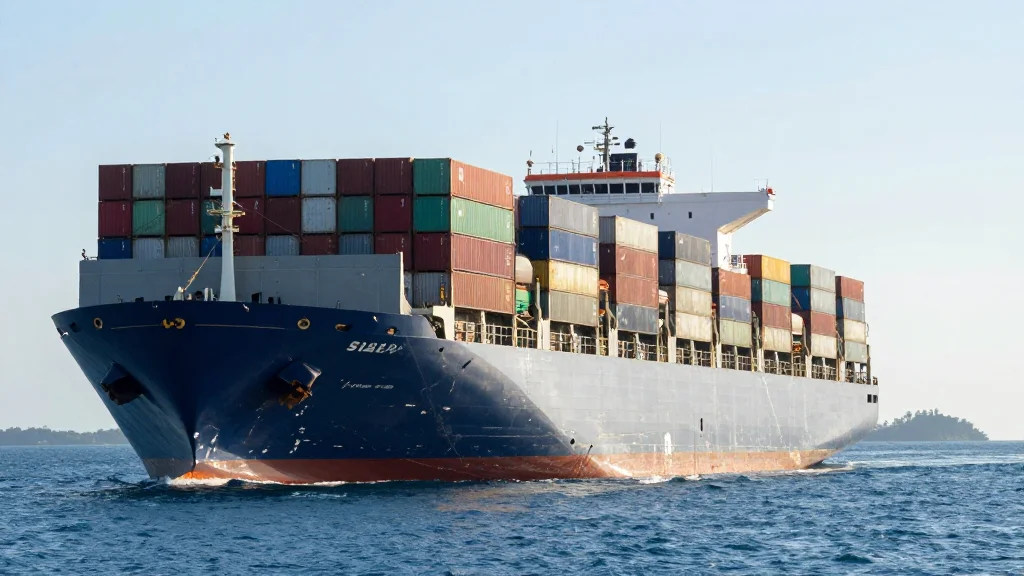
ASEAN Leaders Commit to Boost Intra‑Bloc Trade and Food Security Amid Global Shipping Disruptions

Why It Matters
The pact directly addresses the fragility of Southeast Asia’s supply chains, which have been exposed by recent maritime disruptions and soaring energy costs. By reducing reliance on external routes and streamlining trade procedures, ASEAN can stabilize food prices, protect smallholder livelihoods, and maintain the flow of essential inputs for manufacturing. The agreement also positions the region to capitalize on digital trade and green‑economy trends, fostering long‑term competitiveness. If ASEAN’s commitments translate into concrete infrastructure and policy actions, the bloc could become a model for regional supply‑chain resilience, offering a counterweight to the volatility of global logistics networks. Conversely, delayed implementation could leave member economies vulnerable to the same shocks that prompted the agreement, undermining food security and economic stability across the ten‑nation bloc.
Key Takeaways
- •ASEAN leaders, led by President Ferdinand Marcos Jr., pledged to intensify intra‑bloc trade at the 48th ASEAN Summit in Cebu.
- •Fast‑track ratification of the upgraded ATIGA, concluded in 2025, to slash non‑tariff barriers and add crisis‑response rules for essential goods.
- •Agreement aims to mitigate impacts of Middle‑East shipping disruptions that have raised freight, energy, and fertilizer costs.
- •Focus on supporting MSMEs in agriculture and investing in infrastructure to create more resilient, climate‑smart supply chains.
- •Follow‑up summit scheduled for early 2027 to review implementation and measure progress on trade‑facilitation targets.
Pulse Analysis
ASEAN’s new trade pact reflects a decisive shift from a passive reliance on global logistics to an active strategy of regional self‑sufficiency. Historically, the bloc has championed tariff reductions but struggled with non‑tariff barriers that erode the benefits of a single market. By targeting these hidden frictions, the upgraded ATIGA could unlock efficiency gains comparable to a 5‑10% reduction in logistics costs, according to past trade‑flow studies. The crisis‑response provisions are particularly noteworthy; they institutionalize a collective safety net that can prevent the kind of export bans that triggered food crises during the 2020 pandemic.
The timing aligns with a broader geopolitical recalibration. As the Red Sea and Suez Canal face recurring disruptions, supply‑chain managers worldwide are re‑evaluating risk exposure. ASEAN’s move to strengthen internal trade routes and digital customs platforms mirrors similar initiatives in the European Union’s Green Deal and the United States’ Resilient Supply Chain Act. If ASEAN can deliver on its infrastructure promises—especially in ports, rail links, and digital customs—regional firms could see a measurable boost in competitiveness, attracting foreign direct investment that has been hesitant due to supply‑chain uncertainty.
However, the pact’s success hinges on political will and coordinated execution across ten sovereign states with divergent economic priorities. Past attempts at deeper integration, such as the original ATIGA, faltered due to uneven implementation. The upcoming 2027 review will be a litmus test: robust progress could cement ASEAN’s role as a resilient trade hub, while lagging reforms may reinforce dependence on external shipping lanes, leaving the region exposed to future geopolitical shocks.
ASEAN Leaders Commit to Boost Intra‑Bloc Trade and Food Security Amid Global Shipping Disruptions
Comments
Want to join the conversation?
Loading comments...