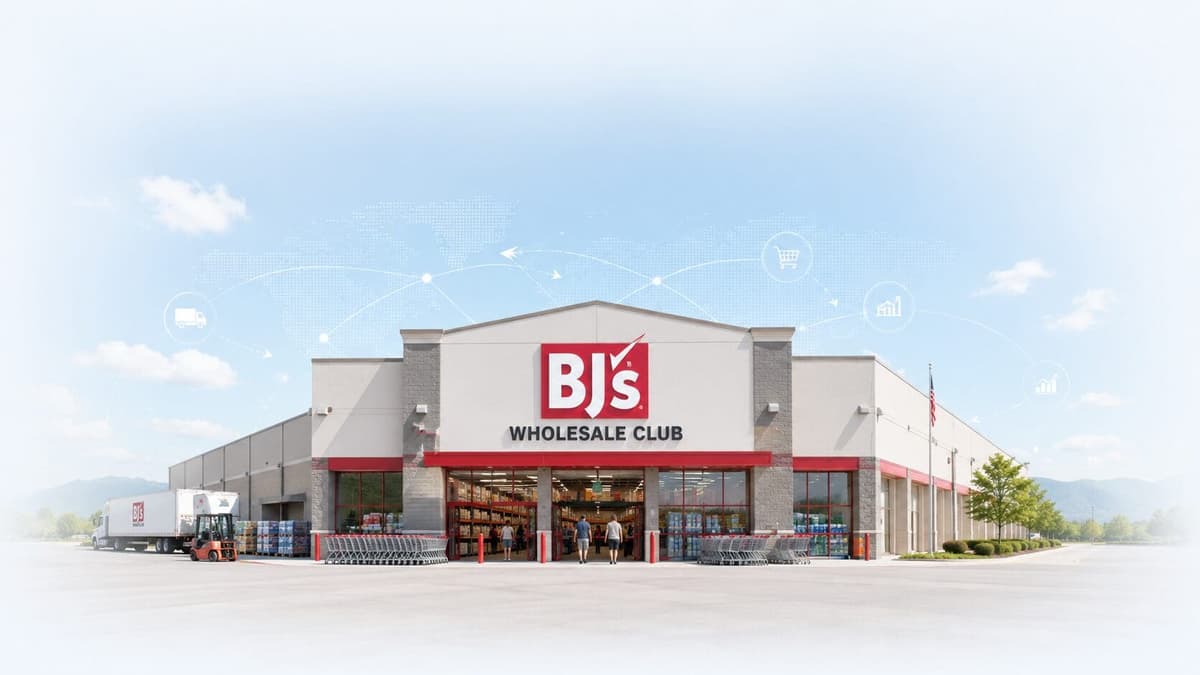
BJ’s Wholesale Club Shows How Warehouse-Club Supply Chains Are Evolving
Companies Mentioned
Why It Matters
Successfully marrying cost‑efficient warehouse‑club fundamentals with digital and fresh‑food services would validate the model against Costco, Sam’s Club and online grocers, reshaping the competitive landscape.
Key Takeaways
- •Direct buying and cross‑docking keep inventory turns high
- •Membership renewals fund price cuts and digital investments
- •Fresh‑food insourcing adds complexity but protects grocery frequency
- •Texas cluster tests regional density as growth engine
Pulse Analysis
The warehouse‑club format has long thrived on simplicity: limited SKUs, bulk purchasing, and cross‑docking that shave labor and inventory costs. BJ’s has honed this playbook, using direct manufacturer contracts and large truckload shipments to keep inventory turns fast and shelf‑space efficient. In an era where many retailers chase endless assortment, BJ’s disciplined approach demonstrates that a lean supply chain can still deliver compelling value, especially when paired with a high‑margin membership model.
Digital fulfillment and fresh‑food offerings are the new frontiers forcing BJ’s to evolve. Curbside pickup, same‑day delivery, and app‑based ordering demand precise inventory visibility and agile labor scheduling, while perishable categories require temperature‑controlled logistics and tighter forecasting. By acquiring refrigerated distribution centers and a private fleet, BJ’s internalizes the cold chain, turning a potential weakness into a strategic asset. Moreover, its rich membership data enables granular demand sensing, allowing the retailer to align replenishment with household buying patterns and reduce out‑of‑stock risk.
Geographic expansion into Texas illustrates the importance of regional density for supply‑chain economics. Concentrated club clusters lower transportation miles, streamline distribution node utilization, and amplify brand awareness. Yet the Lone Star market also pits BJ’s against entrenched players and aggressive online grocers, making operational excellence critical. If BJ’s can replicate its eastern‑U.S. efficiency while scaling digital and fresh‑food services, it offers a blueprint for other retailers seeking to balance low‑cost bulk models with the convenience expectations of today’s shoppers.
BJ’s Wholesale Club Shows How Warehouse-Club Supply Chains Are Evolving
Comments
Want to join the conversation?
Loading comments...