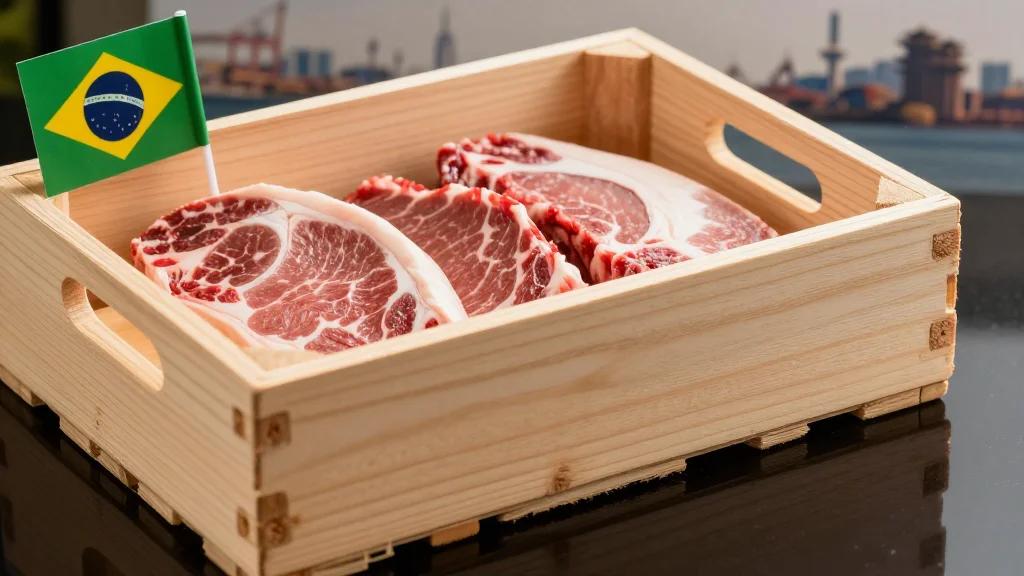
Brazil Nears Full Beef Quota to China, Threatening Export Shift

Why It Matters
Brazil accounts for roughly a third of global beef exports, and China is its single largest buyer. Hitting the quota not only curtails Brazil’s revenue stream but also reshapes global meat supply chains, potentially lowering prices for consumers outside China while tightening supply for markets that rely on Brazilian beef. The situation also tests the resilience of Brazil’s slaughter and logistics infrastructure, which must adapt to a sudden reallocation of cargoes. A prolonged quota‑induced slowdown could accelerate Brazil’s search for new trade agreements, influencing diplomatic negotiations with the United States, Japan, and other meat‑importing nations. The outcome will affect commodity traders, shipping firms, and downstream processors who must recalibrate inventory and pricing strategies in response to shifting volumes.
Key Takeaways
- •Brazil has shipped 510,000 tons of beef to China in Q1 2026, about 46% of the annual quota.
- •Quota fulfillment is expected by mid‑June, with 65% of the limit already reached by April.
- •A 55% tariff applies to any beef volume exceeding the quota, threatening a halt in shipments.
- •Analysts warn of a possible 10% drop in Brazil’s total beef exports if new markets aren’t secured.
- •Japan is being courted as an alternative destination, but regulatory clearance remains pending.
Pulse Analysis
The rapid approach to China’s beef quota underscores a structural vulnerability in Brazil’s export model: heavy reliance on a single, policy‑driven market. Historically, Brazil has leveraged its low‑cost production and expansive cattle base to dominate global beef trade, but the 2026 quota illustrates how geopolitical levers can abruptly reshape demand. The 55% tariff acts as a de‑facto barrier, effectively capping Brazil’s market share in China and forcing a strategic pivot.
From a logistics perspective, the 60‑day lead time from slaughter to port arrival compresses the decision window for exporters. Shipping lines, cold‑chain providers, and port operators must now scramble to re‑route cargoes, likely incurring higher freight rates and storage costs. This operational shock could spill over into other commodities that share the same transport corridors, amplifying congestion and price volatility.
Looking ahead, Brazil’s ability to secure alternative markets will hinge on regulatory agility and branding. Japan’s recent sanitary visits suggest a willingness to diversify, yet the approval process could take months, leaving a gap that may be filled by other South American producers or even domestic Chinese supply. For investors, the quota’s impact on Brazil’s beef exporters may translate into earnings volatility, prompting a re‑evaluation of exposure to companies like JBS and Marfrig. The broader lesson for the supply‑chain sector is the importance of multi‑market diversification to mitigate policy‑driven demand shocks.
Brazil Nears Full Beef Quota to China, Threatening Export Shift
Comments
Want to join the conversation?
Loading comments...