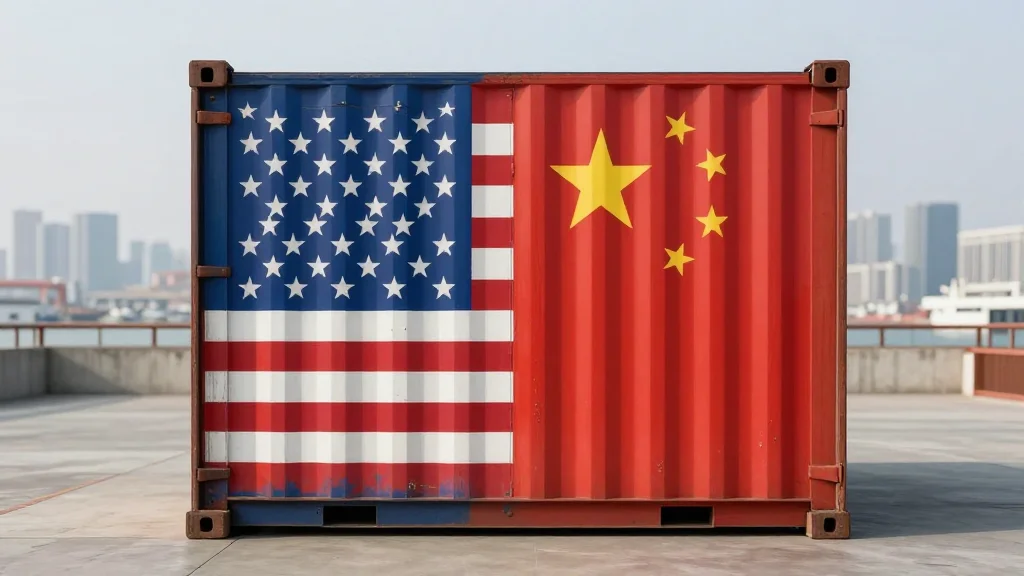
China's New Trade Rules Heighten Supply‑Chain Pressure on U.S. Firms

Why It Matters
The new Chinese trade rules arrive at a moment when U.S. firms are actively seeking to reduce dependence on Beijing for critical components. By introducing legal uncertainty, the regulations threaten to raise costs, delay shipments, and force strategic realignments across multiple industries. For policymakers, the rules test the resilience of existing trade agreements and may compel a recalibration of diplomatic tactics ahead of the May summit. For investors and supply‑chain executives, the development signals a heightened risk environment that could accelerate capital allocation toward diversification, automation, and domestic manufacturing. The ripple effects are likely to be felt in commodity pricing, logistics contracts, and the broader competitive landscape between China and emerging manufacturing hubs.
Key Takeaways
- •Beijing announced new trade regulations this month, targeting firms deemed to threaten Chinese sovereignty.
- •The rules were unveiled weeks before the May 14‑15 Trump‑Xi summit, adding diplomatic weight to the policy shift.
- •U.S. officials have not issued a public statement, indicating a potentially strategic silence ahead of talks.
- •62% of U.S. manufacturers are now evaluating reshoring or nearshoring options within the next year, according to a Global Supply Chain Institute survey.
- •Analysts warn the measures could increase compliance costs and widen price gaps between China and alternative sourcing regions.
Pulse Analysis
China’s latest regulatory push reflects a broader strategy of using trade policy as a bargaining chip in high‑level diplomatic negotiations. By embedding sovereignty language into commercial rules, Beijing signals that economic leverage will be tied to geopolitical objectives, a pattern that mirrors earlier technology export controls. For U.S. supply‑chain planners, the immediate challenge is to quantify the exposure: how many product lines rely on Chinese inputs that could be subject to punitive action, and what are the cost differentials of shifting to Vietnam, India, or Mexico?
Historically, abrupt policy changes have prompted firms to diversify, but the speed and scale of today’s global networks make rapid re‑routing costly. Companies that have already invested in multi‑sourcing or built flexible logistics platforms will likely weather the shock better than those with single‑source dependencies. This creates a competitive advantage for firms that have embraced digital twin modeling and scenario planning, tools that can simulate the impact of tariff spikes or legal penalties in real time.
Looking ahead, the May summit will be a litmus test for whether the United States will respond with counter‑measures, such as tightening export controls on critical technologies, or whether both sides will seek a tacit understanding to avoid a trade escalation. The outcome will shape capital flows into supply‑chain resiliency projects for the next two to three years, influencing everything from warehouse automation investments to the rise of regional trade agreements that aim to bypass the friction point entirely.
China's New Trade Rules Heighten Supply‑Chain Pressure on U.S. Firms
Comments
Want to join the conversation?
Loading comments...