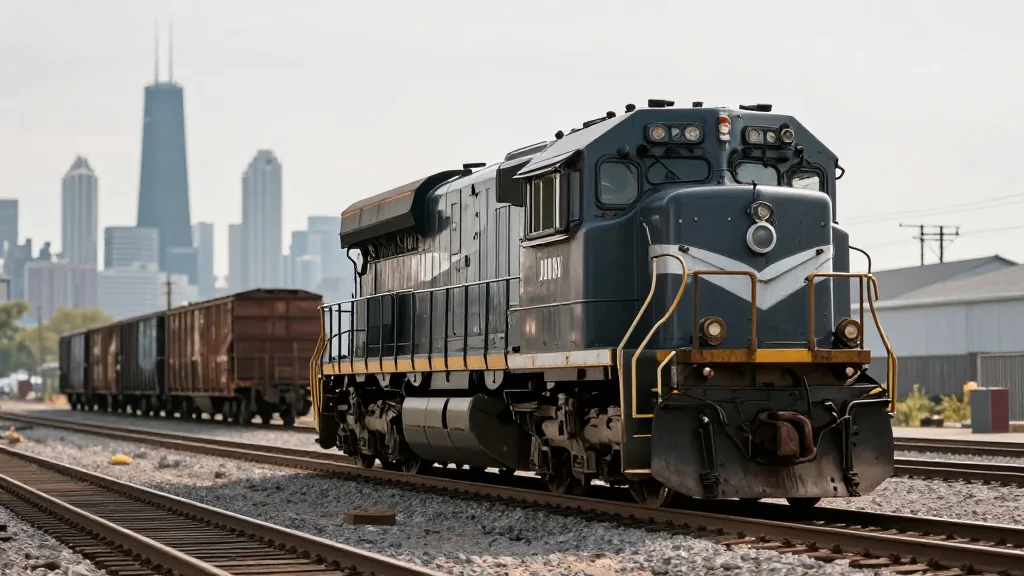
CSX Curtails Operations at Its Major Yard in Chicago
Companies Mentioned
Why It Matters
The shift reshapes Chicago’s rail network, aiming for faster, more reliable service while sparking labor disputes that could affect future rail‑yard collaborations.
Key Takeaways
- •Barr Yard inventory fell from ~1,500 to 228 cars in a week
- •CSX shifted switching to Belt Railway of Chicago and Indiana Harbor Belt
- •Transfer job to CN's Kirk Yard cut; road freights bypass Barr
- •Merchandise trains M326/M327 discontinued, traffic rerouted via Garrett, Toledo, Detroit
- •Union alleges unfair labor practice, citing contract right to perform all switching
Pulse Analysis
CSX’s decision to curtail operations at Barr Yard reflects a broader industry push to streamline congested rail hubs. Barr Yard, once a top‑10 CSX terminal by volume, handled up to 1,800 cars daily, but recent figures show a dramatic drop to just 228. By outsourcing switching to the Belt Railway of Chicago and Indiana Harbor Belt, CSX hopes to eliminate redundant processing steps, shorten dwell times, and improve overall network fluidity. The move aligns with the carrier’s stated goal of delivering more reliable service to shippers navigating the densely packed Chicago corridor.
The operational shift has immediate logistical consequences. Eliminating the daily transfer to Canadian National’s Kirk Yard forces road‑freight trains to bypass Barr entirely, while the suspension of merchandise pair M326/M327 redirects traffic through alternate routes in Garrett, Indiana; Toledo, Ohio; and Detroit, Michigan. These changes reduce the need for on‑site classification but increase reliance on partner railroads’ capacity. For customers, the re‑routing may initially cause longer mileage but promises steadier transit times as bottlenecks at the former choke point are eased.
Labor relations add a complex layer to the transition. The SMART‑TD union argues that outsourcing switching violates the B&OCT contract, which guarantees union members the right to perform all Chicago terminal switching. The dispute underscores a tension between efficiency‑driven network redesigns and entrenched labor agreements. As railroads nationwide explore similar partnerships to cope with growing freight volumes, the outcome of CSX’s Barr Yard overhaul could set a precedent for how carriers balance operational gains with workforce considerations.
CSX curtails operations at its major yard in Chicago
Comments
Want to join the conversation?
Loading comments...