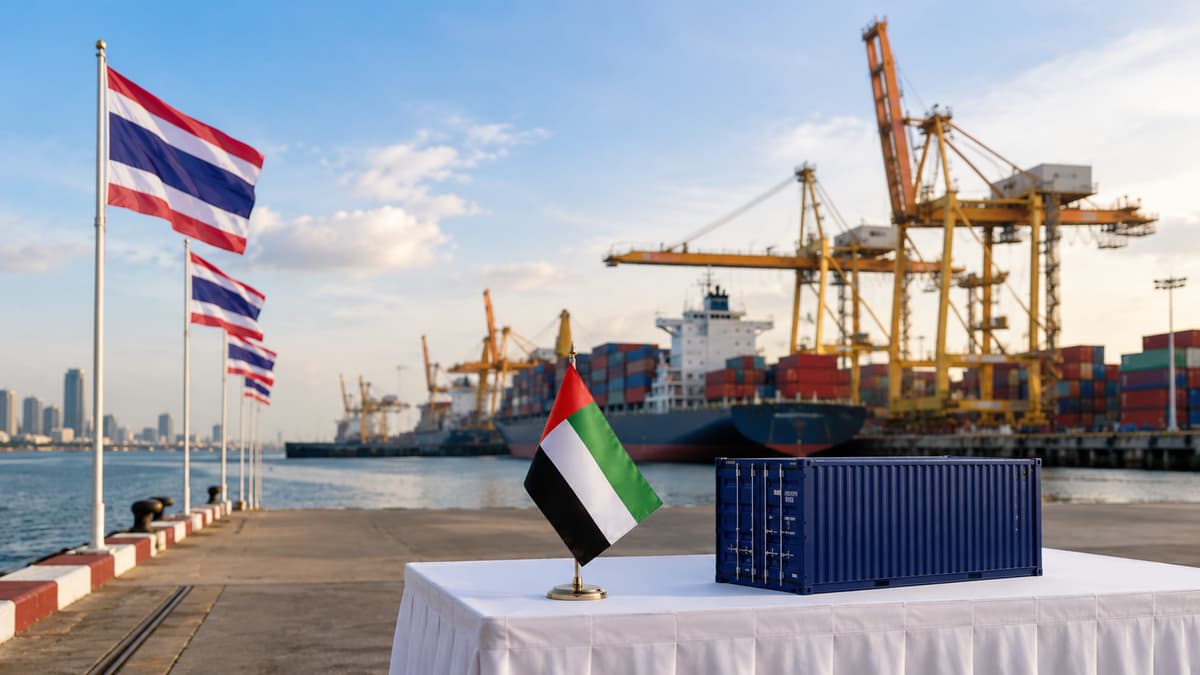
DP World’s Thailand Play and the Eastward Extension of Emirati Port Doctrine
Key Takeaways
- •DP World secures a joint‑venture for a new Thai container terminal
- •Thai manufacturing output projected to grow 6% annually through 2030
- •Emirati port doctrine now targets eastward logistics corridors
- •DP World’s Thailand entry diversifies its revenue beyond Middle East
- •Supply‑chain migration fuels demand for alternative trans‑Pacific hubs
Pulse Analysis
DP World’s Thailand venture reflects a calculated evolution of Abu Dhabi’s port empire, which has traditionally focused on the Middle East, Africa and Europe. Leveraging its expertise in terminal operations and digital trade platforms, the company is now transplanting that model into a market where infrastructure gaps meet soaring demand. Thailand’s strategic location—bordering the Mekong corridor and offering deep‑water ports—makes it an attractive anchor for manufacturers relocating from China to lower‑cost Southeast Asian sites. By embedding itself early, DP World positions to capture a growing share of container traffic destined for the region’s expanding automotive, electronics, and textile sectors.
The Thai logistics landscape is undergoing rapid transformation, driven by government incentives that aim to double the nation’s manufacturing output by 2030. Recent data shows a 6% annual increase in factory output, outpacing many regional peers. DP World’s planned terminal, slated for a capacity of 1.5 million TEUs, will alleviate congestion at existing ports and provide integrated services such as automated handling and real‑time freight visibility. This infrastructure boost is expected to reduce dwell times by up to 20%, a critical advantage for time‑sensitive supply chains seeking to replace longer, costlier routes through China’s congested hubs.
For the broader shipping ecosystem, DP World’s eastward expansion signals a shift in competitive dynamics. Traditional players like PSA and APM Terminals will now contend with a well‑capitalized Emirati entrant that brings a suite of value‑added services and a global network of alliances. The move also underscores the accelerating diversification of global trade routes, as shippers hedge against geopolitical risk and seek resilience through multiple gateways. As Southeast Asia cements its role as the next manufacturing powerhouse, DP World’s Thai foothold could become a pivotal node in the re‑balanced supply‑chain architecture of the 2020s.
DP World’s Thailand play and the eastward extension of Emirati port doctrine
Comments
Want to join the conversation?