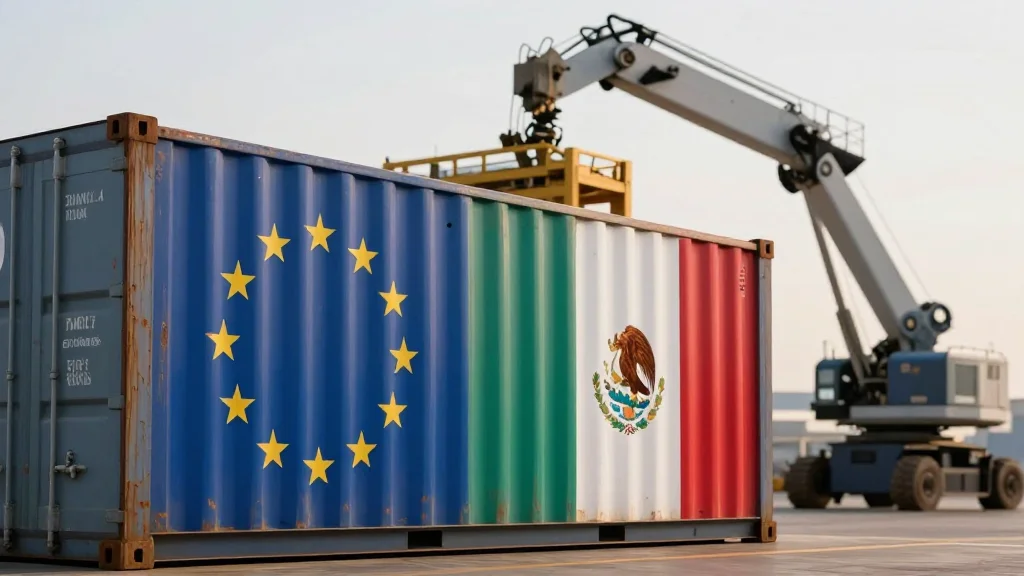
EU-Mexico Modernized Trade Deal Adds $5 B Investment, Cuts Tariffs, Shifts Supply Chains

Why It Matters
The EU‑Mexico agreement reshapes global supply‑chain dynamics by lowering trade barriers and injecting billions of euros into infrastructure and digitalisation projects. For European manufacturers, cheaper agricultural inputs and streamlined digital services reduce production costs and improve resilience. For Mexican firms, the opening of European procurement markets offers growth opportunities but also forces them to upgrade technology and efficiency to compete with larger, better‑capitalised rivals. The deal also serves as a strategic counterweight to U.S. protectionist trends, potentially redirecting investment flows toward Europe‑Mexico corridors and influencing how multinational supply chains are configured in the coming decade. Beyond immediate cost savings, the pact embeds standards on sustainability, data protection and public procurement that could become benchmarks for other trade agreements. If the EU’s $5 billion investment catalyses further private capital, Mexico could see accelerated upgrades to ports, rail links and renewable‑energy grids, strengthening its role as a manufacturing hub for North‑American and European markets. The long‑term impact will hinge on how quickly both sides operationalise the treaty’s provisions and whether the anticipated investment materialises as planned.
Key Takeaways
- •EU and Mexico sign modernized free‑trade agreement with $5 bn investment pledge
- •Tariffs on virtually all Mexican agricultural exports eliminated, saving Mexican exporters up to €100 m annually
- •Bilateral trade reached €86 bn ($93 bn) last year, with a €19 bn ($21 bn) surplus for the EU
- •EU becomes second‑largest foreign investor in Mexico, with a stock of €206 bn ($222 bn)
- •Digital‑trade and public‑procurement chapters open new avenues for supply‑chain visibility and services
Pulse Analysis
The EU‑Mexico modernization is less a routine trade update and more a strategic re‑balancing of supply‑chain power. By coupling tariff cuts with a sizable investment package, Brussels is effectively buying influence over the logistics and digital infrastructure that underpins cross‑border flows. This mirrors the EU’s broader Global Gateway agenda, which seeks to lock in partners through project finance rather than pure market access. For supply‑chain managers, the immediate benefit is lower input costs and smoother customs procedures, but the deeper shift is the creation of a more integrated, technology‑enabled corridor that could rival the U.S.‑Mexico axis.
Historically, the EU’s trade relationship with Mexico has been skewed toward high‑value, capital‑intensive goods, leaving Mexican firms dependent on assembly and raw‑material exports. The new digital‑trade provisions aim to close that gap by allowing European cloud and fintech firms to embed services directly into Mexican supply‑chain platforms, potentially accelerating the adoption of Industry 4.0 technologies. If the $5 bn investment is deployed efficiently—targeting ports, rail links and renewable‑energy grids—it could reduce transit times and lower carbon footprints, giving European manufacturers a greener, faster route to North‑American markets.
Nevertheless, the agreement also raises competitive pressures. Mexican SMEs will now face European incumbents with deep pockets and advanced R&D, especially in sectors like automotive components and specialty chemicals. The success of the pact will depend on Mexico’s ability to upgrade its regulatory environment, protect strategic industries and leverage the influx of capital to build home‑grown capabilities. In the short term, supply‑chain planners should map the new tariff landscape, reassess sourcing strategies, and engage with EU‑based partners early to capture the first wave of digital‑trade benefits.
EU-Mexico Modernized Trade Deal Adds $5 B Investment, Cuts Tariffs, Shifts Supply Chains
Comments
Want to join the conversation?
Loading comments...