Examining Opportunities and Obstacles Facing Central Asia’s Quest to Reach Sea
Why It Matters
Diversifying energy and trade routes away from the Hormuz choke point could reshape global markets, while successful Afghan integration would unlock Central Asia’s mineral and energy potential.
Key Takeaways
- •Afghanistan is seen as critical “gorilla in the room” for S7+ connectivity
- •Taliban’s ties to militants and Pakistan conflict hinder pipeline and rail projects
- •Uzbekistan‑Afghanistan trade already $1.5 bn, indicating growing economic links
- •Experts urge U.S. to let Central Asian states manage Afghanistan relations
- •S7+ aims to forge a Central Asian bloc with a seaport outlet
Pulse Analysis
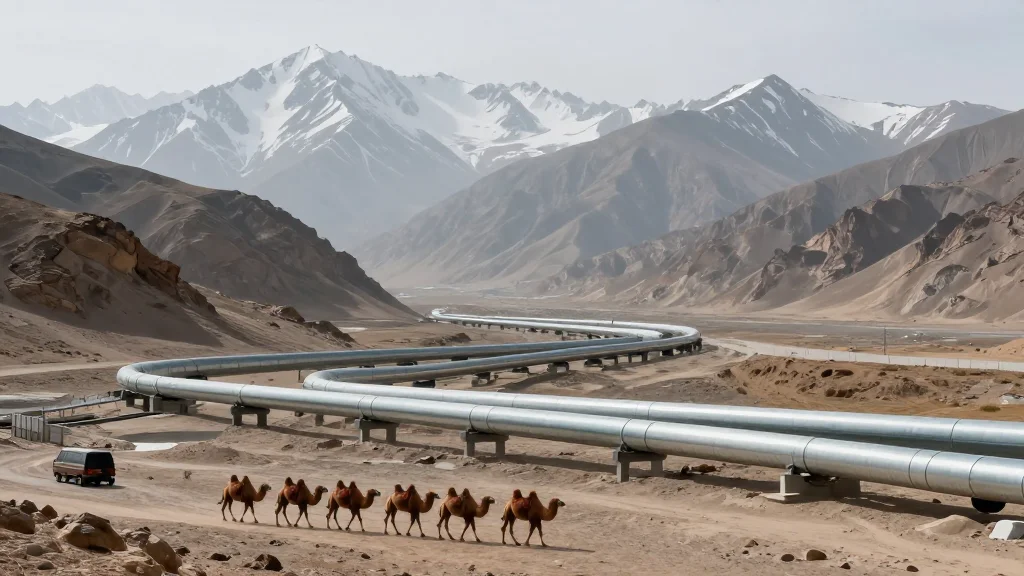
The escalating standoff in the Strait of Hormuz has forced policymakers to reconsider the logistics of oil and commodity flows from the Middle East. Central Asia’s Silk Seven Plus (S7+) concept offers a strategic alternative: a land‑based corridor that would connect the resource‑rich Caspian region to the Arabian Sea, reducing reliance on vulnerable maritime chokepoints. Afghanistan sits at the heart of this vision, providing a geographic bridge between Turkmen gas fields and South Asian demand, but its political volatility makes the route a high‑risk proposition.
Infrastructure planners face a tangled web of challenges. The Taliban’s tolerance of radical groups, ongoing disputes with Pakistan, and lingering resentment from two decades of foreign military presence complicate any large‑scale construction effort. Nevertheless, tangible progress is emerging; Uzbekistan’s annual trade with Afghanistan has reached roughly $1.5 billion, and preliminary designs for a trans‑Afghan natural‑gas pipeline linking Turkmenistan to Pakistan and India are advancing. These developments suggest that, despite security concerns, economic incentives are beginning to outweigh political hesitations.
For investors and governments, the S7+ initiative represents both an opportunity and a litmus test for regional cooperation. Successful integration could unlock access to Central Asia’s critical mineral deposits and diversify global energy supply chains, enhancing market stability. Conversely, failure to reconcile Taliban‑Pakistan tensions or to secure safe passage for pipelines and rail lines could cement the status quo, keeping the Hormuz corridor as the primary conduit for energy trade. As the United States adopts a hands‑off stance, the onus now lies on Central Asian capitals to navigate these complexities and determine whether the S7+ vision can transition from ideology to reality.
Examining opportunities and obstacles facing Central Asia’s quest to reach sea
Comments
Want to join the conversation?
Loading comments...