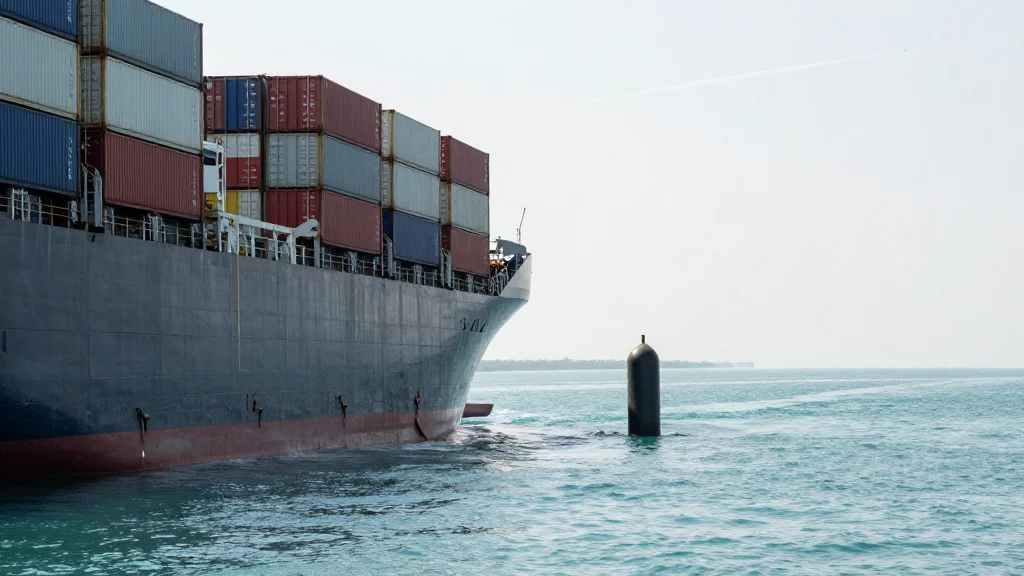
Hormuz War Risk Premiums Surge 4,000-Fold
Why It Matters
The premium spike threatens to inflate global shipping costs, pressuring commodity prices and testing insurers' capacity to cover high‑risk maritime corridors. It also forces supply‑chain managers to reconsider routing strategies and risk‑mitigation budgets.
Key Takeaways
- •Premiums jumped from $50 to $200,000 per voyage
- •Insurers cite heightened geopolitical volatility in Persian Gulf
- •Shipping firms face cost spikes, may reroute around Africa
- •Reinsurance capacity tightening as demand outpaces supply
- •Global oil prices could rise due to slower transit times
Pulse Analysis
The Strait of Hormuz, a chokepoint that carries roughly a fifth of the world’s oil, has become a flashpoint for war‑risk underwriting. After a series of missile launches and naval confrontations, insurers reassessed the probability of loss, translating uncertainty into astronomical premium rates. This rapid repricing mirrors historical patterns where geopolitical shocks force the marine insurance market to recalibrate, but the magnitude—four thousand‑fold—signals an unprecedented risk perception among underwriters.
For carriers, the immediate impact is a steep increase in voyage expenses, eroding profit margins on routes that were previously cost‑effective. Some operators are evaluating longer detours around the Cape of Good Hope, despite added fuel consumption and transit time, to avoid the premium shock. Meanwhile, reinsurers are tightening capacity, demanding higher ceding commissions and imposing stricter terms, which could constrain the availability of coverage for smaller shippers and increase the overall cost of risk transfer across the maritime sector.
Looking ahead, the premium surge may stabilize only if diplomatic channels de‑escalate tensions or if alternative risk‑sharing mechanisms, such as parametric war‑risk pools, gain traction. In the short term, market participants are likely to hedge exposure through diversified routing and cargo insurance structures. The episode underscores the broader lesson that geopolitical volatility can swiftly translate into financial risk for global trade, prompting insurers and logistics firms to embed geopolitical scenario analysis into their strategic planning.
Hormuz war risk premiums surge 4,000-fold
Comments
Want to join the conversation?
Loading comments...