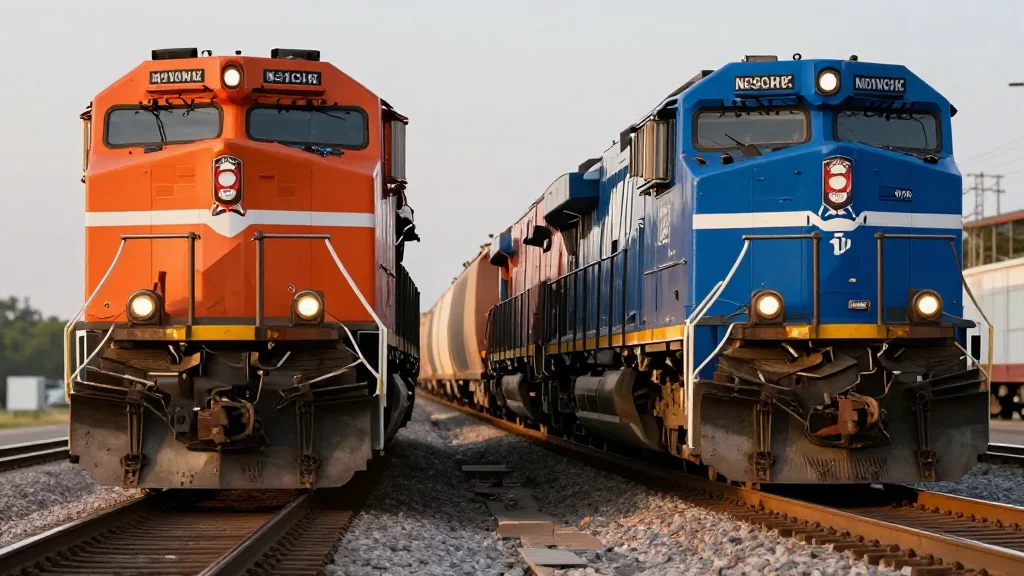
How Rail Mega-Merger Moved Ahead, and STB Avoided Making History
Companies Mentioned
Why It Matters
Creating the first transcontinental railroad would reshape U.S. freight logistics and concentrate market power among the nation’s two largest Class I carriers. The STB’s conditional acceptance signals a rigorous, data‑driven review that could set new precedents for future rail consolidations.
Key Takeaways
- •STB asked UP and NS for more data, deadline July 27.
- •Market lost roughly $7.5 billion in cap‑value after STB decision.
- •Deal valued at $85 billion, aiming to form first transcontinental railroad.
- •Potential divestiture of 15,000 miles of NS track remains unconfirmed.
- •Regulators gathered 120 million data points and hired MIT specialists.
Pulse Analysis
The UP‑NS merger represents a watershed moment for the U.S. rail industry, promising a single network that spans the continent from coast to coast. By uniting Union Pacific’s extensive western routes with Norfolk Southern’s eastern corridors, the combined entity could streamline intermodal connections, reduce transit times, and leverage economies of scale. However, the sheer size of the $85 billion transaction raises antitrust concerns, prompting the Surface Transportation Board to adopt an unprecedented level of scrutiny. The board’s request for additional data—covering traffic volumes, competitive impacts, and infrastructure plans—signals a shift toward evidence‑based decision‑making that could reshape how future rail consolidations are evaluated.
Market participants reacted instantly, wiping out about $7.5 billion in market capitalization as investors weighed the uncertainty of a prolonged review. While the STB’s conditional acceptance avoids the shock of a second outright rejection, it also prolongs the timeline, delaying potential synergies and cost savings that the merger promises. Stakeholders—from shippers to short‑line operators—are watching closely for clues about possible divestitures, such as the rumored 15,000‑mile track carve‑out that could reshape regional rail landscapes. The outcome will influence freight rates, service reliability, and the competitive dynamics among the remaining Class I carriers.
Beyond the immediate financial implications, the merger’s trajectory will likely set a regulatory benchmark for the transportation sector. The STB’s deployment of 120 million data points and collaboration with MIT analysts underscores a new era of data‑intensive oversight. If approved, the deal could accelerate consolidation trends across logistics, prompting other carriers to consider similar scale‑up strategies. Conversely, a stringent conditional approval or eventual denial could reinforce antitrust barriers, preserving a more fragmented rail market. Either scenario will reverberate through supply chains, affecting everything from agricultural exports to e‑commerce deliveries across the United States.
How rail mega-merger moved ahead, and STB avoided making history
Comments
Want to join the conversation?
Loading comments...