How Should Apparel Warehouses Handle High-Volume Returns More Efficiently?
Companies Mentioned
Why It Matters
By converting return bottlenecks into a continuous, automated flow, brands boost fulfillment speed, reduce labor costs, and free up space—critical advantages in the fast‑moving apparel market.
Key Takeaways
- •ANTA processes 70% of returns at night using HaiPick.
- •JNBY boosted inbound speed from 50 to 5,000 items per hour.
- •HaiPick Climb reaches 45 totes per square metre storage density.
- •Bosideng reduced inventory turnover days by 50% with unified stock.
- •Robots dynamically shift between inbound, storage, and picking workloads.
Pulse Analysis
The apparel sector has long grappled with return volatility, where seasonal promotions generate sudden influxes of mixed‑SKU items that overwhelm traditional pick‑and‑pack lines. Manual sorting and fixed‑shift staffing create bottlenecks, extending dwell time and inflating labor expenses. As e‑commerce orders become increasingly single‑item focused, the need for rapid, accurate reverse‑logistics grows, pushing warehouses to seek technology that can absorb spikes without sacrificing outbound throughput.
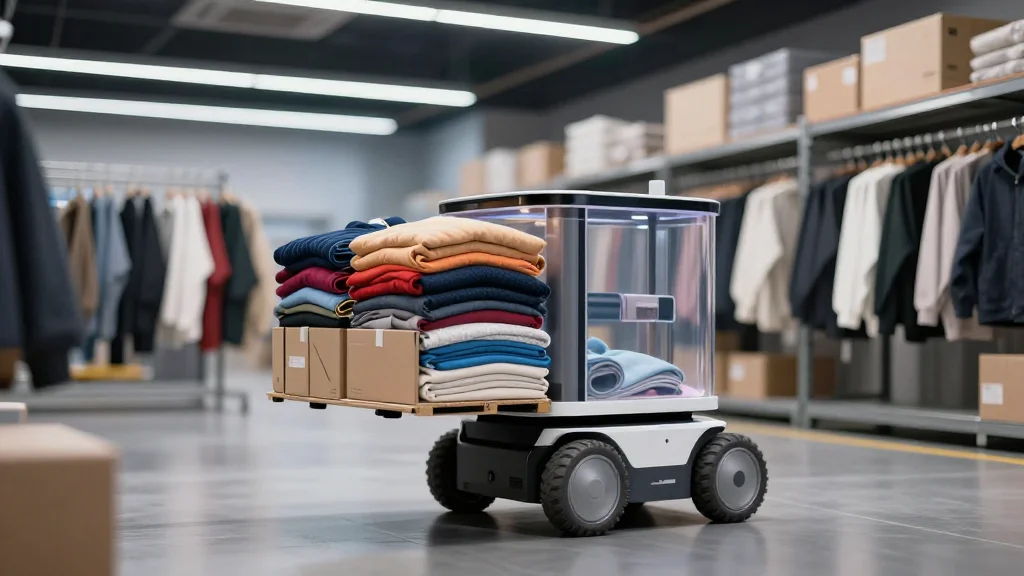
HaiPick Systems addresses these challenges by decoupling return processing from rigid shift schedules. Robots and workstations operate 24/7, moving large volumes of returns into the warehouse during nighttime while daytime crews concentrate on order fulfillment. The platform’s flexible putaway allows mixed SKUs to share containers, eliminating the pre‑sorting step that slows inbound flow. Real‑world results—such as JNBY’s rise from 50 to 5,000 items per hour and ANTA’s 70% nighttime processing—demonstrate how automation can turn a chaotic influx into a steady, high‑throughput stream.
Beyond speed, HaiPick enhances storage efficiency and inventory agility. Vertical storage solutions like HaiPick Climb achieve up to 45 totes per square metre, maximizing footprint without costly expansion. Faster induction reduces dwell time, and continuous inventory rebalancing positions high‑demand SKUs for rapid picking. Bosideng’s 50% reduction in turnover days illustrates the broader financial impact: lower holding costs, improved cash flow, and a more responsive supply chain. For apparel brands competing on speed and flexibility, integrating such robotic reverse‑logistics is becoming a strategic imperative.
How Should Apparel Warehouses Handle High-Volume Returns More Efficiently?
Comments
Want to join the conversation?
Loading comments...