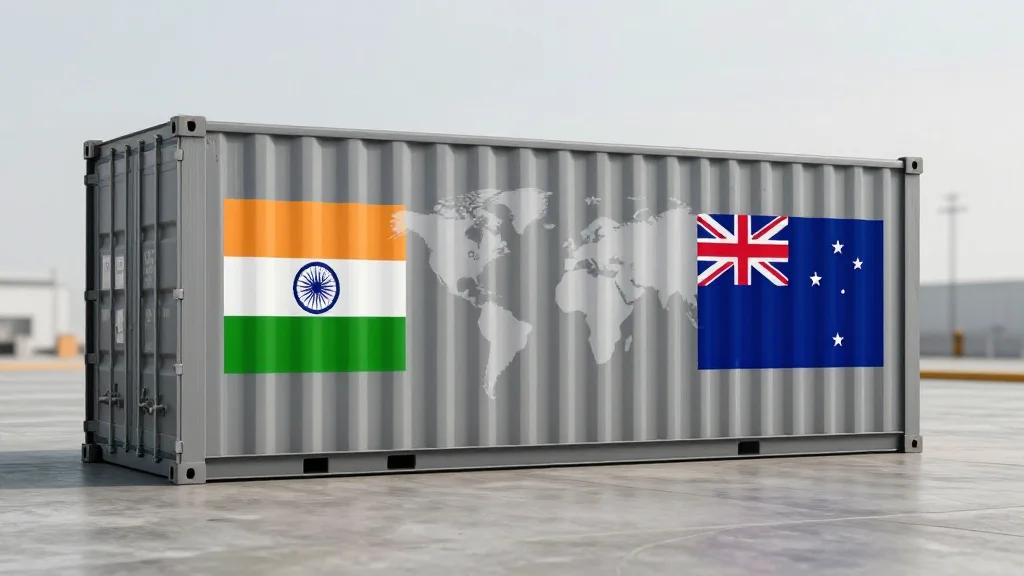
India and New Zealand Sign Free Trade Deal, Unlocking $20 Bn Investment and Full Duty‑Free Access

Why It Matters
The India‑New Zealand FTA reshapes supply‑chain dynamics across the Indo‑Pacific by linking a $1.4 billion consumer market with a high‑tech, resource‑rich economy. Full duty‑free access lowers landed costs, making Indian manufactured goods more price‑competitive in New Zealand and, by extension, in downstream markets that re‑export to Oceania and Southeast Asia. The deal also signals India’s willingness to craft balanced FTAs with developed economies, a model that could influence future negotiations with the EU, UK and other partners. For businesses, the agreement offers a clearer rulebook for origin‑criteria, reduces compliance overhead, and opens new sourcing channels for raw materials such as wood logs and ferrous scrap. At the same time, the protection of dairy and other farm products underscores the political sensitivity of food‑supply chains, reminding firms that tariff liberalisation can be selective and contingent on domestic stakeholder pressure.
Key Takeaways
- •India‑New Zealand FTA signed April 27, 2026, granting 100% duty‑free access for Indian exports
- •Deal promises up to $20 billion in investment facilitation and zero‑duty access for gems worth $50 million in three years
- •India liberalises 70.03% of tariff lines (≈95% of trade value) while protecting 29.97% of lines, notably dairy
- •Bilateral merchandise trade reached $1.3 billion in FY 2024/25; trade surplus fell to $9.4 million in FY 2026
- •Export CAGR 13% (FY 2022‑25) and import CAGR 16% highlight rapid growth in bilateral trade
Pulse Analysis
The India‑New Zealand FTA arrives at a moment when global supply chains are under pressure from geopolitical tensions and rising logistics costs. By securing duty‑free market entry for a broad swath of Indian goods, the pact offers a hedge against the volatility that has plagued maritime routes through the Middle East. Companies that can quickly certify products and navigate the new rules of origin will capture early market share, especially in high‑margin sectors like pharmaceuticals and premium textiles.
Historically, India’s FTAs with developed economies have been hamstrung by agricultural sensitivities. This agreement’s selective protection of dairy—while opening most other lines—represents a calibrated approach that could become a template for future deals. If the promised $20 billion in investment flows materialise, we may see a wave of joint ventures in renewable energy, agritech and digital services, further integrating the two economies’ supply chains. The real test will be the speed of ratification and the effectiveness of on‑ground support mechanisms for MSMEs, which have traditionally lagged behind large exporters in leveraging trade agreements.
In the longer view, the pact could shift regional trade patterns. New Zealand’s access to Indian raw materials may reduce its reliance on traditional suppliers like Australia, while Indian firms gain a foothold in the Pacific market, potentially using New Zealand as a springboard to Australia and Southeast Asia. The FTA thus not only expands bilateral trade volumes but also reconfigures the flow of goods, services and investment across a strategically important corridor.
India and New Zealand Sign Free Trade Deal, Unlocking $20 bn Investment and Full Duty‑Free Access
Comments
Want to join the conversation?
Loading comments...