India's JNPA Implements Rail Evacuations as Hormuz Uncertainty Reshapes West Asian Shipping

Companies Mentioned
Why It Matters
The JNPA’s rapid response illustrates how national ports can mitigate geopolitical bottlenecks through multimodal logistics, preserving trade flows for a region that handles a sizable share of global container traffic. Simultaneously, the prospect of a managed Strait of Hormuz threatens to fragment maritime trade, forcing shippers to navigate a politically tiered waterway that could raise costs, increase compliance burdens, and reshape oil price dynamics. For airlines and freight forwarders, the combined effect of port congestion and restricted air routes amplifies the need for diversified routing strategies and real‑time risk management. The actions taken now will set precedents for how supply‑chain actors respond to future flashpoints in geopolitically sensitive corridors.
Key Takeaways
- •JNPA introduced rail evacuation, waived handling fees and created green channels for empty trailers to ease Gulf‑bound cargo congestion.
- •Union Ministers Piyush Goyal and Sarbananda Sonowal led a high‑level meeting with EXIM stakeholders to coordinate a whole‑of‑government response.
- •Shipping executives, quoted by Richard Meade, are discussing a managed Strait of Hormuz under Iranian control, with over 50% of participants open to an Iranian transit toll.
- •Akasa Air suspended routes to Riyadh, Doha and Kuwait, representing roughly 15% of its West Asian operations, but maintained full service to Abu Dhabi and Jeddah.
- •China‑affiliated vessels accounted for about half of successful Hormuz passages this week, indicating a shift toward politically aligned shipping corridors.
Pulse Analysis
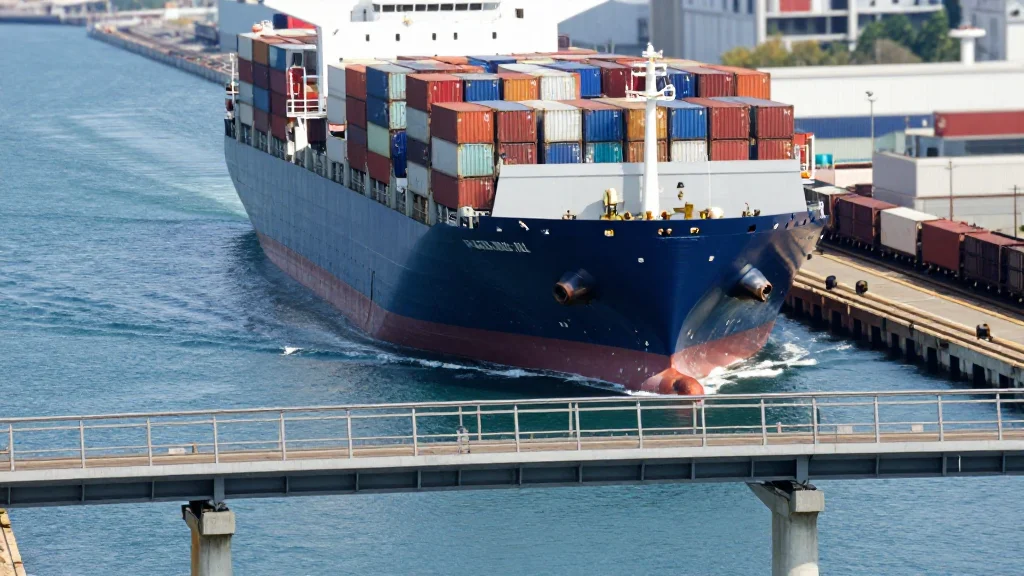
India’s proactive logistics play at JNPA reflects a broader trend of port authorities leveraging rail intermodal capacity to buffer geopolitical shocks. By moving containers off‑shore via rail, the port reduces dwell time and frees berth space, a tactic that could be replicated in other congested hubs facing similar diversions. The waiver of handling and transport charges also signals a willingness to absorb short‑term revenue losses to protect longer‑term trade volumes.
The discussion of a managed Hormuz marks a potential inflection point for maritime governance. Historically, the strait has been a free‑navigation chokepoint; a shift to an Iranian‑administered regime would embed political criteria into a critical energy artery, likely prompting insurers, charterers and commodity traders to renegotiate contracts and pricing structures. The emergence of a bifurcated corridor could accelerate the search for alternative routes, such as the Cape of Good Hope or expanded Red Sea pipelines, reshaping global shipping economics.
Airlines like Akasa Air demonstrate the cascading impact of maritime and land‑based disruptions on the aviation sector. While the airline’s West Asian exposure is modest, the suspension of a handful of routes underscores how quickly geopolitical volatility can erode network connectivity. The broader implication is a heightened emphasis on flexible fleet deployment and the development of contingency markets, ensuring that airlines can sustain growth even when regional tensions flare.
India's JNPA Implements Rail Evacuations as Hormuz Uncertainty Reshapes West Asian Shipping
Comments
Want to join the conversation?
Loading comments...