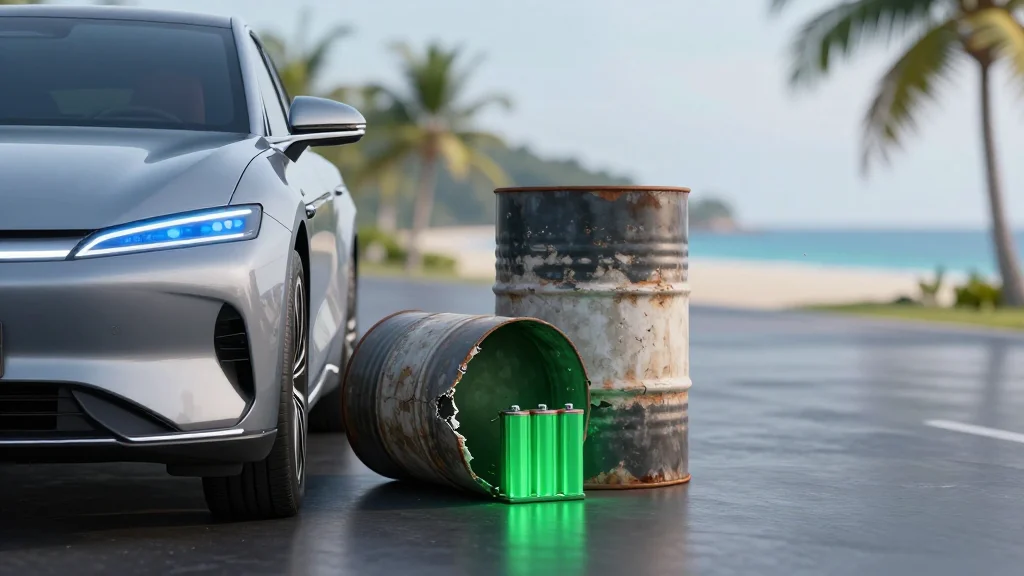
Indonesia’s EV Push Could Save $300 Bn and Cut 6 Bn Barrels of Oil by 2060

Why It Matters
The projected savings and emissions cuts position Indonesia as a potential leader in Southeast Asian EV adoption, offering a blueprint for other oil‑importing economies grappling with fiscal strain. A successful transition could attract foreign direct investment into battery manufacturing, charging infrastructure and renewable energy, reshaping regional supply chains and reducing dependence on volatile oil markets. Moreover, the health benefits from lower vehicle‑related pollution could translate into reduced healthcare costs and higher productivity, reinforcing the economic case for rapid EV scaling. The study’s findings also signal to multinational automotive firms that Indonesia’s market is on the cusp of a structural shift, prompting early engagement with local partners and supply‑chain realignment.
Key Takeaways
- •ICCT study projects $255‑$321 bn in energy‑cost savings for Indonesia by 2060.
- •Transition could cut 5.1‑6.7 bn barrels of oil equivalent through 2060.
- •Fuel subsidies accounted for ~10% of state spending in 2023.
- •Road transport contributes 22% of Indonesia’s energy‑related emissions.
- •EV sales >5% for passenger cars in 2024; other segments <1%.
Pulse Analysis
Indonesia’s EV roadmap arrives at a crossroads where fiscal urgency meets environmental necessity. Historically, the country’s transport sector has been insulated from market price signals through generous subsidies, a model that worked when global oil prices were relatively stable. The recent spike in oil prices, driven by geopolitical tensions, has exposed the fragility of that approach, turning subsidies into a budgetary albatross. The ICCT’s quantification of potential savings reframes the EV push from a purely climate‑centric policy to a fiscal corrective measure.
From a supply‑chain perspective, the transition will likely trigger a wave of investment in battery assembly and component manufacturing, mirroring trends seen in China and Europe. However, Indonesia faces unique hurdles: a fragmented motorcycle market, limited domestic raw‑material processing capacity, and a nascent charging ecosystem. Policymakers must therefore balance short‑term incentives—such as tax breaks for EV purchases and subsidies for charging stations—with longer‑term industrial strategies that develop local expertise and reduce reliance on imported battery cells.
If the government can align its fiscal reforms with clear, enforceable EV targets, the country could unlock a new growth engine that not only curtails oil imports but also creates high‑skill jobs and positions Indonesia as a regional hub for clean‑mobility technology. Failure to address the supply‑chain bottlenecks, however, could stall adoption, leaving the fiscal burden of fuel subsidies intact and undermining the projected economic gains.
Indonesia’s EV Push Could Save $300 bn and Cut 6 bn Barrels of Oil by 2060
Comments
Want to join the conversation?
Loading comments...