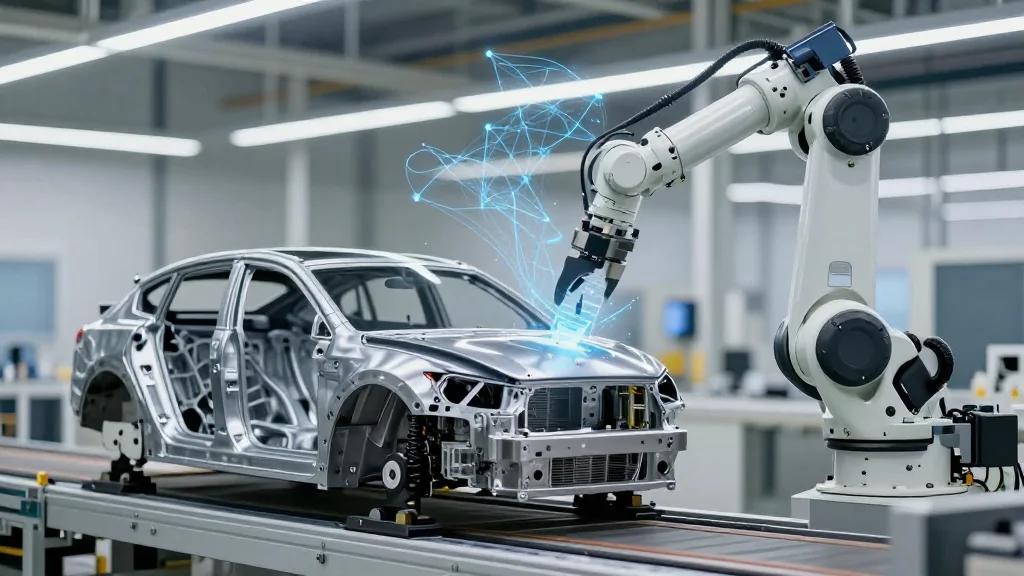
Magna International Deploys AI Across $42 B Auto Parts Empire to Boost Factory Automation

Companies Mentioned
Why It Matters
Embedding AI into Magna’s factories directly tackles chronic pain points in the automotive supply chain—downtime, quality variance and energy waste—by turning physical operations into data‑rich, predictive systems. For OEMs, the promise of real‑time defect detection and equipment health monitoring translates into shorter lead times, lower inventory buffers and a more agile response to market shocks such as raw‑material shortages or sudden shifts in EV demand. The initiative also signals a broader industry pivot toward software‑defined manufacturing. As automakers accelerate EV production, the need for flexible, high‑mix factories grows. Magna’s unified‑factory vision could become a template for other tier‑one suppliers, accelerating the diffusion of AI across the entire automotive ecosystem and potentially reshaping how parts are sourced, produced and delivered worldwide.
Key Takeaways
- •Magna is embedding AI in 330 plants across 28 countries, targeting quality, maintenance, safety, energy and speed.
- •AI‑powered vision inspection and predictive maintenance aim to cut unplanned downtime and improve defect detection.
- •The company is piloting a "unified factory" platform to link data, software and automation for real‑time decision‑making.
- •Magna’s battery‑swapping joint venture with Yulu Energy (Yuma Energy) extends its AI focus into EV mobility services.
- •Analysts estimate the AI‑automation spend could exceed $500 million through 2027, with full rollout planned by 2030.
Pulse Analysis
Magna’s AI rollout is more than a technology upgrade; it is a strategic hedge against the volatility that has plagued the auto supply chain for years. By converting physical processes into predictive, data‑driven workflows, Magna reduces the need for large safety stocks, a cost‑center that has ballooned as manufacturers grapple with semiconductor shortages and pandemic‑induced disruptions. The AI layer also creates a new competitive moat: a standardized, cloud‑ready platform that can be offered as a service to OEMs, turning a cost center into a potential revenue stream.
Historically, tier‑one suppliers have been reluctant to invest heavily in proprietary software, preferring to sell components and let automakers handle integration. Magna’s approach flips that model, positioning the supplier as a digital partner. This mirrors trends in other heavy‑industry sectors, where equipment manufacturers bundle analytics and AI services with hardware sales. If Magna can demonstrate measurable ROI—say, a 5‑10% reduction in downtime or a 3% cut in energy costs—its AI platform could become a de‑facto standard, forcing rivals to follow suit or risk losing OEM contracts.
Looking ahead, the success of Magna’s AI initiatives will hinge on execution at scale. Integrating AI across 330 disparate plants involves not just technology but cultural change, workforce reskilling and robust cybersecurity. Moreover, the battery‑swapping venture with Yulu Energy adds a layer of complexity, tying AI outcomes to the fast‑evolving EV charging ecosystem. Should Magna navigate these challenges, it will not only solidify its position as a leading parts supplier but also emerge as a critical enabler of the next generation of electric, on‑demand mobility.
Magna International Deploys AI Across $42 B Auto Parts Empire to Boost Factory Automation
Comments
Want to join the conversation?
Loading comments...