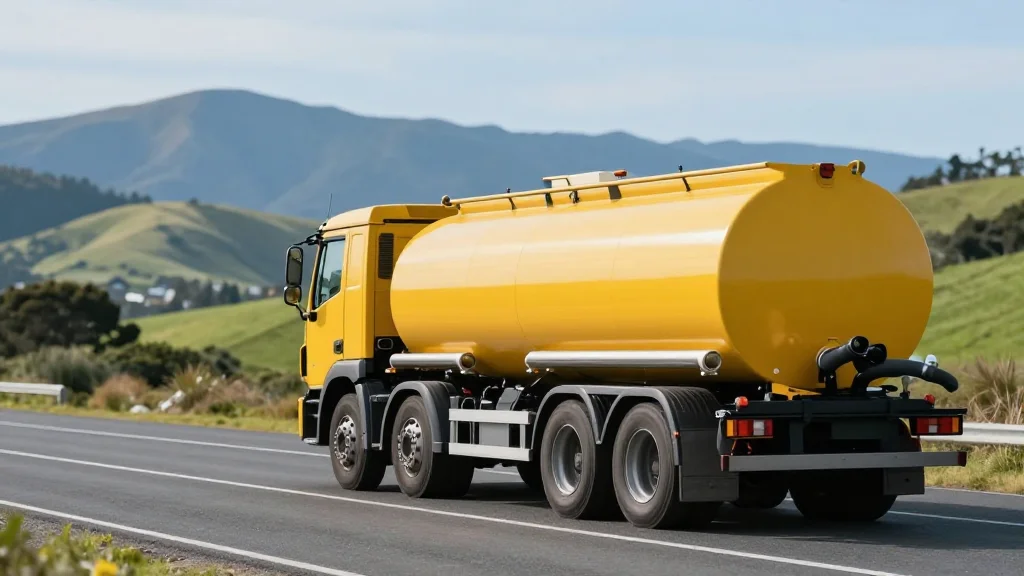
New Zealand Secures 90 Million‑Litre Diesel Reserve to Hedge Middle‑East Disruptions

Companies Mentioned
Why It Matters
A reliable diesel supply underpins New Zealand’s entire logistics network, from freight trucks that move imports and exports to farm equipment that sustains the nation’s agricultural output. By expanding its reserve, the government reduces the probability of a fuel‑driven supply‑chain breakdown that could inflate food prices, delay critical medical deliveries, and erode consumer confidence. Moreover, the deal signals to private sector participants that the state is willing to intervene proactively, encouraging a more collaborative approach to national resilience. The move also illustrates how small, open‑economy nations can leverage strategic stockpiling to offset geopolitical risks that are largely out of their control. As global trade routes become increasingly vulnerable to conflict, climate events and cyber‑attacks, the New Zealand example may inspire similar pre‑emptive contracts in other regions, reshaping how governments think about supply‑chain continuity and energy security.
Key Takeaways
- •New Zealand adds 90 million litres of diesel, extending its reserve by roughly 50%
- •The nine‑day buffer is intended to protect against Middle‑East war‑related supply disruptions
- •Finance Minister Nicola Willis called the deal an "insurance policy" for the nation
- •Diesel accounts for over 30% of national fuel use, critical for transport and agriculture
- •The contract includes a take‑or‑pay clause, ensuring delivery even if global prices spike
Pulse Analysis
New Zealand’s decision to bulk‑purchase diesel reflects a broader shift toward strategic inventory management in an era where geopolitical volatility can instantly reverberate through global supply chains. Historically, the country has relied on a modest strategic petroleum reserve, but the current conflict has exposed the limits of that approach. By locking in a nine‑day supply, the government not only mitigates immediate risk but also creates a pricing floor that could dampen speculative spikes in the domestic market. This is a classic case of a state using its purchasing power to stabilize a critical commodity, a tactic more commonly seen in larger economies.
Comparatively, other island nations such as Singapore and Iceland have long maintained sizable fuel reserves, but they typically do so through state‑owned enterprises rather than ad‑hoc contracts with private refiners. New Zealand’s partnership with Z Energy signals a hybrid model where public policy and private logistics expertise converge. If the Middle‑East conflict persists, we may see a cascade of similar agreements across the Asia‑Pacific, especially in countries with limited domestic refining capacity. The key challenge will be financing these buffers without inflating public debt, a balance that will test fiscal prudence.
Looking forward, the real test will be how quickly the reserve can be mobilised should a supply shock materialise. Operational readiness, distribution logistics, and coordination with regional fuel traders will determine whether the reserve remains a paper safeguard or a functional lifeline. The government’s commitment to annual reviews suggests an adaptive strategy, but the effectiveness of that strategy will hinge on transparent reporting and continuous market monitoring. In sum, New Zealand’s diesel reserve is a pragmatic, if costly, hedge that could set a precedent for supply‑chain resilience in a world where geopolitical risk is the new normal.
New Zealand Secures 90 Million‑Litre Diesel Reserve to Hedge Middle‑East Disruptions
Comments
Want to join the conversation?
Loading comments...