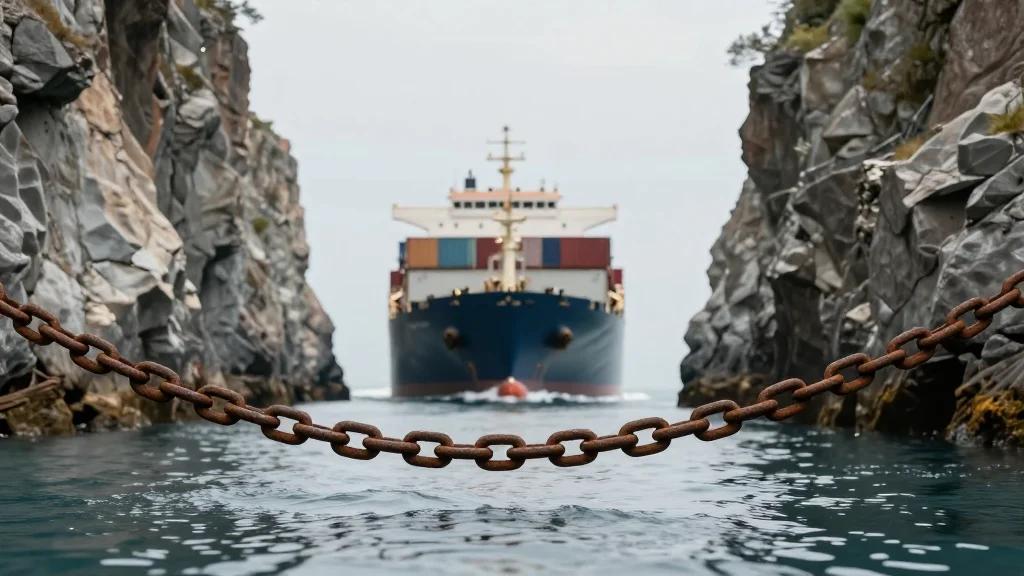
Shipping Firms Warn of Heightened Risks as Strait of Hormuz Remains Closed

Companies Mentioned
Why It Matters
The Hormuz closure is a chokepoint event that reshapes global energy and logistics flows. With roughly 20% of daily oil and LNG shipments normally passing through the strait, its shutdown forces a rapid reallocation of freight, inflates shipping costs, and drives up commodity prices, directly affecting manufacturing, retail and transportation sectors worldwide. The heightened insurance premiums and weekly losses reported by carriers like Hapag‑Lloyd illustrate how geopolitical risk translates into tangible balance‑sheet hits, prompting firms to reassess route risk models and diversify supply‑chain footprints. Moreover, the crisis underscores the fragility of maritime supply chains to political shocks. Prolonged disruption could accelerate a shift toward regionalization, spur investment in alternative energy transport corridors, and catalyze policy debates on strategic petroleum reserves and energy security. Stakeholders from oil traders to consumer brands must monitor diplomatic developments closely, as any breakthrough—or escalation—will reverberate through freight rates, inventory strategies, and ultimately end‑consumer prices.
Key Takeaways
- •Over 1,500 vessels and 22,500 mariners remain trapped in the Persian Gulf.
- •War‑risk insurance premiums have risen to 3‑10% of cargo value, up from under 1% pre‑war.
- •German carrier Hapag‑Lloyd reports $60 million weekly losses due to higher fuel and insurance costs.
- •Brent crude jumped from $70 to $126 per barrel after the strait’s closure, pushing global fuel prices higher.
- •U.S. Secretary of State Marco Rubio expects an Iranian response to a cease‑fire proposal within days.
Pulse Analysis
The Hormuz impasse is reshaping the economics of global shipping in a way that may have lasting structural effects. Historically, the strait has functioned as a low‑cost, high‑capacity conduit for oil and container traffic; its closure forces carriers to substitute longer routes that erode margins and increase emissions, potentially accelerating the industry's shift toward greener, more resilient logistics networks. The $60 million weekly hit reported by Hapag‑Lloyd is a symptom of a broader cost inflation that will likely persist even after the waterway reopens, as insurers recalibrate risk models and shippers embed higher premiums into freight contracts.
From a strategic perspective, the crisis highlights the growing interdependence of geopolitical maneuvering and supply‑chain stability. The U.S. use of precision strikes to enforce a blockade, coupled with diplomatic overtures, illustrates a hybrid approach that blends hard power with negotiation—an approach that supply‑chain leaders must factor into scenario planning. Meanwhile, China’s stance, as noted by analysts, suggests that major oil‑importing economies will press for a rapid de‑escalation, leveraging their buying power to influence outcomes. This dynamic could lead to a new form of energy diplomacy where access to critical chokepoints becomes a bargaining chip in broader trade negotiations.
Looking ahead, the key variable is the timeline for a sustainable reopening. If diplomatic talks yield a credible cease‑fire and a clear mechanism for safe passage, we may see a rapid normalization of freight rates and a rollback of the risk premium. Conversely, a protracted stalemate would embed higher costs into the supply‑chain calculus, prompting firms to diversify away from Gulf‑centric routes, invest in strategic stockpiles, and possibly accelerate the transition to alternative fuels. In either scenario, the Hormuz shutdown serves as a stark reminder that geopolitical risk remains a primary driver of supply‑chain volatility, demanding continuous monitoring and agile response mechanisms.
Shipping firms warn of heightened risks as Strait of Hormuz remains closed
Comments
Want to join the conversation?
Loading comments...