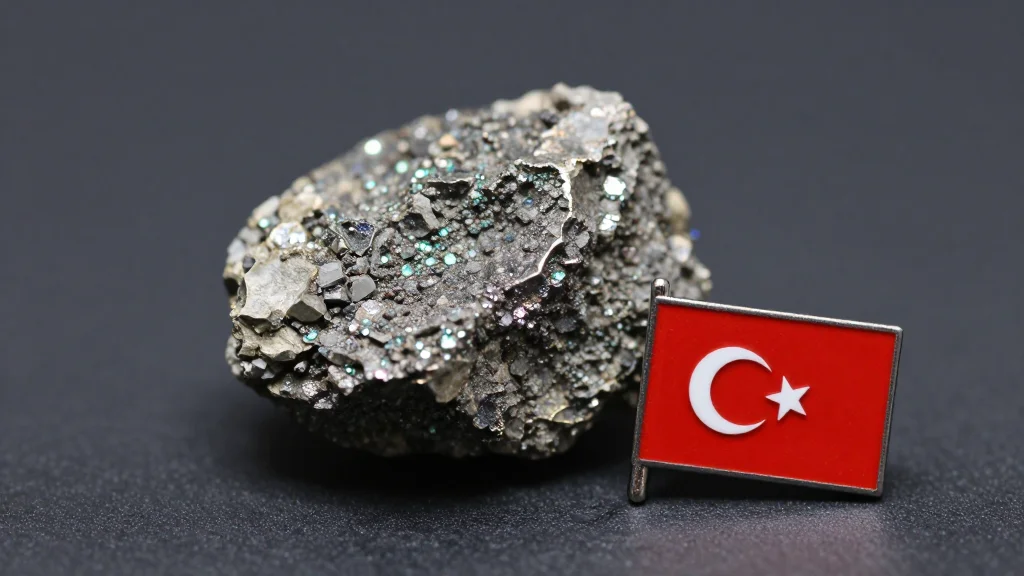
Turkey's Beylikova Rare‑Earth Deposit Triggers Strategic Supply‑Chain Tug‑of‑War

Why It Matters
The Beylikova deposit is a flashpoint in the global race for rare‑earth independence. As nations transition to electric vehicles, renewable energy and advanced weaponry, securing a stable supply of critical minerals becomes a matter of national security. Turkey’s decision could either diversify the supply chain, reducing the leverage that China holds over key industries, or cement China’s monopoly if the partnership leans eastward. Moreover, the project highlights the growing trend of geopolitically motivated investments in resource extraction, where supply‑chain resilience is intertwined with strategic alliances. For NATO, a U.S.-aligned Turkish mine would strengthen the alliance’s eastern logistics and reduce the risk of supply disruptions during crises. For the broader market, a new source could alleviate price spikes that have plagued manufacturers since China imposed export curbs in 2020, fostering more predictable planning for sectors ranging from smartphones to fighter jets.
Key Takeaways
- •Turkey’s Beylikova deposit holds 694 million tons of ore, potentially yielding 12.5 million tons of rare‑earth minerals.
- •China currently supplies >90% of refined rare‑earths and controls ~50% of global reserves.
- •U.S. and Chinese firms are courting Turkey for joint‑venture development, each offering technology and financing.
- •Local residents express distrust of U.S. involvement, preferring Chinese partnership for perceived stability.
- •The mine could reshape NATO’s supply‑chain security and impact global pricing for electronics and defense hardware.
Pulse Analysis
Turkey’s flirtation with the Beylikova rare‑earth project underscores a broader shift: critical‑material supply chains are no longer purely commercial pipelines but strategic battlegrounds. Historically, the United States attempted to revive domestic rare‑earth production after China’s 2010 export curbs, but high costs and environmental concerns stalled progress. Turkey now offers a geographically proximate, politically aligned alternative for NATO, potentially shortening logistics and reducing transit risk through the Black Sea corridor.
However, the success of any venture hinges on Turkey’s ability to bridge its technical gap. While Chinese firms bring proven extraction technology, they also bring the risk of deepening Beijing’s market share. U.S. partners may offer more favorable terms for Western allies but must overcome higher capital costs and the need for technology transfer. The decision will likely be a calculus of immediate economic gain versus long‑term strategic positioning.
In the short term, the announcement alone has already rattled rare‑earth markets, with spot prices for neodymium and dysprosium inching up by 3‑4% as investors price in the potential for a new supply source. Over the next 12‑18 months, the trajectory of the Beylikova project will serve as a barometer for how effectively nations can diversify away from Chinese dominance without compromising on cost or environmental standards. The outcome will shape not only defense procurement but also the broader clean‑energy transition that depends on these critical minerals.
Turkey's Beylikova Rare‑Earth Deposit Triggers Strategic Supply‑Chain Tug‑of‑War
Comments
Want to join the conversation?
Loading comments...