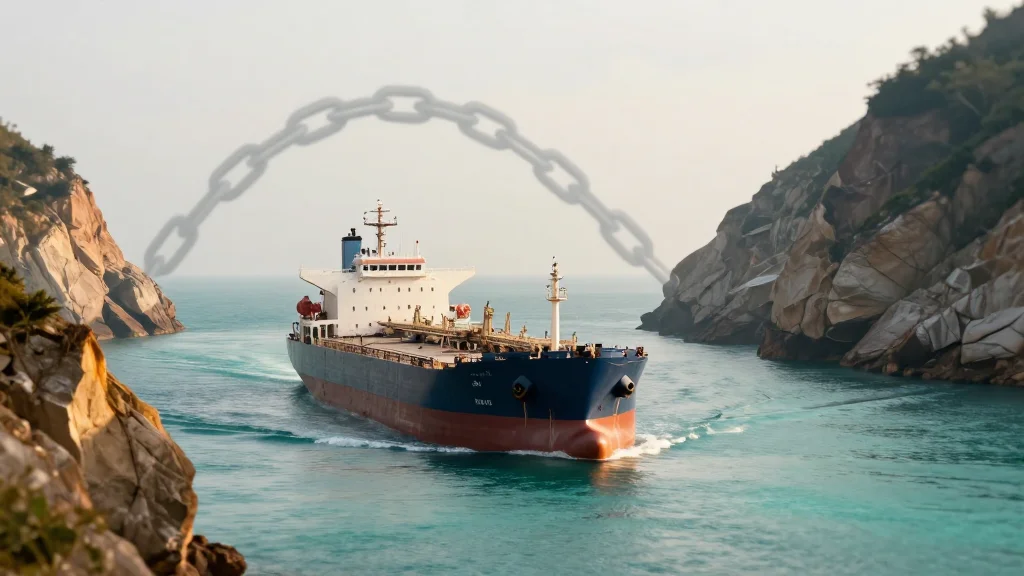
UK, Allies Mull Fresh Iran Sanctions as Hormuz Toll Threatens Oil Supply Chain

Why It Matters
The Strait of Hormuz handles about a fifth of the world’s seaborne oil. A $2 million per‑vessel toll not only raises shipping costs but also threatens to choke a critical node of the global energy supply chain, potentially driving up fuel prices worldwide. Moreover, the split between the US and its European allies over military action could fragment coordinated responses, making diplomatic resolutions harder and increasing the risk of a prolonged disruption. For multinational corporations, logistics providers and commodity traders, the sanctions‑toll nexus signals heightened geopolitical risk that must be baked into supply‑chain risk models. Companies may need to diversify sourcing, secure alternative routes, or hedge against price spikes, reshaping trade patterns that have been stable for decades.
Key Takeaways
- •UK and allies draft new sanctions targeting Iran’s oil export facilities
- •Iran imposes $2 million toll per vessel, affecting ~138 daily transits
- •Brent crude climbs to $109/bbl, WTI to $111/bbl amid Hormuz tension
- •European nations refuse US request for base access, widening alliance rift
- •Intelligence suggests 50% of Iran’s missile launchers and drones remain operational
Pulse Analysis
The Hormuz toll represents a strategic lever for Tehran, turning a geographic chokepoint into a revenue generator while simultaneously weaponizing supply‑chain fragility. Historically, sanctions have been used to pressure Iran’s nuclear program, but this new financial squeeze directly targets the logistics of global oil markets, a move that could backfire by prompting buyers to seek alternative, less efficient routes. The UK’s willingness to sanction, contrasted with Europe’s refusal to back a US ground offensive, highlights a shift toward economic coercion over kinetic escalation. This divergence may embolden Iran to maintain its toll, knowing that the US lacks unified NATO support for a full‑scale invasion.
From a supply‑chain perspective, the immediate impact is cost inflation and routing uncertainty. Shipping firms are already modeling longer voyages around Africa, which adds 10‑15 days to transit times and raises carbon emissions—a growing concern for ESG‑focused investors. In the longer term, persistent Hormuz disruptions could accelerate the diversification of energy imports, spurring investment in LNG infrastructure and renewable alternatives in Europe and Asia. Companies that can quickly adapt logistics, secure hedging strategies, and engage in diplomatic lobbying will mitigate exposure, while those reliant on just‑in‑time oil deliveries may face severe operational strain.
Strategically, the US faces a credibility challenge. Trump’s public boasts of swift victory clash with intelligence assessments that Iran’s missile and drone capabilities remain robust. If the US proceeds without allied backing, any misstep could deepen the supply‑chain shock and erode confidence in American leadership, prompting a realignment of global trade routes away from US‑friendly corridors. The coming weeks will test whether economic pressure can replace military action in achieving policy goals without fracturing the very supply chains that underpin the world economy.
UK, Allies Mull Fresh Iran Sanctions as Hormuz Toll Threatens Oil Supply Chain
Comments
Want to join the conversation?
Loading comments...