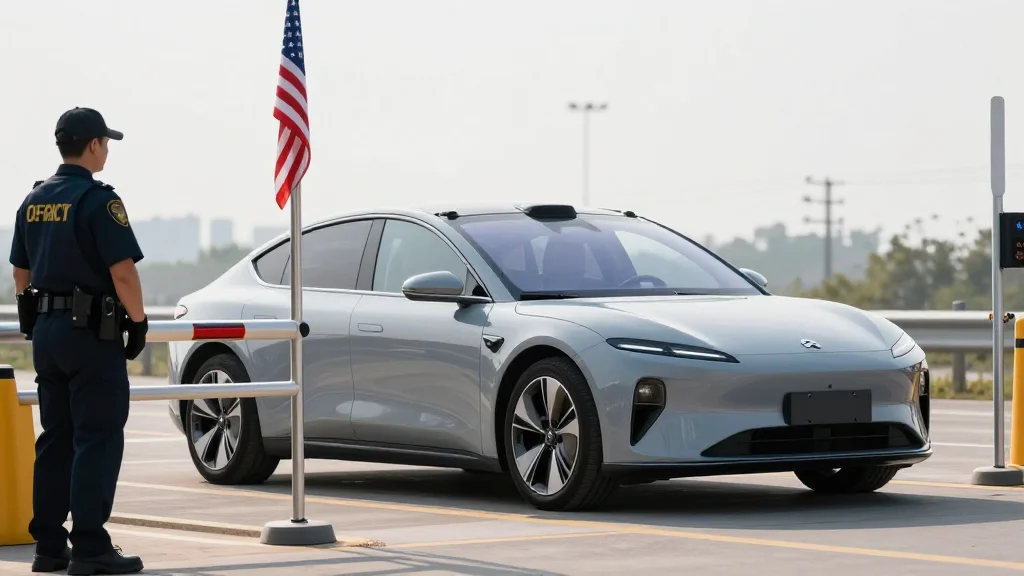
US Bill Seeks to Block Chinese‑Connected EVs From Entering via Canada and Mexico

Companies Mentioned
Why It Matters
The Protecting America from Chinese Cars Act targets a critical juncture where automotive supply chains intersect with data security. By restricting Chinese‑connected EVs, the U.S. aims to safeguard sensitive location and infrastructure data that modern vehicles continuously collect, mitigating espionage risks. At the same time, the bill forces manufacturers to reconsider cross‑border sourcing strategies, potentially reshaping investment flows, production footprints, and pricing dynamics across North America. For Canada, the legislation adds pressure to its own policy calculus. While the country seeks to attract Chinese EV investment to create jobs, it must also address public safety concerns raised by its own agencies. The outcome will influence how Canada balances economic growth with security, setting a precedent for other allied nations grappling with similar supply‑chain vulnerabilities.
Key Takeaways
- •U.S. Rep. Haley Stevens and Sen. Elissa Slotkin introduced the Protecting America from Chinese Cars Act
- •Bill bans vehicles with ≥15% Chinese ownership from entering the U.S. via Canada or Mexico
- •Canada’s current quota permits up to 49,000 Chinese EVs at a 6.1% tariff, projected to exceed 63,000 by 2031
- •Public Safety Canada warned that vehicle data could be used for surveillance on sensitive sites
- •Bill creates a strict authorization process for any prohibited vehicle to gain entry, subject to congressional oversight
Pulse Analysis
The proposed legislation reflects a broader shift toward securitizing supply chains that were once viewed purely through a cost‑competitiveness lens. Historically, the North American auto sector has relied on a seamless flow of parts and finished vehicles across borders, underpinned by NAFTA and its successor, USMCA. However, the rise of connected vehicle technology has introduced a data dimension that traditional trade agreements did not anticipate. By targeting ownership thresholds and mandating congressional oversight, the bill attempts to embed a security gate into the supply chain, effectively turning data provenance into a trade barrier.
From a market perspective, the act could accelerate the diversification of component sourcing away from China, prompting U.S. OEMs to deepen relationships with domestic or allied suppliers. This realignment may raise short‑term costs but could foster a more resilient ecosystem less vulnerable to geopolitical shocks. Conversely, the exemption mechanism may give rise to a new class of "clean‑room" collaborations, where Chinese firms provide non‑critical software or hardware under strict monitoring, preserving some of the cost advantages while satisfying security mandates.
Looking ahead, the bill’s fate will likely hinge on how convincingly policymakers can demonstrate tangible security threats without stifling innovation. If passed, it could set a template for other sectors—such as telecommunications and aerospace—where data‑rich products cross borders. The ripple effects may compel multinational corporations to embed compliance layers into product design, ensuring that future generations of connected vehicles are built with both performance and geopolitical risk in mind.
US Bill Seeks to Block Chinese‑Connected EVs from Entering via Canada and Mexico
Comments
Want to join the conversation?
Loading comments...