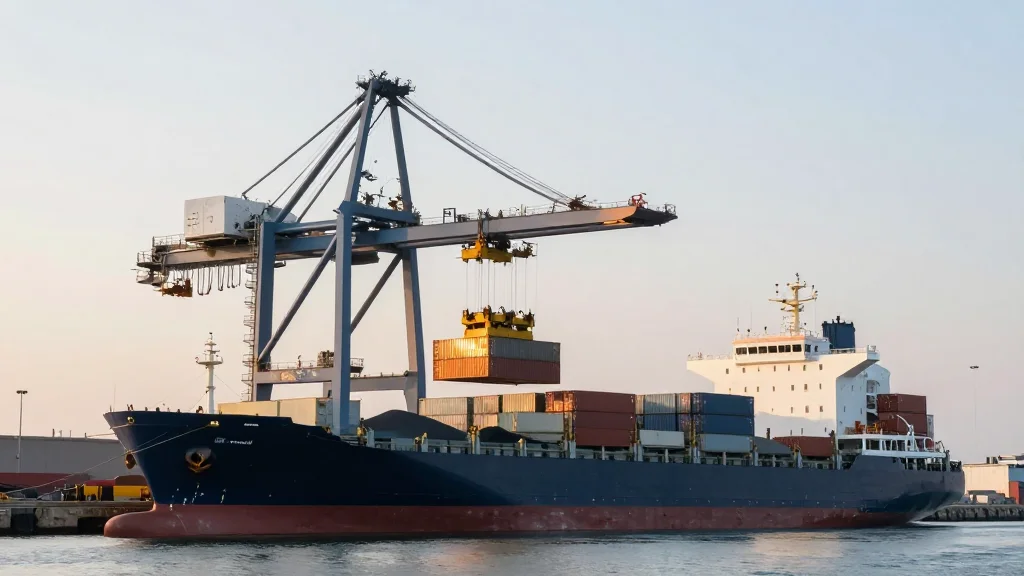
US Bill Targets Georgian Port as NATO Ramps Up Defence Supply Chains

Why It Matters
The convergence of legislative action in the United States and strategic recalibration within NATO underscores a new era where supply‑chain resilience is treated as a national‑security imperative. By targeting the Anaklia port, Congress aims to prevent a choke point in the rare‑earth supply chain from falling under adversarial control, protecting the downstream tech and defense industries that rely on these materials. Meanwhile, NATO’s push to shore up ammunition and logistics supply chains addresses vulnerabilities exposed by Russia’s war, ensuring that member states can sustain prolonged operations without facing shortages. Together, these developments could reshape global trade flows, spur domestic manufacturing, and alter the geopolitical balance of resource control. For businesses, the heightened focus on supply‑chain security may translate into stricter compliance requirements, new investment opportunities in resilient logistics infrastructure, and a reevaluation of sourcing strategies away from high‑risk regions. For policymakers, the challenge will be to balance security objectives with the need to keep trade routes open and cost‑effective, avoiding over‑protectionism that could stifle economic growth. Overall, the actions signal that supply‑chain considerations will increasingly drive both diplomatic negotiations and defense budgeting, making them a critical factor for companies and governments alike.
Key Takeaways
- •U.S. bipartisan bill H.R. 7668 targets Chinese and Russian influence at Georgia's Anaklia Deep Sea Port, a key rare‑earth transit hub.
- •Latvia’s foreign minister warned that Russia’s war exposed gaps in Europe’s defence industrial capacity, prompting large‑scale supply‑chain investments.
- •The Anaklia port project was awarded to a Chinese‑led consortium, raising concerns over strategic material flows.
- •NATO is urged to adopt a 360‑degree defence approach, focusing on ammunition production and logistics supply‑chain resilience.
- •Both initiatives could reshape global rare‑earth trade routes and drive new public‑private partnerships in defence manufacturing.
Pulse Analysis
The twin narratives of a U.S. legislative push and NATO’s supply‑chain overhaul illustrate a broader strategic pivot: supply chains are no longer peripheral to security policy, they are central. Historically, supply‑chain security was a logistical footnote, addressed after a crisis erupted. The Ukraine war, however, forced a re‑examination of where critical inputs—whether ammunition, rare‑earth minerals, or fuel—originated and how vulnerable they were to adversarial interference.
Washington’s focus on the Anaklia port is a textbook case of pre‑emptive supply‑chain defense. By demanding a detailed intelligence assessment, the bill seeks to map the full extent of Chinese and Russian leverage over a node that could bottleneck the flow of materials essential to everything from smartphones to missile guidance systems. If successful, the move could set a precedent for similar scrutiny of other strategic infrastructure projects worldwide, effectively weaponizing supply‑chain transparency.
NATO’s response, articulated by Latvia’s Baiba Braže, reflects an institutional learning curve. The alliance is now treating ammunition stockpiles and logistics networks as strategic assets that require the same level of investment and risk management as conventional military hardware. This shift could accelerate the creation of a European defence industrial base less dependent on external suppliers, a goal that aligns with the EU’s recent economic‑security agenda. However, the challenge lies in coordinating across 30+ member states, each with its own industrial policies and budget constraints.
Looking ahead, the interplay between legislative oversight of foreign‑controlled ports and NATO’s supply‑chain modernization may redefine the rules of engagement for both commercial and defence sectors. Companies will need to monitor policy developments closely, as new compliance regimes could affect sourcing decisions and capital allocation. Meanwhile, governments will have to balance the imperative of security with the economic costs of reshoring or diversifying supply chains. The next few months—particularly the outcome of the U.S. committee review and NATO’s Ankara summit—will be decisive in setting the trajectory for this emerging security‑supply‑chain nexus.
US Bill Targets Georgian Port as NATO Ramps Up Defence Supply Chains
Comments
Want to join the conversation?
Loading comments...