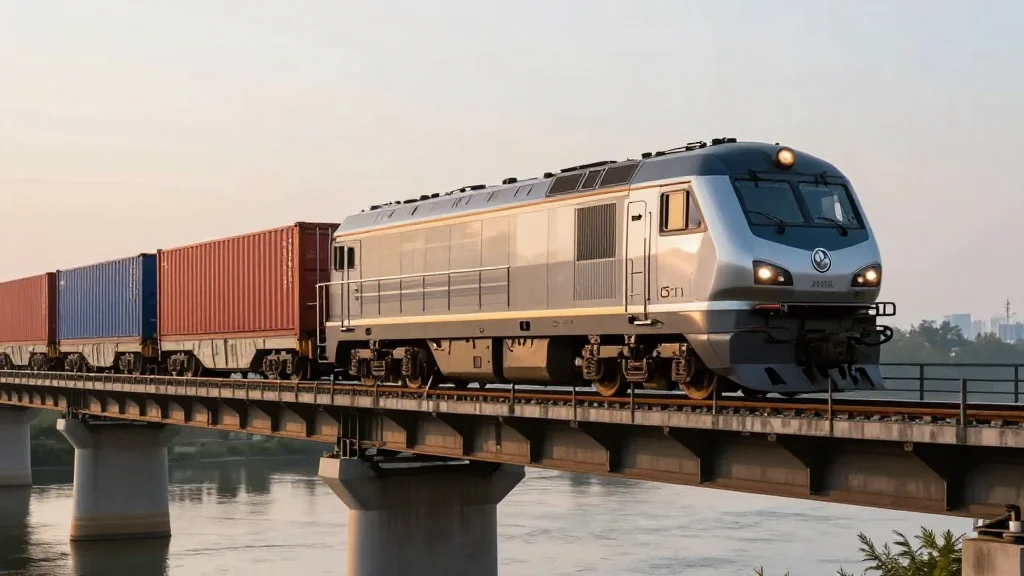
U.S. Rail Carloads, Intermodal Traffic Post Strong April Gains, Reports AAR
Why It Matters
Rail volume trends act as a leading indicator for manufacturing and consumer demand, giving investors and policymakers a timely view of underlying economic momentum.
Key Takeaways
- •April carloads hit highest level since 2019
- •16 of 20 tracked commodities posted annual gains
- •Intermodal volumes posted third straight month of growth
- •Freight Rail Index reached 16‑month high in March
- •Rail data signals goods‑side momentum despite uneven economy
Pulse Analysis
The Association of American Railroads (AAR) released its latest Rail Industry Overview, a monthly digest that translates freight‑rail statistics into a broader economic barometer. By aggregating data from roughly 45 AAR reports, the RIO offers a non‑technical snapshot for investors, policymakers and analysts. Central to the publication is the Freight Rail Index (FRI), which tracks movement of the most economically sensitive commodities—excluding coal and grain—and intermodal containers. Because rail moves bulk goods faster than trucks, shifts in carload and intermodal volumes often precede changes in manufacturing output and consumer demand.
In April, U.S. rail carloads rose for the fourth month in a row, reaching the strongest monthly total since 2019. Sixteen of the twenty commodities the AAR monitors posted year‑over‑year gains, highlighting unusually broad‑based freight strength. Intermodal traffic also posted its third consecutive month of growth, delivering one of the strongest April readings on record. The March Freight Rail Index climbed to a 16‑month high, reinforcing signs that industrial production, exports, agriculture and supply‑chain replenishment are gaining momentum.
While the data suggest the goods side of the economy is more resilient than headline narratives imply, AAR economists caution that growth remains uneven, sentiment fragile, and inflation volatile. Nevertheless, the upward trend in rail volumes provides an early warning signal for sectors that rely on bulk transportation, from steel mills to agricultural exporters. Investors and corporate strategists can use these trends to gauge demand pipelines ahead of the summer hiring season, while policymakers may view rail activity as a leading indicator when calibrating fiscal or monetary responses.
U.S. rail carloads, intermodal traffic post strong April gains, reports AAR
Comments
Want to join the conversation?
Loading comments...