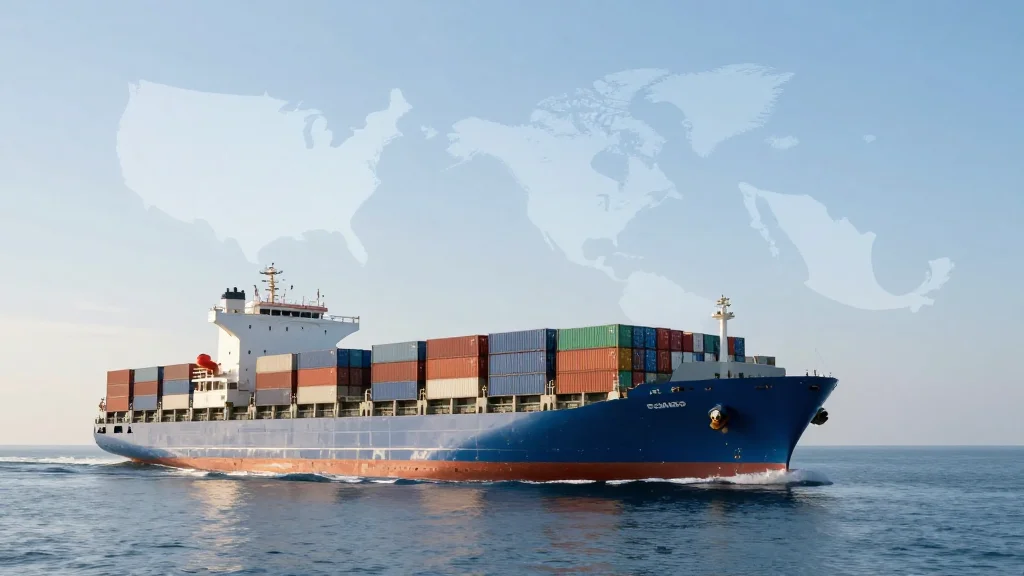
USMCA Trade Jumps 29% Post‑Ratification, Transshipment Costs Hit $40 B

Companies Mentioned
Why It Matters
The 29% trade surge signals that the USMCA is delivering on its promise of deeper market integration, potentially reshaping supply‑chain strategies across North America. However, the $40 billion revenue gap and the $86 billion forced‑labor exposure highlight systemic vulnerabilities that could erode trust in the agreement and invite stricter regulatory action. Companies that fail to adapt may face fines, supply disruptions, or loss of market access. For policymakers, the findings underscore the need to modernize enforcement mechanisms to keep pace with digital trade flows and sophisticated routing tactics. Strengthening customs data analytics and harmonizing labor‑rights audits could protect both revenue streams and human‑rights standards, preserving the USMCA’s credibility as a model trade pact.
Key Takeaways
- •Intra‑USMCA trade increased 29% since ratification, driven by lower tariffs and digital customs tools.
- •Transshipment is estimated to have cost the U.S. $40 billion in lost tariff revenue.
- •$86 billion in product value is linked to forced‑labor exposure upstream in the supply chain.
- •Experts call for a unified customs intelligence platform and harsher penalties for misclassification.
- •Upcoming compliance directives from USTR and the Department of Commerce are expected within six months.
Pulse Analysis
The USMCA’s early performance suggests that the agreement is achieving its core objective of boosting intra‑regional trade. The 29% growth rate outpaces the modest gains seen under NAFTA’s later years, indicating that the modernized rules of origin and digital customs processes are delivering tangible efficiencies. Companies that have re‑engineered their logistics networks to take advantage of these provisions are likely seeing lower landed costs and faster time‑to‑market.
Yet the transshipment data reveals a darker side. The $40 billion revenue loss is not merely a fiscal issue; it reflects a strategic exploitation of loopholes that could undermine the agreement’s integrity. As customs agencies adopt more sophisticated data‑matching algorithms, firms that rely on indirect routing may face abrupt cost spikes or supply chain reroutes. The forced‑labor figure adds a reputational dimension, especially as ESG criteria become a decisive factor for investors and buyers. Companies will need to embed robust provenance tracking into their procurement processes, potentially leveraging blockchain or AI‑driven risk assessment tools.
In the broader context, the USMCA’s challenges mirror global trends where trade liberalization is increasingly paired with heightened scrutiny over labor standards and revenue protection. The next phase of the agreement will likely involve a tighter feedback loop between trade policy and enforcement technology. Firms that proactively align with emerging compliance frameworks will not only safeguard against penalties but also position themselves as preferred partners in a market that values transparency and ethical sourcing.
USMCA Trade Jumps 29% Post‑Ratification, Transshipment Costs Hit $40 B
Comments
Want to join the conversation?
Loading comments...