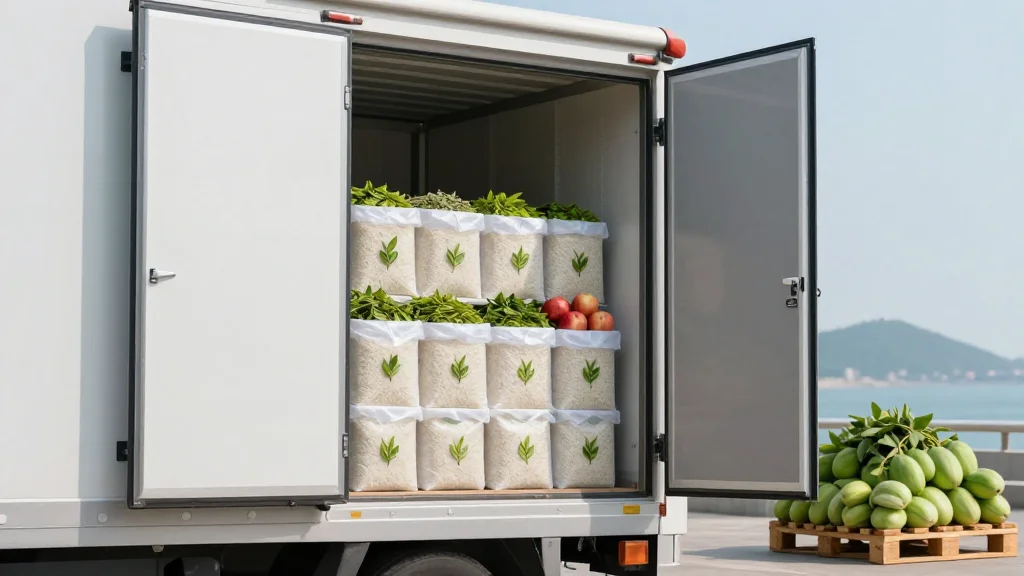
Vietnam‑China Agricultural Trade Hits $20.9 Bn, Spurring Cold‑chain Logistics Investment

Why It Matters
The expanded trade volume and the parallel investment in cold‑chain logistics tighten the food‑supply link between two of Asia’s largest economies, reducing reliance on third‑party routes and enhancing resilience against disruptions. For supply‑chain operators, the harmonised standards and traceability mandates lower compliance risk and open access to China’s premium consumer market, where demand for safe, high‑quality produce is rising sharply. For investors, the $1.2 bn cold‑chain build‑out represents a clear opportunity in a sector traditionally under‑served in Southeast Asia. The partnership also sets a precedent for how bilateral agreements can translate diplomatic goodwill into concrete infrastructure projects, a template other regional blocs may emulate to secure food‑security pathways.
Key Takeaways
- •Bilateral agricultural trade reached $20.94 bn in 2025, a 17.6% YoY increase.
- •Vietnam’s exports to China jumped 41.1% to $15.97 bn.
- •33 agreements and protocols signed; five new protocols added in 2025.
- •At least $1.2 bn earmarked for cold‑chain logistics capacity by 2027.
- •Traceability standards now cover 15 fruit/vegetable categories, with nine under formal protocols.
Pulse Analysis
The Vietnam‑China agricultural partnership illustrates how strategic diplomacy can accelerate supply‑chain modernization. By coupling trade liberalisation with targeted infrastructure spending, the two governments are addressing both the demand side (China’s appetite for diverse, high‑quality produce) and the supply side (Vietnam’s need for reliable, temperature‑controlled transport). Historically, cross‑border agri‑trade in the region has been hampered by fragmented customs procedures and limited cold‑storage, leading to high post‑harvest loss rates. The current wave of agreements effectively creates a single‑window clearance system, which, when paired with new refrigerated corridors, could cut average transit times from 10‑12 days to under 7 days for perishable goods.
From a competitive standpoint, the partnership positions Vietnam to capture market share from other ASEAN exporters such as Thailand and the Philippines, whose logistics networks are less integrated with China’s inland distribution hubs. The emphasis on traceability also aligns Vietnam with emerging global standards, potentially unlocking access to European and North American markets that require end‑to‑end visibility. However, the success of the cold‑chain rollout hinges on private‑sector participation and the ability to secure skilled technicians to operate sophisticated refrigeration equipment.
Looking ahead, the next phase will likely involve digital integration—blockchain‑based provenance tracking, AI‑driven demand forecasting, and IoT sensors across the cold‑chain. If these technologies are adopted, the Vietnam‑China corridor could become a benchmark for high‑value, low‑risk agri‑trade, influencing policy across the broader Belt and Road Initiative. For supply‑chain managers, the message is clear: aligning with the new regulatory framework and investing in temperature‑controlled logistics will be essential to stay competitive in a market that is rapidly moving toward quality‑over‑quantity.
Vietnam‑China agricultural trade hits $20.9 bn, spurring cold‑chain logistics investment
Comments
Want to join the conversation?
Loading comments...