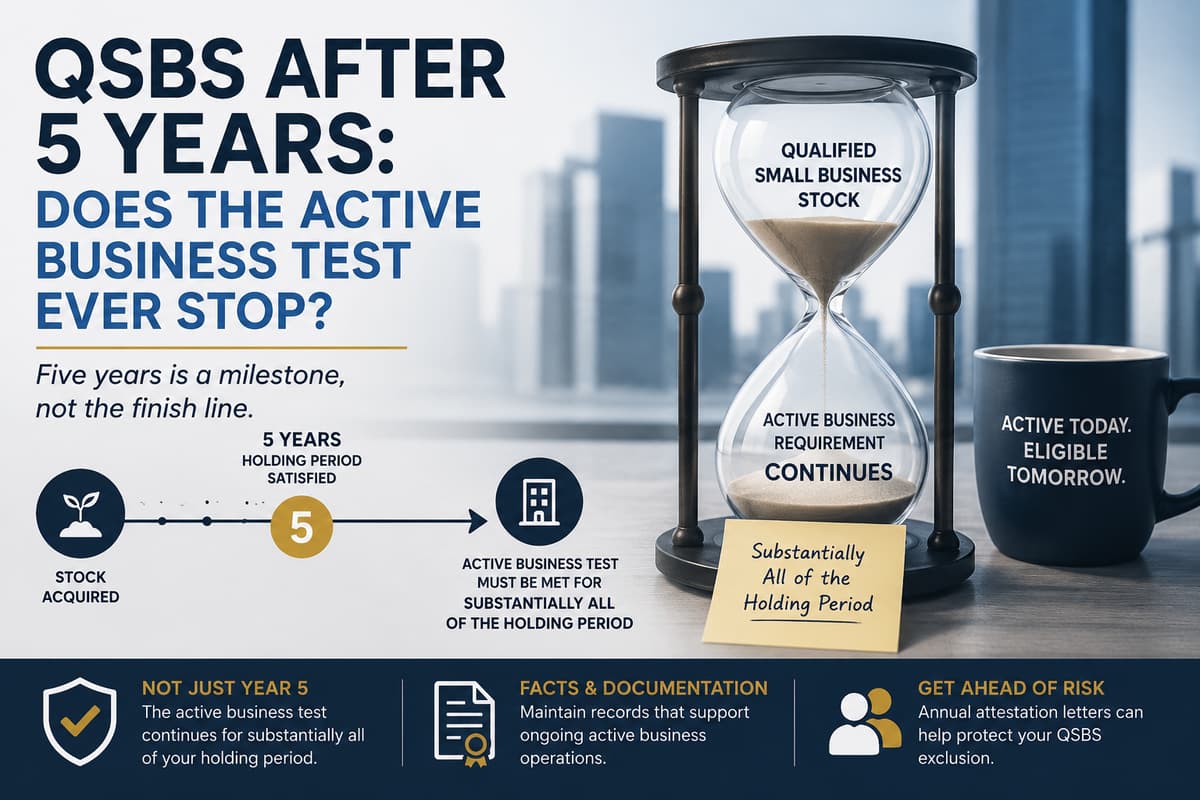
QSBS After 5 Years: Does the Active Business Test Ever Stop?
Key Takeaways
- •Active‑business test applies for entire holding period, not just first five years
- •OBBBA creates tiered QSBS exclusion; non‑qualified portion taxed at 28% rate
- •Cash exceeding working‑capital limits or pivots into disallowed fields can break qualification
- •Annual QSBS attestation letters help shareholders verify ongoing eligibility
- •Companies must monitor asset mix and real‑estate holdings to stay compliant
Pulse Analysis
Qualified Small Business Stock (QSBS) remains a powerful tax incentive, but its benefits hinge on more than simply crossing a five‑year clock. Section 1202(e) requires that at least 80% of a company’s assets stay in qualified trades or businesses for substantially the entire holding period. This continuous test means that a founder who holds stock for ten years must maintain QSBS status for roughly nine of those years, and any material deviation can jeopardize the exclusion. Understanding this dynamic is essential for investors planning long‑term exits and for startups aiming to attract capital with the promise of tax‑free gains.
The One Big Beautiful Bill Act (OBBBA), effective for QSBS issued after July 4 2025, adds a tiered exclusion structure: 50% of gain after three years, 75% after four, and full exclusion after five. However, the non‑excluded portion is taxed at the 28% rate, creating a hidden tax trap for those who assume a flat capital‑gains rate. Moreover, compliance pitfalls such as excessive cash balances, pivots into disallowed services, or stock‑for‑stock reorganizations can instantly disqualify the stock. Companies must vigilantly track working‑capital rules, the 10% portfolio cap, and real‑estate holdings to avoid inadvertent breaches.
Practical steps can safeguard both shareholders and issuers. Shareholders should request annual QSBS attestation letters that reflect the current asset mix and business activities, rather than relying on the initial issuance letter. Companies, meanwhile, should embed QSBS compliance into their financial reporting cycles, limit idle cash, and document any capital‑use plans. By treating QSBS qualification as an ongoing compliance obligation, both parties can preserve the tax advantage and enhance the attractiveness of the equity for future investors.
QSBS After 5 Years: Does the Active Business Test Ever Stop?
Comments
Want to join the conversation?