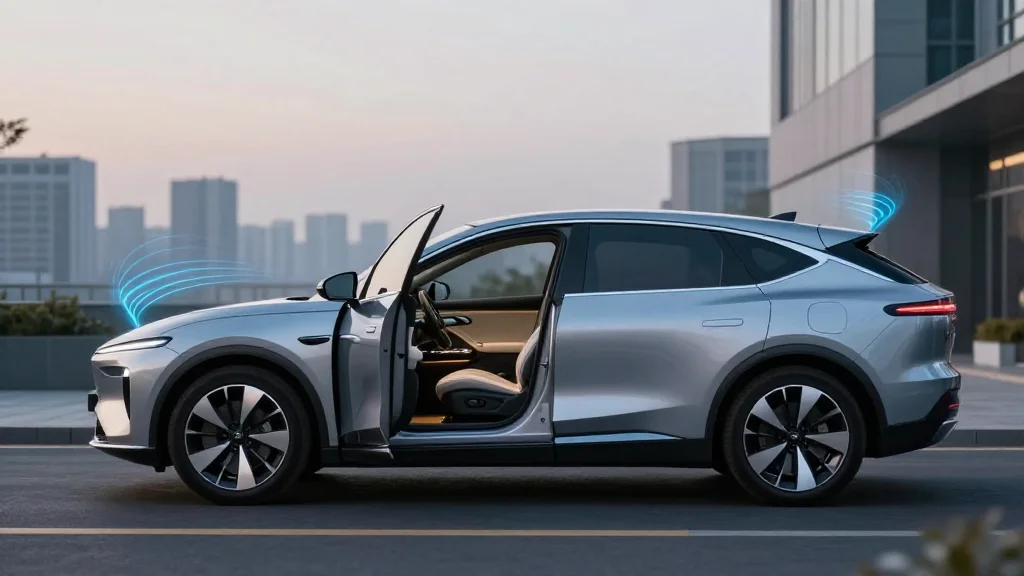
Lucid Motors Launches Robotaxi Service with Uber and Nuro to Take on Tesla

Companies Mentioned

Why It Matters
Lucid’s robotaxi launch marks the first major luxury‑EV entrant to combine a premium vehicle platform with Level 4 autonomy and a global ride‑hailing network. By challenging Tesla’s head start, the venture could accelerate the broader rollout of driverless services, prompting regulators and incumbents to adapt faster. Moreover, the involvement of Saudi Arabia’s Public Investment Fund signals sustained sovereign wealth interest in autonomous mobility, potentially unlocking further capital for the sector. If Lucid can deliver a reliable, high‑end robotaxi experience, it may set new expectations for passenger comfort, safety, and range, forcing competitors to upgrade both hardware and software. The move also diversifies the autonomous vehicle ecosystem beyond the traditional tech‑first players, adding a strong automotive brand to the mix.
Key Takeaways
- •Lucid Motors announced a robotaxi service built on the Gravity SUV with Uber and Nuro.
- •The partnership showcased at CES includes Level 4 autonomy, NVIDIA DRIVE AGX Thor compute, and a six‑passenger cabin.
- •Gravity SUV sales rose 912 units to 1,142 in Q4 2025, while Air sedan sales increased by 625 units.
- •Production is being ramped up at Lucid’s Casa Grande, Arizona plant to meet robotaxi demand.
- •The service aims to compete directly with Tesla’s robotaxi ambitions, leveraging Saudi PIF backing.
Pulse Analysis
Lucid’s entry into the robotaxi arena represents a strategic pivot from pure vehicle manufacturing to mobility‑as‑a‑service. By aligning with Uber’s marketplace and Nuro’s proven autonomous stack, Lucid sidesteps the massive software development costs that have hampered many automakers. The partnership also gives Lucid access to real‑world data at scale, a critical advantage for refining Level 4 algorithms.
Historically, Tesla has relied on its proprietary Full Self‑Driving (FSD) suite and a vertically integrated approach. Lucid’s model, however, mirrors the airline industry’s separation of aircraft manufacturers and operators, allowing each partner to focus on core competencies. This could compress the timeline for commercial robotaxi deployment, especially as regulatory frameworks evolve to accommodate Level 4 operations.
Looking ahead, the success of Lucid’s robotaxi will depend on three variables: regulatory clearance for driverless rides, consumer trust in a new brand’s autonomous safety record, and the economics of operating a premium fleet. If Lucid can demonstrate high utilization rates and low per‑mile costs, it may force Tesla to accelerate its own rollout or reconsider pricing strategies. Conversely, any high‑profile incident could reinforce skepticism around autonomous mobility and slow industry momentum. The next six months will be a litmus test for whether luxury EV makers can translate vehicle excellence into scalable, driverless services.
Lucid Motors launches robotaxi service with Uber and Nuro to take on Tesla
Comments
Want to join the conversation?
Loading comments...