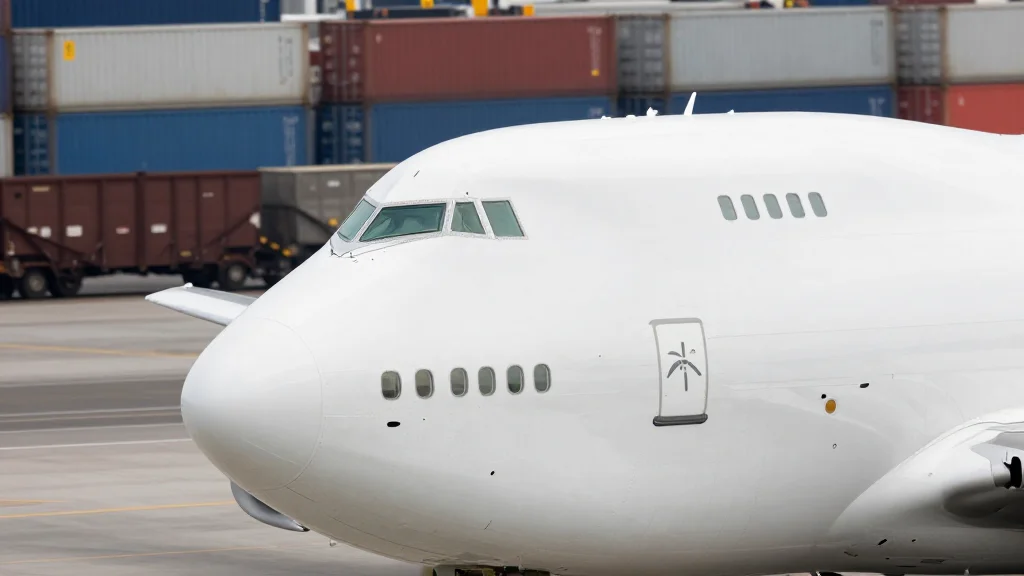
Middle East Airspace Restrictions Prompt Global Cargo Reroute and Multimodal Shift

Why It Matters
The diversion of air‑cargo traffic away from the Middle East underscores the fragility of a network that relies heavily on a few high‑capacity corridors. By inflating operating costs and tightening capacity, the disruption pressures freight rates and could accelerate a shift toward more resilient, multimodal supply chains. For the broader transportation sector, the rise of rail‑road corridors and dry‑port hubs signals a strategic pivot: logistics firms are investing in cross‑modal infrastructure to hedge against geopolitical shocks, which may reshape trade patterns and competitive dynamics for years to come. Moreover, the heightened focus on infrastructure integration could spur public‑private partnerships in regions previously peripheral to global freight. Enhanced rail‑air connectivity may attract new investment, improve regional economic prospects, and diversify routing options for carriers, ultimately contributing to a more robust global logistics ecosystem.
Key Takeaways
- •Air carriers are rerouting cargo flights north via Central Asia/Caucasus or south over the Indian Ocean due to Middle Eastern airspace restrictions.
- •Longer routes increase fuel burn, crew utilisation and have caused freight rates on key intercontinental lanes to firm.
- •Rail freight on the China‑Kazakhstan‑Russia‑Eastern Europe corridor is gaining market share as a time‑sensitive alternative.
- •Dry‑port hubs in Central/Eastern Europe and Central Asia are being expanded to enable rapid air‑rail‑road transfers.
- •Integrated logistics platforms are being deployed to coordinate multimodal movements across entire corridors.
Pulse Analysis
The current air‑space disruption is a textbook case of how geopolitical risk can force a rapid reconfiguration of logistics networks. Historically, the Middle East has acted as a low‑cost, high‑speed bridge between Asia and Europe; its sudden inaccessibility has exposed the sector's over‑reliance on a narrow set of corridors. In the short term, carriers are absorbing higher operating costs, but the longer‑term implication is a strategic re‑balancing toward multimodal resilience. Companies that have already invested in rail‑air integration—particularly those with assets along the Middle Corridor—are poised to capture market share from traditional air‑only operators.
From a competitive standpoint, the shift could erode the pricing advantage of Gulf‑based carriers, whose hub models depend on ultra‑short routes. Meanwhile, European and Chinese logistics firms are likely to double‑down on rail investments, leveraging state‑backed infrastructure projects that promise lower marginal costs over longer distances. The emergence of dry‑port hubs also creates a new battleground for control of inland logistics nodes, where the ability to move cargo quickly between modes will become a key differentiator.
Looking ahead, the persistence of airspace restrictions could cement a new equilibrium where multimodal pathways are not merely contingency plans but core components of global freight strategy. Stakeholders should monitor policy developments in the Middle East, track capacity utilisation on the Middle Corridor, and assess the scalability of integrated logistics platforms. Those that can orchestrate seamless air‑rail‑road flows will likely dictate the next generation of pricing and service standards in the air‑cargo market.
Middle East Airspace Restrictions Prompt Global Cargo Reroute and Multimodal Shift
Comments
Want to join the conversation?
Loading comments...