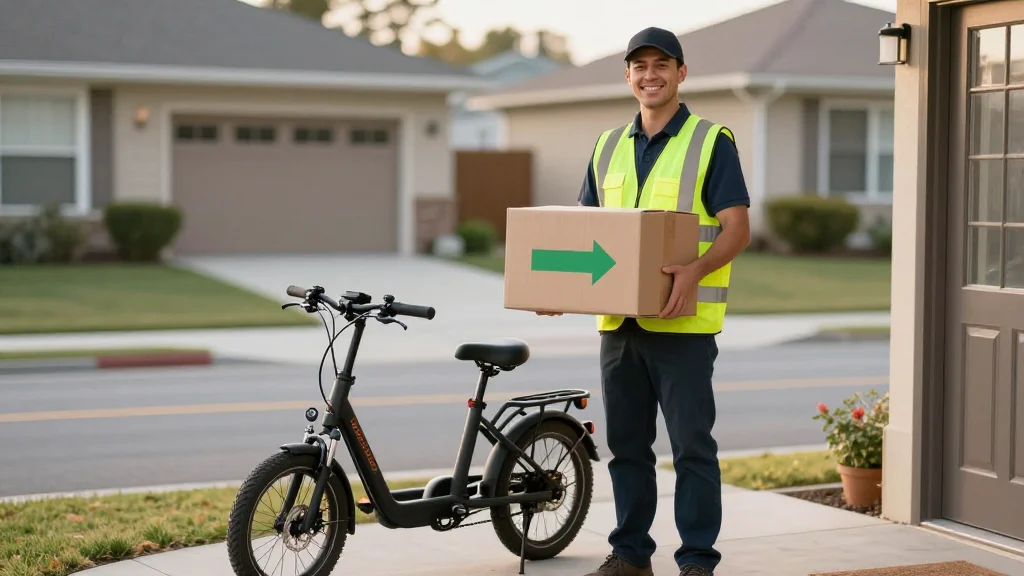
Uber Launches $5 Doorstep Return Pickups for Uber Eats Purchases Across 5,000 US Cities
Companies Mentioned

Why It Matters
The service turns a common consumer pain point into a low‑cost, on‑demand solution, potentially increasing Uber Eats retention while showcasing Uber’s broader ambition to become a general‑purpose logistics platform. It also taps into a $850 billion U.S. returns market that still lacks convenient, door‑to‑door options.
Key Takeaways
- •$5 on‑demand return pickup available in ~5,000 U.S. cities.
- •Only Uber Eats orders $20‑$100 eligible.
- •Uber One members pay $3 per return.
- •Nine retailers, including Target and Best Buy, join at launch.
- •Uber aims to boost courier utilization and app engagement.
Pulse Analysis
The U.S. returns landscape is a $850 billion challenge, with online items returning at twice the rate of in‑store purchases. Consumers face the hassle of repackaging, printing labels, and traveling to drop‑off points, while retailers absorb $10‑$65 per return in processing costs and $103 billion in fraud losses. Uber’s $5 doorstep pickup eliminates most of that friction, offering a price comparable to printing a label but with the added convenience of a courier arriving at the customer’s door. By limiting the service to Uber Eats orders, the company ensures the marginal cost of each pickup is low, as drivers are often already in the area delivering food or groceries.
In a market crowded with established players, Uber differentiates itself through on‑demand collection rather than static drop‑off locations. UPS’s acquisition of Happy Returns and Amazon’s network of Whole Foods and locker hubs provide label‑free returns, yet both require the consumer to travel to a physical site. Uber’s model removes that step entirely, positioning the service as a true convenience layer for a niche segment of e‑commerce transactions. The current constraints—minimum $20 spend, $100 value cap, 30‑pound weight limit, and a nine‑partner retailer roster—keep the offering modest, but they also allow Uber to test demand without overextending its logistics network.
Strategically, Return a Package aligns with Uber’s broader push into logistics, from Uber Connect to autonomous vehicle pilots. The service adds another touchpoint that can increase the frequency of app opens and the number of tasks each courier completes per hour, both key levers for profitability in the delivery business. If Uber expands the retailer list, lifts the value ceiling, and eventually opens the feature to non‑Uber Eats orders, it could capture a meaningful slice of the reverse‑logistics market. For now, the $5 price point makes the service an impulse choice for eligible shoppers, while serving as a proof point that Uber’s courier fleet can handle both forward and reverse deliveries.
Uber launches $5 doorstep return pickups for Uber Eats purchases across 5,000 US cities
Comments
Want to join the conversation?
Loading comments...