Helion Secures $465 Million Series G, Valuing Fusion Startup at $15.5 B

Companies Mentioned

Why It Matters
Helion’s $465 million raise marks one of the largest VC‑backed infusions into deep‑tech energy this year, signaling that limited partners are increasingly comfortable allocating capital to ventures with decade‑long payback periods. The funding validates a shift in venture strategy: moving beyond software‑centric bets toward physics‑driven solutions that could unlock massive, systemic value if successful. For the broader VC landscape, Helion’s valuation sets a new benchmark for what investors are willing to pay for a credible path to commercial fusion, potentially reshaping deal structures, LP expectations, and the risk‑return calculus for capital‑intensive clean‑energy startups. Moreover, Helion’s partnership with Microsoft ties the fusion narrative to the AI industry’s insatiable demand for reliable, low‑cost power. If Helion delivers on its timeline, it could catalyze a wave of AI‑driven data‑center deployments powered by fusion, creating a feedback loop that further fuels investor enthusiasm for deep‑tech energy solutions. The outcome will influence how venture capital allocates resources across the emerging clean‑energy frontier and could accelerate the transition to a carbon‑free grid.
Key Takeaways
- •Helion closed a $465 million Series G round, valuing the company at $15.5 billion.
- •Thrive Capital led the round; new investors include Alta Park Capital, Anti Fund, BoxGroup, Lux Capital, Peak XV Partners and Bill Ford.
- •Helion’s total capital raised now exceeds $1.5 billion, with a prior $425 million raise in Jan 2025.
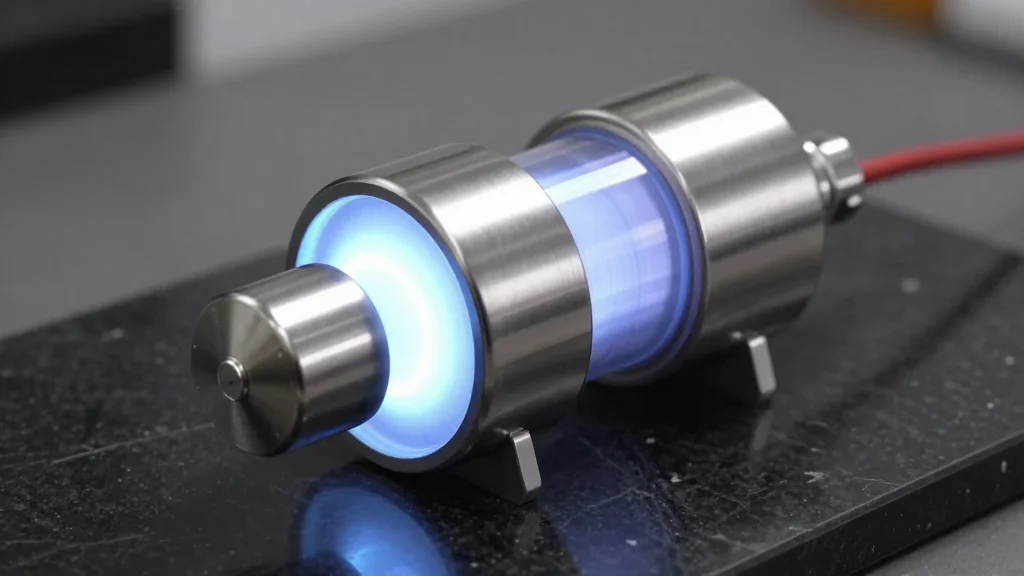
- •The company uses magnetic‑compression fusion, aiming to harvest electricity directly from magnetic fields.
- •Fusion sector funding surged: Focused Energy $240 M, Thea Energy $100 M, Inertia Energy $450 M Series A.
Pulse Analysis
Helion’s latest financing underscores a pivotal moment for venture capital’s deep‑tech playbook. Historically, VCs have shied away from physics‑heavy startups because of long development cycles and high capital intensity. The $465 million infusion, however, reflects a maturing LP appetite for bets that promise outsized, systemic returns despite extended timelines. This shift is partly driven by the convergence of two megatrends: the urgent need for carbon‑free baseload power and the exploding compute demand from AI workloads. Investors see fusion not just as an energy story but as a strategic enabler for the next generation of data‑center infrastructure.
The valuation premium placed on Helion—$15.5 billion—also redefines the market’s pricing of risk. By benchmarking against late‑stage software unicorns, VCs are effectively betting that the upside of a successful fusion plant outweighs the traditional risk premium associated with hardware and physics R&D. This could lead to a reallocation of capital from later‑stage SaaS rounds toward earlier, more capital‑intensive deep‑tech pipelines, reshaping the venture capital ecosystem’s capital flow.
Looking ahead, Helion’s ability to meet its 2028 grid‑connection target will be the decisive factor. A successful demonstration would likely trigger a cascade of follow‑on investments, not only in Helion’s supply chain but across the broader fusion ecosystem, accelerating commercialization timelines. Conversely, missed milestones could temper enthusiasm and tighten funding standards, prompting LPs to demand more rigorous technical validation before committing. In either scenario, Helion’s raise is a bellwether for how venture capital will navigate the high‑stakes frontier of clean‑energy innovation.
Helion Secures $465 Million Series G, Valuing Fusion Startup at $15.5 B
Comments
Want to join the conversation?
Loading comments...