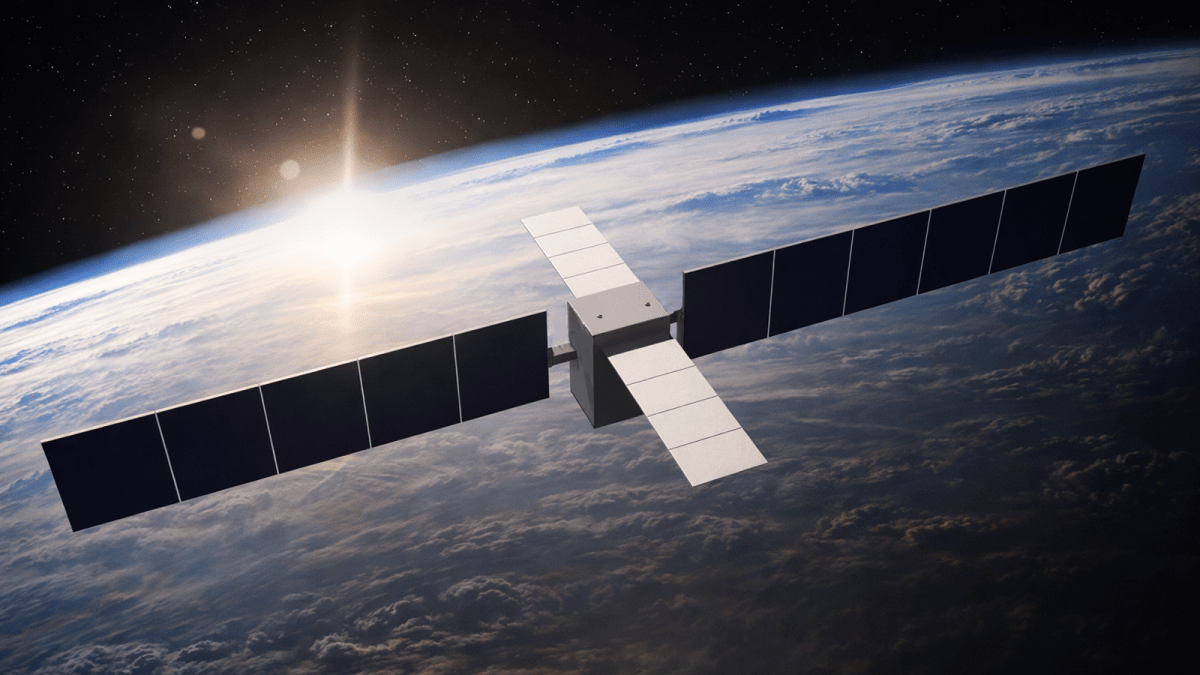
How an E-Scooter Founder Raised $5 Million to Build Space Data Centers
Companies Mentioned


Why It Matters
The funding shows venture capital’s confidence that space‑based AI compute can eventually overcome Earth‑bound latency and cost constraints, potentially reshaping the AI infrastructure market.
Key Takeaways
- •Orbital secured $5 million seed from a16z Speedrun and 15 other investors.
- •Founder Euwyn Poon, former Spin CEO, pivots to space data‑center market.
- •First demo will fly Nvidia Blackwell chip to validate shielding technology.
- •Target: 10,000 satellites each delivering 100 kW, achieving gigawatt compute.
- •Business model depends on Starship lowering launch costs versus Falcon 9.
Pulse Analysis
The race to put AI workloads in orbit reflects a broader shift in compute economics. As terrestrial data centers grapple with power limits, cooling challenges, and regulatory hurdles, space offers near‑constant solar energy and a clean regulatory slate. Venture firms have taken note, pouring capital into startups that promise to sidestep Earth’s bottlenecks by leveraging the vacuum of space for heat dissipation and the low‑gravity environment for novel hardware designs. This trend is amplified by the explosive demand for generative AI models, which consume ever‑greater compute resources.
Orbital’s approach blends seasoned entrepreneurship with cutting‑edge hardware. Euwyn Poon, who scaled Spin to 250,000 scooters before selling to Ford, is now applying that scaling mindset to aerospace. The $5 million seed round, backed by a16z Speedrun and a diverse investor group, funds a pilot mission that will mount an Nvidia Blackwell GPU on a commercial satellite to prove radiation‑hardening and thermal‑management solutions. Success hinges on SpaceX’s Starship delivering launch costs low enough to make a satellite‑based data center financially viable, a hurdle that current Falcon 9 pricing cannot overcome.
If Orbital’s demo validates its technology, the company’s roadmap—10,000 satellites delivering 100 kW each for a gigawatt of compute—could redefine AI service delivery. Competitors like Starcloud and Cowboy Space are already testing similar concepts, while Blue Origin eyes data‑center payloads on New Glenn. The sector faces steep capital requirements, estimated at $5 billion over a decade, but the promise of ultra‑low latency, global coverage, and virtually limitless power may justify the investment. As launch economics improve, space‑based AI compute could transition from speculative venture to a cornerstone of the next generation of cloud infrastructure.
How an e-scooter founder raised $5 million to build space data centers
Comments
Want to join the conversation?
Loading comments...