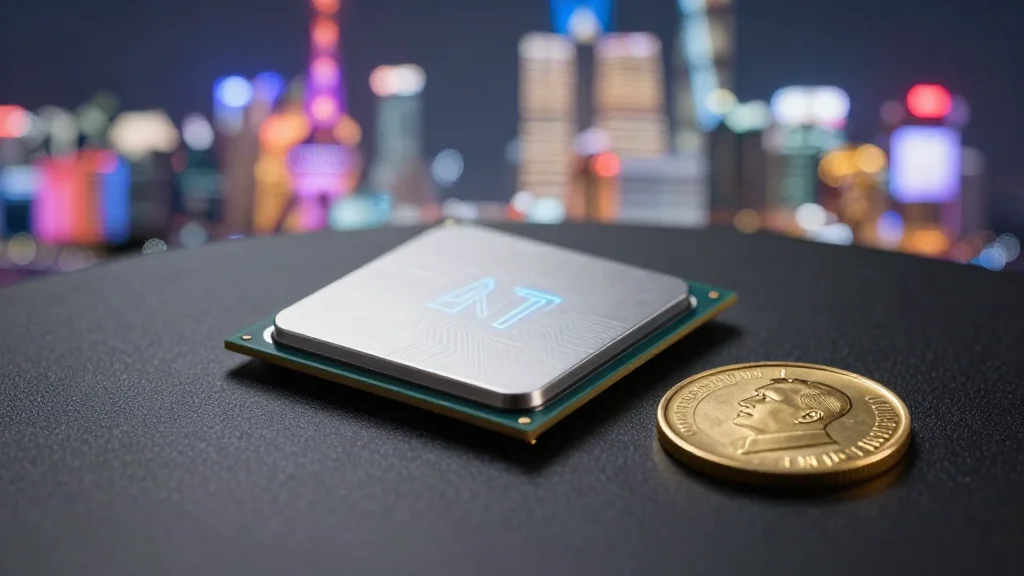
Young Chinese VCs Cite AI Valuations and IPO Momentum as Deal‑Making Shifts

Companies Mentioned
Why It Matters
The shift highlighted at the summit signals a turning point for China’s venture ecosystem. As AI valuations climb, funds are compelled to pool resources, accelerating the consolidation of capital among a younger, more tech‑savvy generation of investors. This collaborative model could reshape deal flow, pricing dynamics, and the competitive landscape for both domestic and foreign limited partners seeking exposure to China’s high‑growth sectors. Moreover, the renewed focus on IPO exits suggests a maturing market where liquidity events become a central metric for fund performance, potentially attracting more institutional capital. For the broader venture capital industry, the Chinese experience offers a cautionary tale about the risks of chasing headline‑grabbing valuations without a clear exit pathway. It also illustrates how generational change can drive the adoption of AI tools within investment processes, a trend that may soon spread to other regions as firms look to automate routine analysis while preserving the nuanced judgment required for early‑stage bets.
Key Takeaways
- •Young Chinese VCs at an April 22 summit highlighted AI valuations and IPO momentum as key deal‑making drivers.
- •Shanghai State‑Owned Capital Investment FOF Capital manages roughly 60‑70 billion yuan ($8.5‑$10 bn) across multiple strategies.
- •Panelists noted a market split: hot AI/computing projects with high multiples versus a crowded broader funding environment.
- •Joint‑deal syndicates are rising as single investors struggle to fund high‑valued early‑stage rounds.
- •AI tools are being deployed for research and data sorting, but deep early‑stage judgment remains human‑centric.
Pulse Analysis
The emergence of a cohort of 1990s‑born Chinese investors marks more than a demographic shift; it reflects a strategic re‑orientation toward capital efficiency and technology‑enabled decision‑making. Historically, Chinese venture capital was dominated by senior partners with strong state‑backed networks. The new generation, armed with AI‑driven analytics, is less reliant on personal guile and more on data‑centric sourcing, which could democratize access to high‑quality deals but also intensify competition for the limited pool of truly differentiated startups.
The emphasis on joint deals signals a nascent form of consortium‑style investing that mirrors trends in Silicon Valley where mega‑funds co‑lead mega‑rounds to mitigate risk. In China, this model may accelerate the consolidation of capital among a few well‑connected funds, potentially squeezing out smaller, niche players unless they can carve out differentiated theses. The renewed optimism around IPO exits, however, could broaden the exit horizon, encouraging more funds to stay the course rather than exit early via secondary sales.
Looking forward, the real test will be whether AI‑centric valuations can be justified by sustainable revenue growth and whether the IPO pipeline can absorb the influx of high‑valuation companies. If the market corrects, we may see a swing back toward deep‑tech niches and a re‑valuation of the joint‑deal model. Conversely, a smooth IPO rollout could cement the collaborative, AI‑enabled approach as the new norm for Chinese venture capital, influencing global capital allocation strategies in the years to come.
Young Chinese VCs Cite AI Valuations and IPO Momentum as Deal‑Making Shifts
Comments
Want to join the conversation?
Loading comments...