Buprenorphine Lowers Suicidality After Ketamine Treatment
Why It Matters
Sustaining ketamine’s rapid antisuicidal effect could fill a critical gap in suicide prevention, offering clinicians a scalable, low‑risk adjunct therapy. The study suggests buprenorphine may become a practical tool for extending protection against suicidal thoughts after acute treatment.
Key Takeaways
- •Buprenorphine after ketamine cut suicidal ideation 76% vs placebo.
- •Study: 50 adults, 0.2‑0.8 mg buprenorphine daily for 4 weeks.
- •No significant withdrawal symptoms observed upon buprenorphine discontinuation.
- •Findings suggest a scalable, safe adjunct for suicide risk management.
Pulse Analysis
The United States faces a mental‑health emergency, with roughly 13 million people contemplating suicide each year. Ketamine has emerged as a fast‑acting antidote to acute suicidal thoughts, yet its benefits typically wane within days. Researchers at Stanford explored whether targeting the mu‑opioid pathway—central to ketamine’s mechanism—could prolong its protective effect, turning a fleeting intervention into a longer‑lasting safeguard.
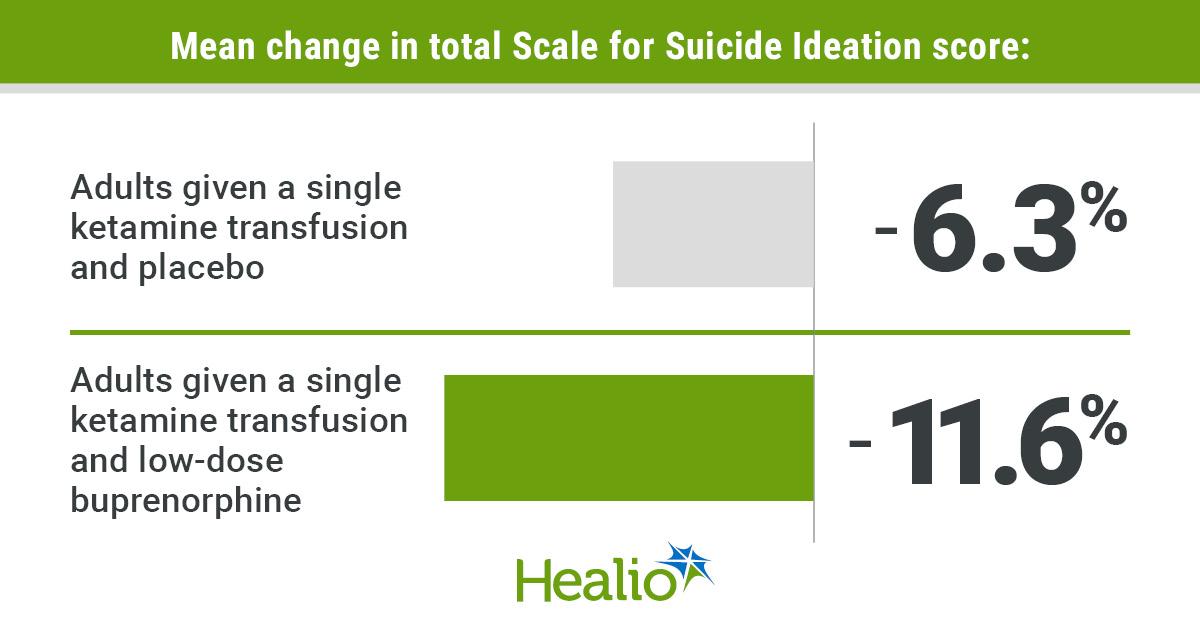
In a rigorously designed double‑blind trial, 50 adults with major depressive or bipolar II disorder received an intravenous ketamine infusion followed 48 hours later by either sublingual buprenorphine (0.2‑0.8 mg) or placebo for four weeks. The buprenorphine cohort experienced a mean reduction of 11.6 points on the Scale for Suicide Ideation, compared with a 6.3‑point drop in the placebo group, a statistically significant divergence (P < .001). While depressive symptom scores improved in both arms, only the suicide‑specific outcomes reached clear significance, underscoring buprenorphine’s targeted antisuicidal potential.
These findings carry weight for clinicians seeking durable solutions to suicide risk. Buprenorphine’s established safety record, combined with the absence of opioid‑withdrawal symptoms upon cessation, positions it as a viable maintenance strategy after ketamine’s rapid onset. Nonetheless, broader trials are needed to define optimal dosing duration, assess long‑term dependence risks, and evaluate effectiveness across diverse psychiatric populations. If subsequent research confirms these early results, buprenorphine could become a cornerstone in a two‑step protocol—ketamine for immediate relief, followed by buprenorphine to sustain life‑saving benefits.
Buprenorphine lowers suicidality after ketamine treatment
Comments
Want to join the conversation?
Loading comments...