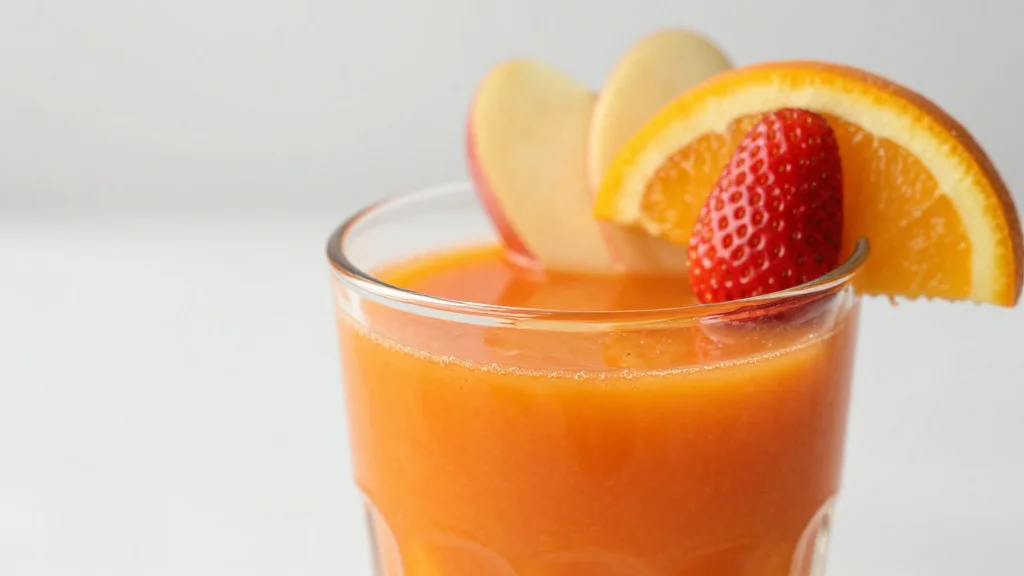
Daily Fruit Juice Cut Depression Scores by 2.5 Points in UK Adults

Why It Matters
The study bridges two traditionally separate public‑health domains: nutrition and mental health. By quantifying a mood improvement linked to a specific, inexpensive dietary change, it offers a tangible strategy for reducing depression risk among adults who struggle to meet fruit and vegetable guidelines. If adopted broadly, the approach could alleviate pressure on mental‑health services and contribute to chronic‑disease prevention, given the known physical benefits of a 5‑a‑day diet. Moreover, the research challenges the prevailing narrative that fruit juice is inherently detrimental due to sugar content. By showing no adverse metabolic effects over a month, it opens a nuanced conversation about how juice can fit into balanced diets, especially for low‑income groups where fresh produce may be cost‑prohibitive. This could reshape dietary guidelines and influence food‑industry product positioning.
Key Takeaways
- •Daily 100% fruit juice or smoothie cut depression scores by 2.52 points on a 27‑point scale
- •Study involved 42 adults with baseline intake of ≤2 fruit/veg portions per day
- •Both groups increased fiber intake by 8‑10 g per day, showing juice did not replace whole produce
- •No negative metabolic health effects observed over the four‑week trial
- •Only ~17% of UK adults currently meet the 5‑a‑day recommendation
Pulse Analysis
The Newcastle University trial arrives at a moment when mental‑health interventions are increasingly looking beyond pharmaceuticals to lifestyle levers. Historically, nutrition‑focused mental‑health research has centered on micronutrients—omega‑3s, B vitamins, and antioxidants—while whole‑diet patterns like the Mediterranean diet have shown broader mood benefits. This study narrows the focus to a single, easily implementable change, offering a low‑threshold entry point for individuals and health systems alike.
From a market perspective, the findings could invigorate the fruit‑juice sector, which has faced declining sales amid sugar‑concern campaigns. If public‑health agencies begin to endorse juice as a mental‑health adjunct, manufacturers may see a resurgence in demand, prompting product reformulations that emphasize 100% juice and reduced added sugars. Simultaneously, retailers could leverage the data to promote juice bundles alongside fresh produce, creating cross‑selling opportunities that align with the 5‑a‑day push.
Looking ahead, the key question is scalability. The trial’s modest size and short duration limit confidence in long‑term efficacy and generalizability across age groups, ethnicities, and socioeconomic strata. Larger, multi‑site studies will be needed to verify that the depression‑score reduction persists beyond four weeks and translates into clinically meaningful outcomes, such as reduced antidepressant use or lower incidence of major depressive episodes. If future research confirms these early signals, we may witness a shift in dietary guidelines that explicitly mention mental‑health benefits of fruit juice, reshaping both public‑policy discourse and consumer behavior.
Daily Fruit Juice Cut Depression Scores by 2.5 Points in UK Adults
Comments
Want to join the conversation?
Loading comments...