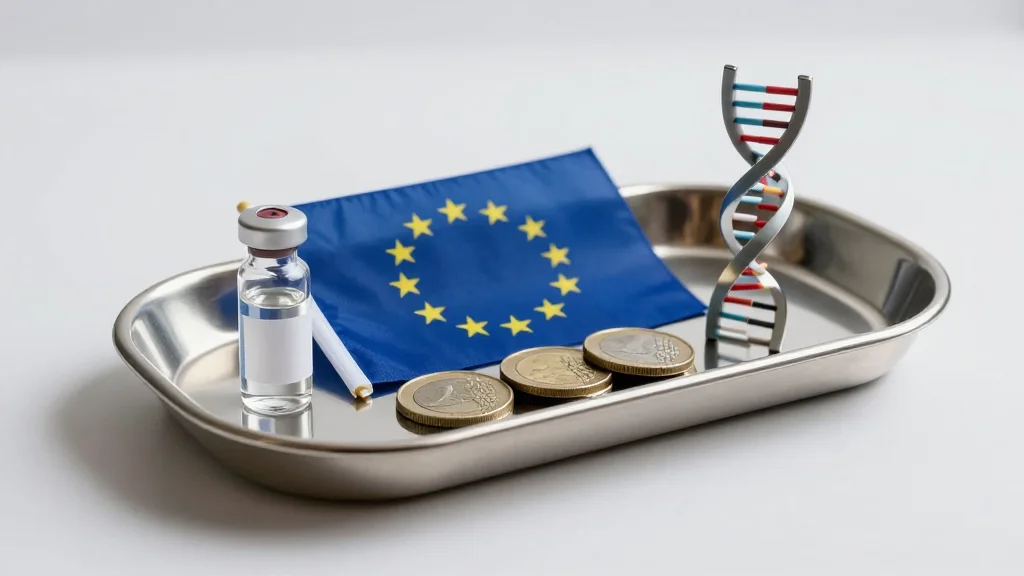
EU Unveils $6.5B Global Health Resilience Initiative for Worldwide Security

Why It Matters
The initiative represents a decisive move by the EU to re‑anchor global health security in a post‑pandemic world, where fragmented aid and supply‑chain vulnerabilities have hampered rapid responses. By coupling public funds with private capital, the EU aims to create a more resilient financing ecosystem that can sustain long‑term health system strengthening rather than episodic emergency relief. If successful, the Global Health Resilience Initiative could set a new standard for multilateral health cooperation, encouraging other donors to adopt blended‑finance models and prioritize health sovereignty. The emphasis on a streamlined architecture may also reduce administrative overhead, allowing resources to flow more directly to countries that need them most, thereby improving global preparedness for future health threats.
Key Takeaways
- •EU commits over €6 billion (~$6.5 billion) to the Global Health Resilience Initiative.
- •Five priority areas include supply‑chain diversification, primary health‑care strengthening, and a global health tracker.
- •Blended‑finance tools will combine EU public funds with private‑sector loans and guarantees.
- •The initiative aligns with the EU’s Multiannual Financial Framework starting in 2028.
- •EU aims to streamline the global health architecture, reducing overlap among WHO, UNAIDS, UNICEF and other UN bodies.
Pulse Analysis
The EU’s Global Health Resilience Initiative arrives at a moment when donor fatigue and geopolitical tensions have strained traditional development assistance. By pivoting to blended finance, the EU is betting that private capital can fill the chronic funding shortfall that has plagued health systems in low‑income regions. This approach mirrors the broader trend of “impact‑linked” financing seen in climate and infrastructure sectors, where risk‑sharing mechanisms are used to unlock private investment.
Historically, EU health aid has been fragmented across multiple programmes, often leading to duplication and inefficiency. The new tracker and the promise of a unified EU‑wide map of health investments could dramatically improve visibility and coordination, but its success will depend on the political will of member states to cede some autonomy to a centralised strategy. Moreover, the reliance on private‑sector partners raises questions about governance, pricing, and equitable access to medical countermeasures—issues that have sparked criticism in past public‑private collaborations.
Looking ahead, the initiative’s impact will be measured by how quickly it can translate financial commitments into tangible health outcomes, such as increased vaccine manufacturing capacity in Africa or strengthened primary‑care networks in the Middle East. If the EU can demonstrate that blended finance delivers faster, more resilient health infrastructure, it may inspire a new wave of donor strategies that blend public oversight with market efficiency, reshaping the global health financing landscape for the next decade.
EU Unveils $6.5B Global Health Resilience Initiative for Worldwide Security
Comments
Want to join the conversation?
Loading comments...