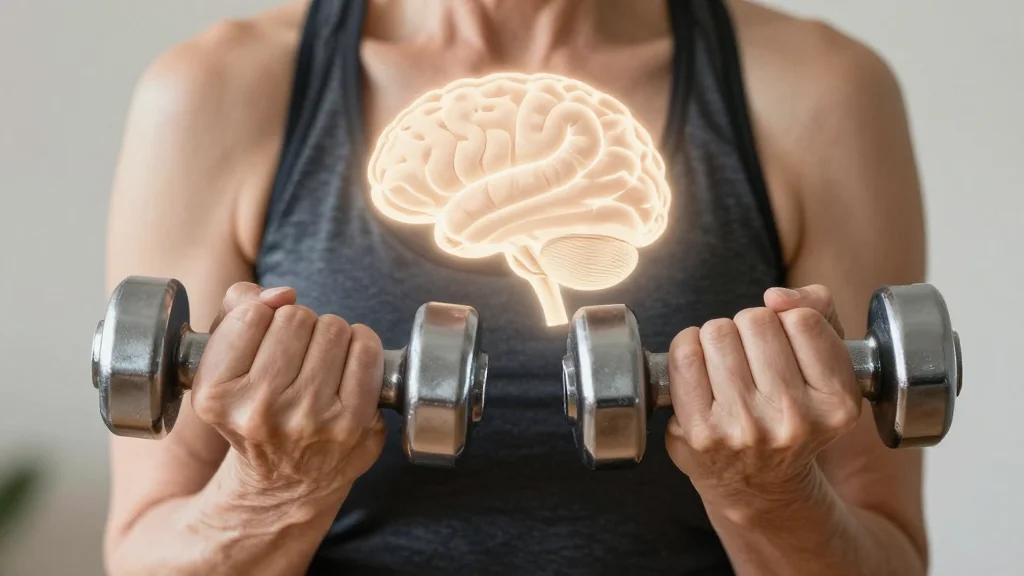
Lifting Weights Builds a Sharper Mind and Reduces Anxiety in Older Women
Why It Matters
The findings demonstrate that structured resistance exercise can serve as an accessible, cost‑effective intervention to mitigate age‑related cognitive decline and mood disorders, a growing concern as the population ages. Health systems and senior‑care providers can leverage these results to design evidence‑based fitness programs that enhance quality of life and reduce long‑term care costs.
Key Takeaways
- •Resistance training improves cognition and reduces anxiety in women 68 avg.
- •Both heavy (8-12 reps) and lighter (10-15 reps) loads yielded similar gains.
- •Depressive symptoms fell 24‑34%; anxiety dropped over 40% after 12 weeks.
- •Improvements observed across global cognition, executive function, and reaction time.
- •Social interaction in group workouts may amplify mental health benefits.
Pulse Analysis
As the global population ages, preserving cognitive function and emotional wellbeing becomes a public‑health priority. While pharmacologic approaches dominate headlines, the biological mechanisms triggered by resistance exercise—such as the release of myokines that promote neurogenesis and the modulation of cortisol—offer a complementary pathway to brain health. For older women, who face heightened risks of depression and anxiety due to hormonal shifts and social isolation, weightlifting provides a dual benefit: strengthening musculoskeletal systems while simultaneously buffering stress‑related neural damage.
The recent randomized controlled trial led by Paolo M. Cunha enrolled 120 women averaging 68 years old and compared two resistance‑training regimens against a sedentary control. Participants exercised three mornings per week for twelve weeks, performing full‑body movements under professional supervision. Cognitive assessments—including the Montreal Cognitive Assessment and the Trail Making Test—showed significant score improvements in both active groups, while mood surveys recorded a 24‑34% drop in depressive symptoms and over a 40% reduction in anxiety. Notably, the heavier‑load, lower‑rep protocol performed on par with the lighter‑load, higher‑rep approach, suggesting flexibility in program design without sacrificing mental‑health outcomes.
These results have immediate implications for senior fitness programming, health insurers, and policymakers. Community centers and assisted‑living facilities can integrate resistance‑training modules that accommodate varying strength levels, knowing that either intensity range yields comparable neurocognitive benefits. Moreover, the study highlights the added value of group‑based exercise environments, which may amplify emotional gains through social interaction. Future research should isolate the relative contributions of load, volume, and social factors to refine guidelines, but practitioners can already recommend regular weightlifting as a low‑cost, high‑impact tool for aging women’s mental resilience.
Lifting weights builds a sharper mind and reduces anxiety in older women
Comments
Want to join the conversation?
Loading comments...