Health Longevity Secrets
Keto Saved My Life — The Future of Metabolic Medicine | Nick Norwitz PhD MD
Why It Matters
Understanding how metabolic therapies can outperform costly pharmaceuticals challenges the status quo and empowers patients to take control of their health with data‑driven tools. As wearables and AI become mainstream, personalized nutrition and metabolic medicine could dramatically reduce chronic disease burden, making this conversation especially timely for anyone seeking proactive, cost‑effective health solutions.
Key Takeaways
- •Keto diet induced remission in ulcerative colitis case series.
- •Evidence-based care often misses low-profit, high-impact interventions.
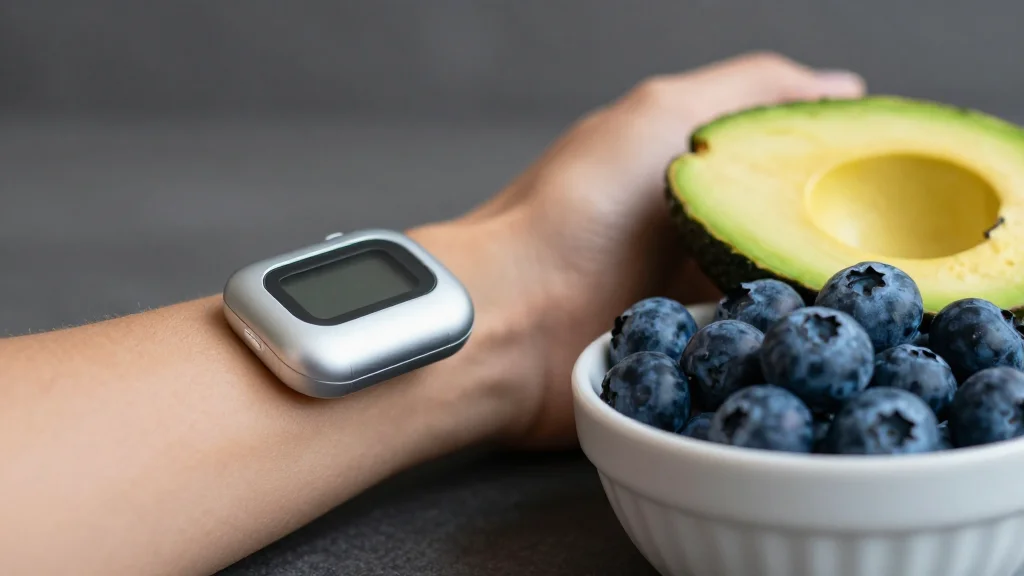
- •CGMs and AI decode glucose curves for personalized treatment.
- •Metabolic research hindered by funding models favoring pharmaceuticals.
- •Patient-driven data empowers prevention and metabolic health management.
Pulse Analysis
In this episode, Dr. Nick Norwitz recounts how a ketogenic diet rescued him from severe ulcerative colitis, achieving clinical remission confirmed by colonoscopy and biomarkers. He expanded his experience into a ten‑patient case series, documenting complete disease reversal on a low‑carb, carnivore‑style regimen. The narrative underscores the therapeutic potential of ketosis, fiber elimination, and anti‑inflammatory ketone signaling for gut health, positioning diet as a life‑saving tool often overlooked by conventional gastroenterology.
Norwitz challenges the notion that "evidence‑based" automatically equals optimal care. He explains that large‑scale trials for low‑profit interventions like keto are rare because pharmaceutical and procedural reimbursement models dominate research funding. This incentive gap leaves effective metabolic therapies under‑studied, despite growing mechanistic data linking ketosis to reduced inflammation, stem‑cell renewal, and immune modulation. The conversation pivots to emerging technologies—continuous glucose monitors, machine‑learning algorithms, and multi‑omic panels—that decode individual metabolic phenotypes, enabling clinicians to pinpoint whether muscle insulin resistance, beta‑cell dysfunction, or incretin deficits drive a patient’s disease.
Looking ahead, Norwitz envisions a democratized health ecosystem where patients collect real‑time biometrics, interpret them through AI‑driven apps, and tailor nutrition, fiber intake, or GLP‑1 therapies with precision. This shift could realign the business model toward outcomes rather than procedures, accelerating adoption of metabolic medicine for chronic conditions ranging from IBD to diabetes and neurodegeneration. By marrying patient‑generated data with rigorous scientific communication, the field moves closer to preventive, personalized care that transcends traditional pharmaceutical incentives.
Episode Description
A ketogenic diet put his ulcerative colitis into complete remission — off all medications, confirmed on colonoscopy. Dr. Nick Norwitz (PhD Oxford, MD Harvard) explains why evidence-based care isn't always optimal care, how keto rewires the gut and brain, and why GLP-1 drugs should catalyze lifestyle change, not replace it.
CHAPTERS:
0:00 - The most remarkable thing about my story is it's not unique
1:14 - Welcome Nick Norwitz — Oxford PhD, Harvard MD
2:02 - Ulcerative colitis, desperation, and keto remission
5:34 - What medical school doesn't teach
8:05 - Why evidence-based care ≠ optimal care
15:53 - The carnivore-ketogenic IBD case series (10 patients)
18:50 - Fiber elimination in pediatric Crohn's — 60–85% remission
20:00 - Keto for depression: Ohio State trial — 69–71% reduction
23:49 - Seed oils: the nuanced truth
29:32 - Ketones and neurodegenerative disease
32:52 - Autophagy, lateral habenula, and depression
36:16 - Sonnenburg 2021: fermented foods beat fiber for inflammation
37:20 - GLP-1 agonists: good tool, poor deployment
43:29 - Statins slash GLP-1 by ~50% (Cell Metabolism, 2024)
48:57 - Closing
REFERENCES:
Carnivore-Keto for IBD (Norwitz et al., Frontiers, 2024): PMC11409203
Keto for Depression (Ohio State, 2025): PMC12420795
Fermented Foods vs Fiber (Sonnenburg, Cell, 2021): Stanford News
Statins Slash GLP-1 (Cell Metabolism, 2024): pubmed/38325336
Autophagy + Depression (Nature, 2025): Nature
GUEST: Nick Norwitz, PhD MD
HOST: Dr. Robert Lufkin MD | robertlufkinmd.com
New episodes every Tuesday & Thursday. Subscribe so you don't miss one.
Continue this conversation on Substack: https://robertlufkinmd.substack.com
Lies I Taught In Medical School — Free sample chapter: https://www.robertlufkinmd.com/lies/
Web: https://www.robertlufkinmd.com
YouTube: https://www.youtube.com/robertlufkinmd
X: https://x.com/robertlufkinmd
Instagram: https://www.instagram.com/robertlufkinmd/
TikTok: https://www.tiktok.com/@robertlufkin
LinkedIn: https://www.linkedin.com/in/robertlufkinmd/
Comments
Want to join the conversation?
Loading comments...