Nayuta Space Secures Pre‑A Funding to Advance Aerodynamic‑Recovery Rocket

Companies Mentioned
Why It Matters
Nayuta Space’s pursuit of an aerodynamic‑deceleration, horizontal‑landing recovery system introduces a fundamentally different reusability model to the commercial launch ecosystem. If the approach proves viable, it could lower the technical barriers associated with engine reignition and precise vertical landings, thereby reducing launch costs and turnaround times. Moreover, the success of a Chinese firm championing a non‑VTVL architecture would broaden the strategic options available to satellite operators and could spur further innovation across the global launch industry. The development also highlights the rapid maturation of China’s private launch sector, which is now experimenting with multiple reusability pathways in parallel. By diversifying the technological portfolio, China reduces reliance on any single recovery method and strengthens its position in the competitive international launch market, where cost, cadence and reliability are paramount.
Key Takeaways
- •Nayuta Space closed three Pre‑A financing rounds (Pre‑A1‑A3) on April 24, amount undisclosed
- •Funding earmarked for static‑ignition, wind‑tunnel tests and scaled‑down aerodynamic‑recovery flights
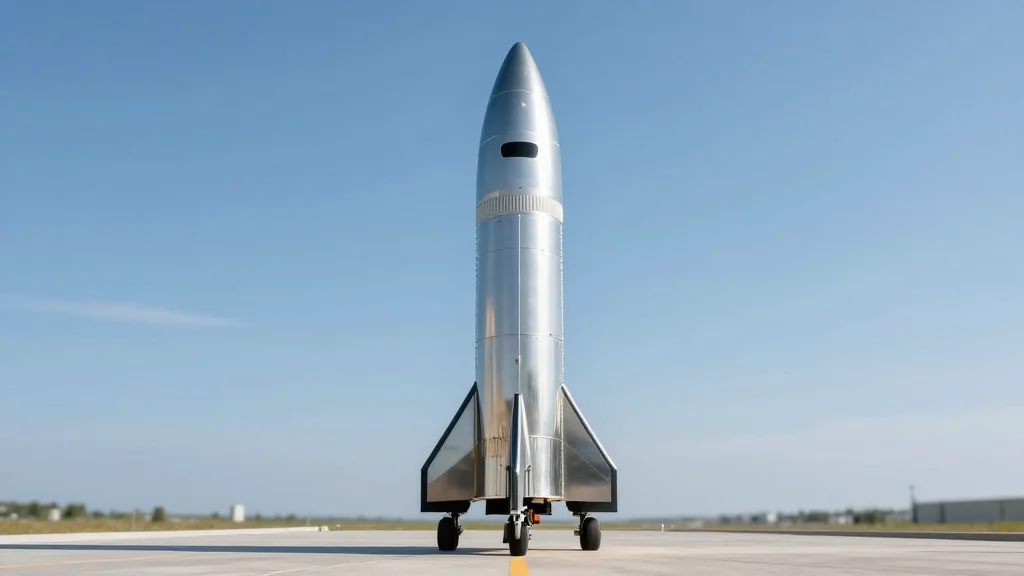
- •Xuanniao‑R is a 70‑m, 3.8‑m diameter, two‑stage stainless‑steel rocket using 13 Canglong‑1 methane‑LOX engines
- •The vehicle employs an aerodynamic deceleration and horizontal landing (ADHL) recovery concept
- •First full‑scale test flight targeted for the first half of 2027
Pulse Analysis
Nayuta Space’s funding round underscores a broader shift in the commercial launch arena: the search for reusable architectures that move beyond the vertical‑landing playbook popularized by SpaceX. While VTVL has become the industry default, its reliance on complex engine reignition and high‑precision thrust vector control imposes significant engineering and cost burdens. Nayuta’s ADHL approach, by leveraging aerodynamic drag and horizontal touchdown, could sidestep many of these challenges, offering a potentially cheaper and faster turnaround solution. However, the trade‑off lies in added structural mass and aerodynamic complexity, which could erode payload capacity—a critical metric for launch customers.
China’s private launch sector is uniquely positioned to experiment with divergent recovery methods because of a relatively open regulatory environment and a growing pool of venture capital. Nayuta’s decision to pivot from a chopstick‑style recovery to ADHL signals confidence that the aerodynamic route can be scaled. If the upcoming sub‑orbital hops and static‑fire campaigns validate the concept, Nayuta could attract additional investors seeking exposure to a differentiated reusability technology, potentially accelerating the commercialization timeline.
From a market perspective, a successful ADHL system would diversify the competitive landscape, forcing incumbents to reassess their own recovery strategies. Satellite operators could benefit from a broader menu of launch services, each with distinct cost structures and risk profiles. In the long term, the emergence of multiple viable reusability pathways may drive overall launch costs down, catalyze higher launch cadence, and expand access to space for a wider range of customers—from small‑sat constellations to deep‑space missions.
Nayuta Space Secures Pre‑A Funding to Advance Aerodynamic‑Recovery Rocket
Comments
Want to join the conversation?
Loading comments...