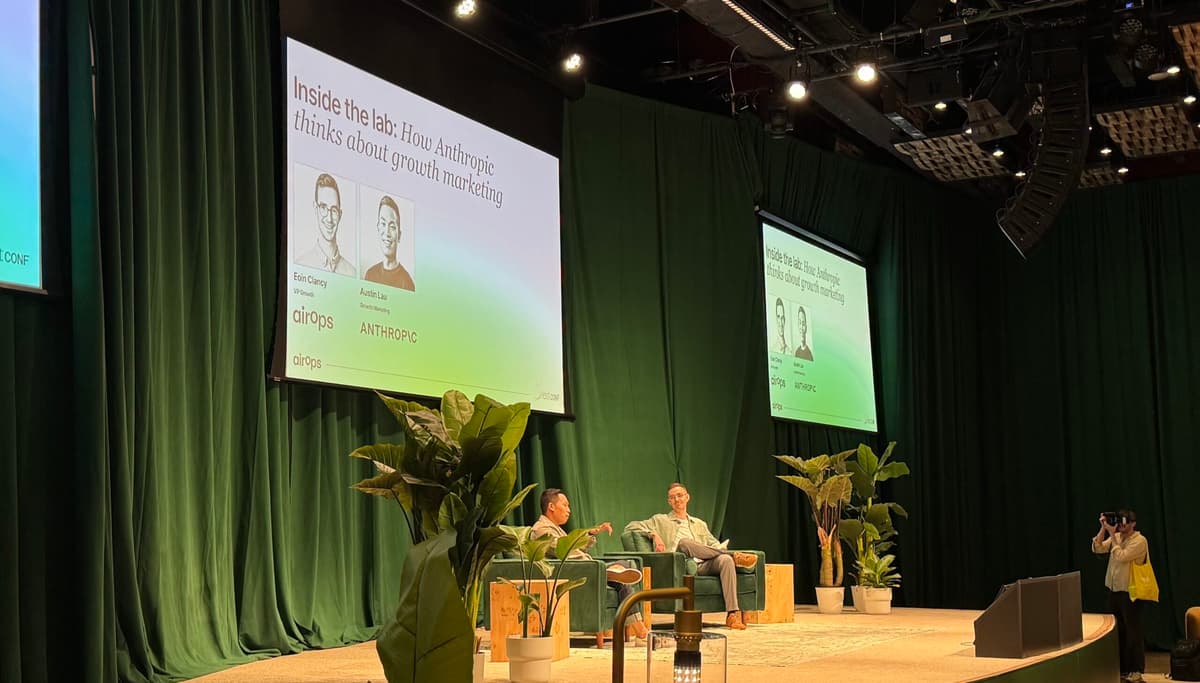
8 Ways to Use AI in Marketing, According to Anthropic’s Austin Lau
Why It Matters
Lau’s framework shows how leading AI firms operationalize LLMs, giving marketers a scalable roadmap to boost efficiency, reduce tech debt, and stay competitive as AI adoption accelerates across the industry.
Key Takeaways
- •Map current workflows, then match Claude’s speed or quality advantage.
- •Benchmark AI output against manual results before scaling.
- •Break complex tasks into incremental prompts, not single-shot commands.
- •Build in‑house tools only for truly niche problems; buy otherwise.
- •Encode tribal knowledge into reusable AI skills for scalable adoption.
Pulse Analysis
The marketing landscape is being reshaped by large language models, and Anthropic’s meteoric rise—from $150 million to $7 billion in revenue—illustrates the commercial power of AI‑enabled campaigns. While 80% of marketers already use AI for content creation, many still grapple with integrating these tools into day‑to‑day workflows. Austin Lau’s experience at Anthropic provides a rare front‑row view of how a fast‑growing AI company aligns its marketing engine with Claude, turning experimental prompts into measurable revenue drivers. His emphasis on process mapping ensures that teams first understand where AI can outperform humans, creating a clear ROI baseline before scaling.
Lau’s eight‑point guide translates high‑level AI hype into actionable tactics. By benchmarking Claude’s output against manual work, marketers can quickly validate quality without committing resources. Incremental prompting replaces the common mistake of dumping complex briefs into a single request, allowing teams to monitor each step and adjust on the fly. The buy‑versus‑build decision is framed around tech debt: unless a use case is truly niche, existing SaaS solutions—like Salesforce or Gong—offer faster, lower‑maintenance alternatives. Encoding tribal knowledge into reusable AI skills further amplifies scalability, turning expert know‑how into shareable prompts that reduce onboarding time and ensure consistency across campaigns.
Beyond tactics, Lau highlights a cultural shift in talent acquisition. Companies now seek marketers who excel in their core discipline and demonstrate AI curiosity, bridging the gap between creative strategy and algorithmic execution. As AI models become exponentially more capable, the competitive edge will belong to organizations that codify expertise, automate repeatable tasks, and continuously iterate on prompt engineering. For businesses aiming to future‑proof their marketing operations, adopting Lau’s framework offers a pragmatic path to harnessing AI’s speed and precision while mitigating the risks of over‑customization and knowledge silos.
8 Ways to Use AI in Marketing, According to Anthropic’s Austin Lau
Comments
Want to join the conversation?
Loading comments...