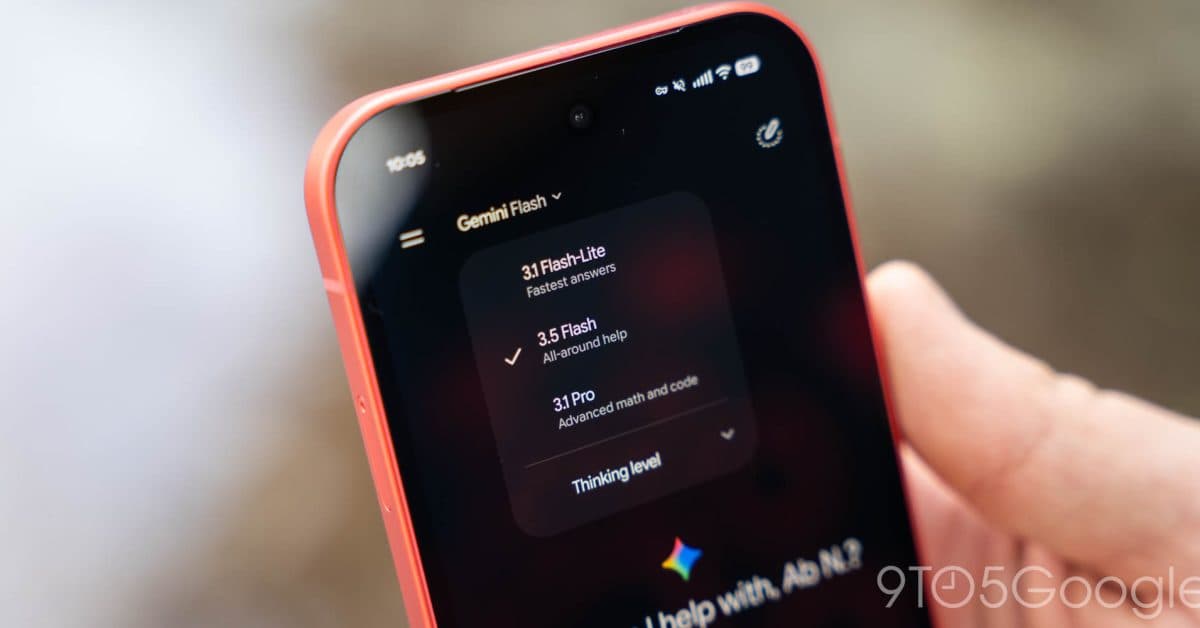
Gemini 3.5 Flash Lands on Google’s Android Coding Rankings, but It’s 3x the Cost for Slower Performance
Companies Mentioned


Why It Matters
Developers relying on LLMs for code generation face higher expenses and slower turnaround with Gemini 3.5 Flash, potentially steering them toward more cost‑effective alternatives. The benchmark reshapes vendor positioning in the emerging agentic‑coding market.
Key Takeaways
- •Gemini 3.5 Flash ranks 6th in Android Bench, behind GPT 5.5
- •Flash costs $147.1/run, using 5.5× tokens of Gemini 3.1 Pro
- •Performance gap 9% lower than Gemini 3.1 Pro despite faster claim
- •GPT 5.5 matches Flash cost but uses far fewer tokens
- •Android coding benchmarks show agentic models still lag behind specialized tools
Pulse Analysis
The AI landscape is rapidly pivoting from generic chatbots to specialized agentic models that can write code, test snippets, and even manage entire development cycles. Google’s Android Bench, a recurring evaluation of LLM performance on real‑world Android coding scenarios, provides a rare, data‑driven glimpse into how these models stack up. By running ten independent test cases per model and scoring success rates out of 100, the benchmark isolates both raw capability and operational efficiency—key metrics for enterprises weighing AI‑assisted development tools.
In the most recent release, Gemini 3.5 Flash, touted as a faster, cheaper successor to Gemini 3.1 Pro, underperforms on two critical fronts. Its success score of 63.7 trails the Pro preview’s 72.4, and its average latency of 14.2 seconds is higher than many rivals. More striking is the token consumption: 355.9 tokens per run translates to $147.1, roughly 5.5 times the token count and double the cost of the Pro preview. By contrast, GPT 5.5 achieves a comparable $134.2 cost while using only 64.7 tokens, underscoring a stark efficiency gap that could erode Flash’s appeal for cost‑sensitive development teams.
For developers and product managers, these findings carry practical implications. Higher token usage inflates API bills and can throttle throughput in CI/CD pipelines, while slower latency hampers real‑time assistance during coding sessions. Companies may therefore prioritize models like GPT 5.5 or Claude Opus 4.7, which deliver a better balance of accuracy, speed, and cost. As the market matures, vendors will need to demonstrate not just raw coding prowess but also economic viability, prompting a likely acceleration of optimization efforts across the AI coding ecosystem.
Gemini 3.5 Flash lands on Google’s Android coding rankings, but it’s 3x the cost for slower performance
Comments
Want to join the conversation?
Loading comments...