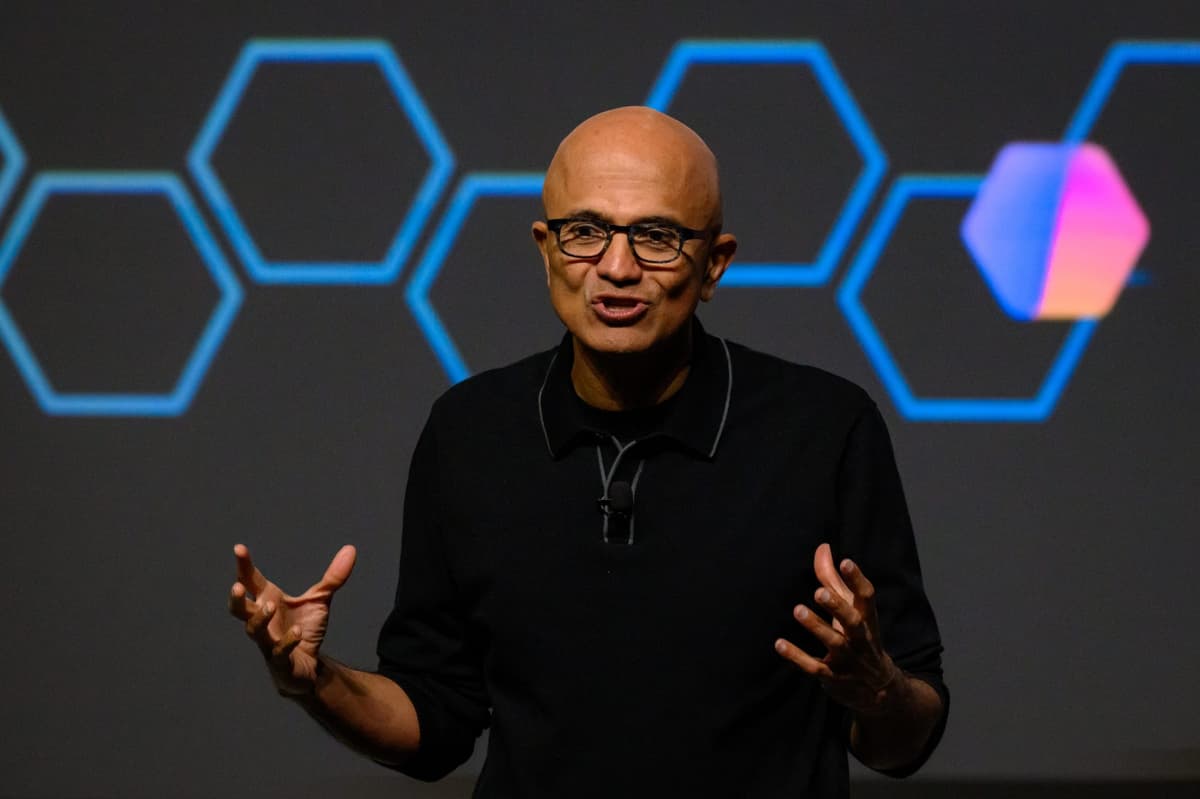
Microsoft Seeks to Be AI’s Center of Gravity Again. CEO Satya Nadella Is in San Francisco to Make the Case
Companies Mentioned



Why It Matters
Microsoft’s push to own the agent‑native stack re‑asserts its relevance in the fast‑moving AI market and promises new revenue streams from enterprise and developer tools.
Key Takeaways
- •Project Solara targets device‑level agents for desktops and wearables
- •Microsoft unveiled home‑grown image, coding, and reasoning AI models
- •Copilot super app will merge chat, code, and Autopilot agents
- •Shift to an “agent‑native stack” signals new hardware‑software integration
Pulse Analysis
The AI landscape has become a crowded battlefield, with Google, Anthropic, Meta and even SpaceX racing to out‑innovate each other. Microsoft, once the clear front‑runner thanks to its early partnership with OpenAI, now faces pressure to prove its relevance. By framing the next wave as an "agentic" era, Satya Nadella is signaling a strategic pivot: rather than merely hosting large language models, Microsoft wants its software and hardware to act as autonomous agents that can execute tasks across devices and networks.
At Build, Microsoft rolled out several concrete pieces of that vision. Project Solara is billed as a purpose‑built platform that embeds agents into both desktop PCs and wearable badges, allowing users to interact with AI through physical devices. The company also introduced a new suite of internally developed models—a fresh image generator, a coding assistant, and its first reasoning model—showcasing a growing confidence in building proprietary AI capabilities. Integration of the OpenClaw personal assistant into Windows and a partnership with Nvidia on a "superchip" further underline Microsoft’s commitment to a tightly coupled hardware‑software stack.
The broader implication is a shift from a cloud‑centric to an "agent‑native" architecture, where AI agents operate seamlessly across software layers and hardware substrates. This approach could unlock new productivity tools for developers, enterprises, and end‑users, while giving Microsoft leverage to monetize through Copilot‑driven services and device sales. If successful, the strategy may restore Microsoft’s early AI momentum and set a new standard for how AI is embedded in everyday computing environments.
Microsoft seeks to be AI’s center of gravity again. CEO Satya Nadella is in San Francisco to make the case
Comments
Want to join the conversation?
Loading comments...