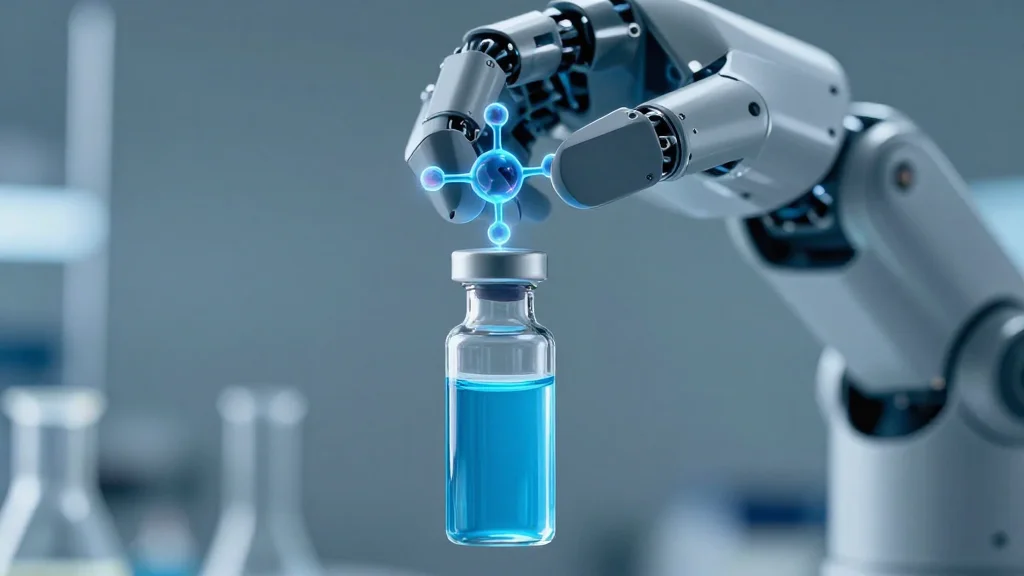
Sir Demis Hassabis Wants to Automate Drug Design
Why It Matters
Automating drug discovery could dramatically lower R&D expenditures and accelerate time‑to‑market, reshaping the pharmaceutical landscape.
Key Takeaways
- •DeepMind aims to create AI that designs drugs autonomously
- •AlphaFold’s success fuels confidence in protein‑targeted AI models
- •Large language models are being repurposed for molecular generation
- •Hassabis targets a decade‑long timeline for meaningful automation
- •Industry expects AI to cut drug development costs dramatically
Pulse Analysis
DeepMind’s foray into drug design builds on a decade of AI breakthroughs that began with game‑playing agents and culminated in AlphaFold’s Nobel‑winning protein‑folding predictions. The lab’s expertise in modeling complex biological structures gives it a unique foothold for tackling the next frontier: generating viable chemical entities from scratch. By leveraging transformer‑based language models trained on billions of molecular strings, DeepMind aims to predict not only binding affinity but also synthetic feasibility, safety profiles, and pharmacokinetics in a single workflow.
The technical challenges are substantial. Biological systems are high‑dimensional and noisy, demanding models that can navigate vast chemical spaces while respecting quantum‑level constraints. DeepMind is experimenting with reinforcement learning loops that iteratively propose molecules, receive simulated assay feedback, and refine designs, echoing strategies used in protein‑structure prediction. Integrating multi‑omics data, high‑throughput screening results, and real‑world clinical outcomes promises richer training signals, yet raises questions about data privacy, bias, and interpretability that the lab must address before commercial deployment.
From a business perspective, successful automation could compress the drug‑development timeline from years to months and slash costs that traditionally run into billions of dollars per candidate. Venture capital is already flowing into AI‑driven biotech startups, and pharmaceutical giants are forming strategic alliances with AI labs to stay competitive. If DeepMind delivers on its promise within the projected decade, the industry could see a paradigm shift where AI‑generated molecules become the default starting point, reshaping pipelines, talent needs, and the economics of innovation.
Sir Demis Hassabis wants to automate drug design
Comments
Want to join the conversation?
Loading comments...