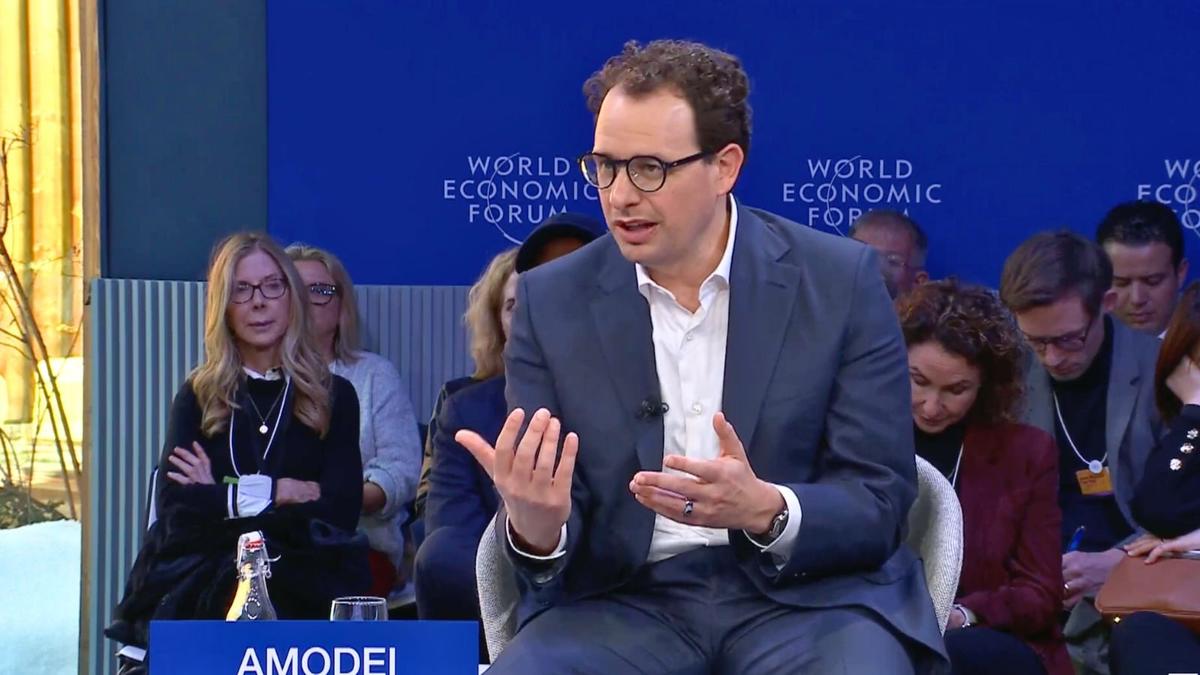
Software Engineering Will Be ‘Automatable’ in 12 Months, Says Anthropic CEO Dario Amodei
•January 21, 2026
0
Companies Mentioned


Why It Matters
If AI can fully automate software development, it could reshape talent demand, accelerate product cycles, and disrupt the traditional engineering labor market.
Key Takeaways
- •Anthropic engineers rely solely on AI‑generated code now.
- •End‑to‑end coding automation predicted within 6‑12 months.
- •Claude Code expands AI’s terminal‑based development capabilities.
- •Hardware and training time remain bottlenecks for AI scaling.
- •Industry may face rapid shift in software engineering workforce.
Pulse Analysis
The notion that software engineering could become fully automatable is no longer speculative fiction. Over the past year, large‑language‑model assistants have moved from autocomplete suggestions to acting as autonomous coding partners, a shift epitomized by the rise of ‘Vibe Coding’ where developers issue plain‑language prompts and receive production‑ready modules. This acceleration is driven by improvements in model size, instruction tuning, and the integration of tool‑use capabilities such as file manipulation and API calls. As a result, the boundary between human‑written and AI‑generated code is blurring, prompting executives to reassess development timelines and cost structures.
Anthropic’s Claude series illustrates the competitive edge that specialized coding agents can provide. Claude Code, a terminal‑based agent, can open files, run tests, and refactor code without human intervention, while the broader Claude platform now supports real‑time artefact rendering and autonomous desktop interaction. These features compress the traditional software lifecycle—design, implementation, testing—into a conversational loop, allowing engineers to focus on high‑level architecture and problem framing. The rapid iteration cycle also creates a feedback loop that accelerates model improvement, reinforcing Anthropic’s claim of a six‑to‑twelve‑month horizon for end‑to‑end automation.
Despite the hype, practical constraints temper the timeline. Training cutting‑edge models demands custom silicon, massive data pipelines, and weeks of compute, factors that could delay widespread deployment. Moreover, the displacement of routine coding tasks raises workforce questions: firms must upskill engineers toward system design, ethics, and AI oversight, while education providers scramble to embed prompt engineering into curricula. Companies that integrate AI coding assistants early can gain a competitive advantage through faster time‑to‑market, but they must also establish governance frameworks to mitigate security and reliability risks inherent in machine‑generated software.
Software engineering will be ‘automatable’ in 12 months, says Anthropic CEO Dario Amodei
0
Comments
Want to join the conversation?
Loading comments...