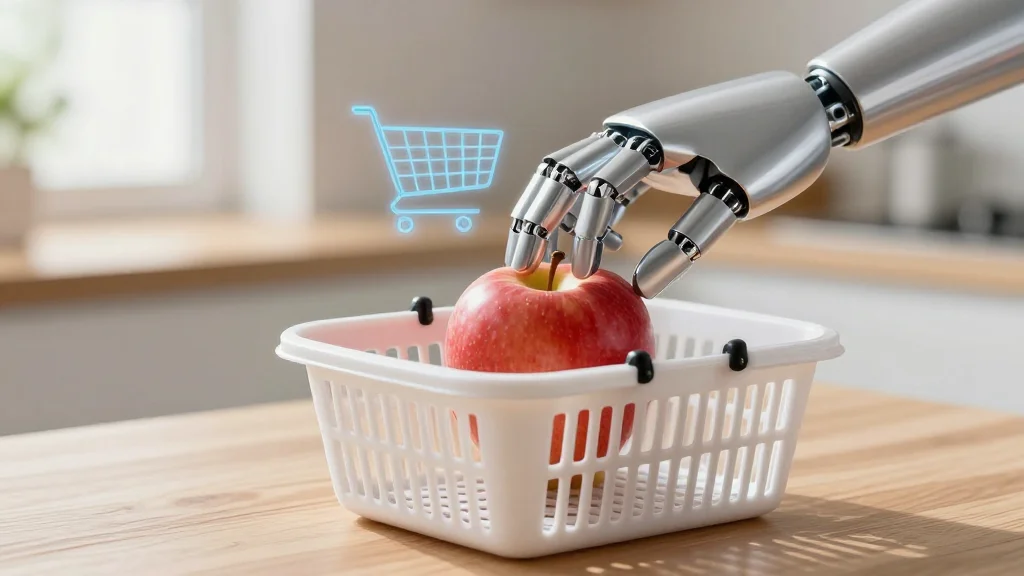
The Friday Checkout: Is Agentic AI the Next Frontier for Grocers?



Why It Matters
Agentic AI could reshape omnichannel grocery strategies, but low consumer enthusiasm and trust issues mean retailers must proceed cautiously.
Key Takeaways
- •Instacart now lets users build carts via Anthropic's Claude chatbot.
- •Only 29% of U.S./U.K. shoppers are enthusiastic about agentic shopping.
- •Walmart shifted from OpenAI checkout to its own Sparky agent in ChatGPT.
- •Early consumer resistance cites intrusiveness and AI “slop” concerns.
- •Grocers advised to pilot, not fully commit, to agentic commerce.
Pulse Analysis
Agentic artificial intelligence—software that can act autonomously on behalf of a user—has become the newest buzzword in grocery tech. By embedding a conversational assistant directly into the shopping flow, retailers hope to turn chat into a seamless checkout channel. Instacart’s recent rollout with Anthropic’s Claude lets shoppers add items to a cart while conversing, effectively turning a text dialogue into a virtual aisle. The move signals a shift from static recommendation engines toward interactive, end‑to‑end purchasing experiences that could deepen engagement with digital‑first consumers.
Despite the hype, adoption remains tentative. A joint FMI‑NielsenIQ study projects the online grocery market to reach $452 billion by 2028, yet only 29 % of surveyed shoppers in the United States and United Kingdom say they are excited about agentic shopping, with nearly half labeling it intrusive or unnecessary. Recent headlines about AI “slop”—inaccurate or biased outputs—have eroded trust, especially when errors affect food safety or pricing. For grocers, the data suggests that convenience alone will not outweigh concerns about privacy, control, and reliability.
Walmart’s recent pivot illustrates the experimental nature of the space. After an initial partnership with OpenAI to enable instant checkout inside ChatGPT, the retailer withdrew the plug in March and redeployed its proprietary Sparky commerce agent across both ChatGPT and Google Gemini. This retreat is less a sign of failure than a reminder that integration must be tailored to brand voice, inventory systems, and regulatory constraints. For the broader grocery sector, the prudent path is incremental pilots, rigorous measurement of conversion and error rates, and a clear fallback to traditional e‑commerce channels until agentic tools prove consistently reliable.
The Friday Checkout: Is agentic AI the next frontier for grocers?
Comments
Want to join the conversation?
Loading comments...