The Future of Software Development: Now with Less Software Development
Companies Mentioned
Why It Matters
AI‑driven development promises faster product cycles and lower defect rates, forcing firms to rethink talent, tooling and data strategies to stay competitive.
Key Takeaways
- •AI agents could write 100% of code, reducing human bottlenecks
- •Spec‑driven development improves AI output quality and lowers defect rates
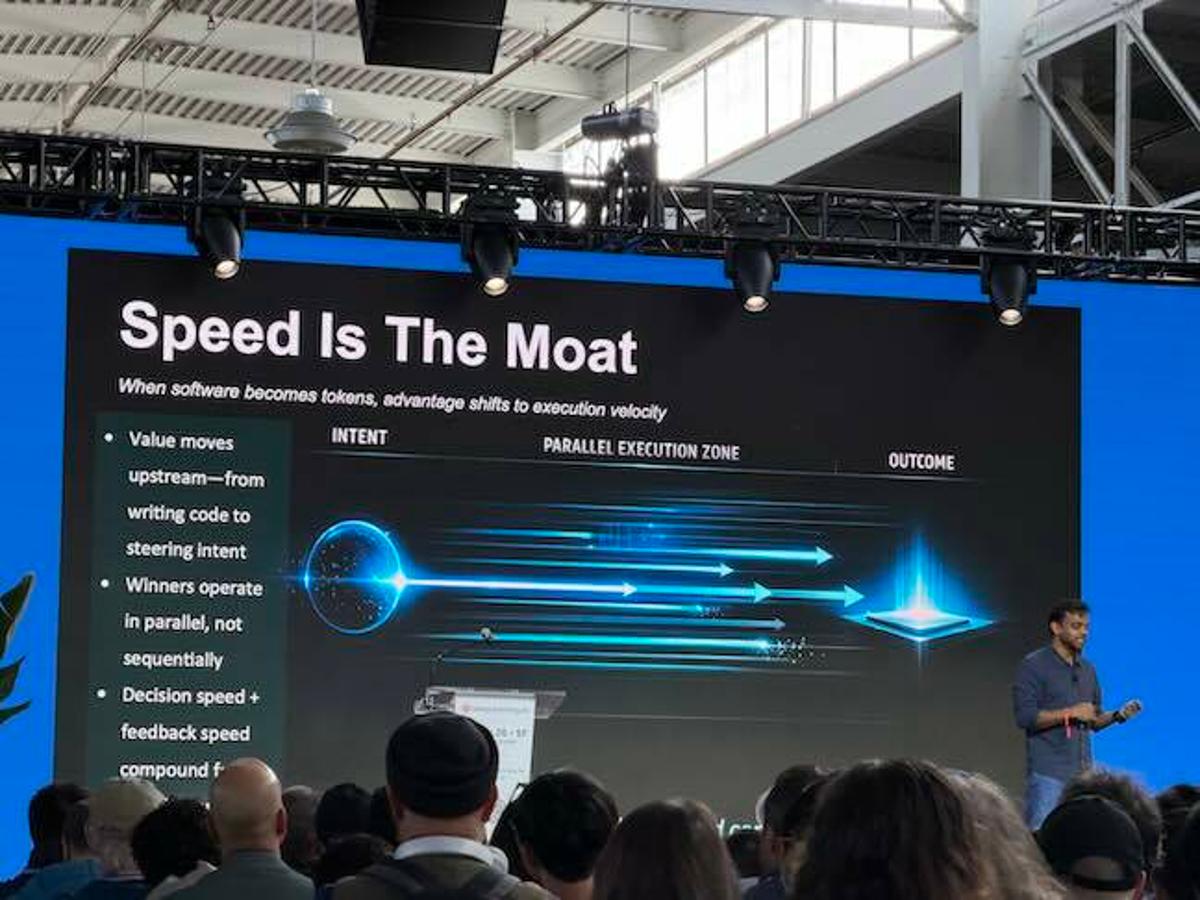
- •Speed, not just innovation, is becoming the primary competitive moat
- •Hybrid infrastructure remains essential amid European data‑sovereignty concerns
Pulse Analysis
The AI Dev 26 x SF conference marked a watershed moment for the software industry, gathering thought leaders who see artificial intelligence moving from a coding assistant to a full‑stack developer. By treating AI agents as autonomous code generators, companies hope to eliminate the traditional bottleneck of manual programming and accelerate time‑to‑market. This paradigm shift aligns with broader trends in generative AI, where large language models are being fine‑tuned for code synthesis, and reflects a growing belief that imagination, not raw coding effort, will dictate competitive advantage.
Practically, the dialogue at the summit emphasized spec‑driven development as the key to harnessing AI reliably. Providing clear, machine‑readable specifications helps large models produce accurate, low‑defect code, while frameworks like AWS’s Hydro and Cedar aim to enforce correctness through formal verification. Engineers are also expected to transition into hybrid roles—combining product management, design, and marketing—because AI agents will handle routine implementation tasks. This role blurring could reshape hiring, training, and compensation models across the tech sector.
Strategically, speed has become the dominant moat, as highlighted by speakers from AMD and AWS. Companies that can rapidly iterate on AI‑generated solutions will outpace rivals, making investment in high‑performance hardware stacks and robust data pipelines essential. At the same time, geopolitical pressures, especially Europe’s data‑sovereignty stance, reinforce the need for hybrid cloud‑edge architectures. Firms that master both AI‑centric development and compliant, distributed infrastructure will be best positioned to capture market share in the next five years.
The future of software development: Now with less software development
Comments
Want to join the conversation?
Loading comments...